


Do You Actually Know Your Insurance Deductable?

Jennifer Schillaci • May 26, 2026

 Your RV Insurance Deductible: What It Really Means & Why It Matters

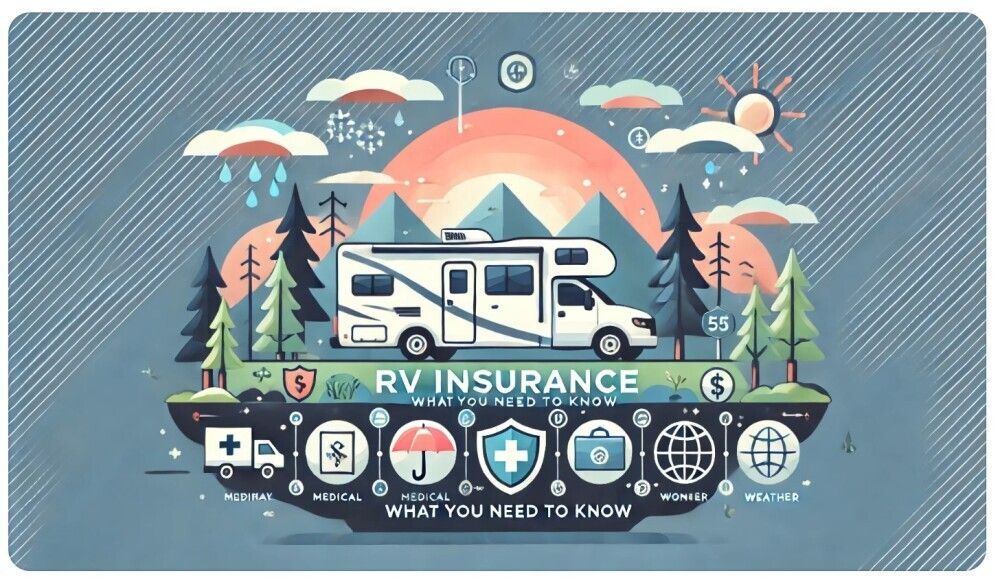
Illustrated RV insurance graphic with motorhome, icons, mountains, and the text “RV Insurance” and “What You Need to Know”

The deductible number most RVers can't answer off the top of their heads is the one that can quietly matter more than the premium they obsess over — because a high deductible doesn't just lower your monthly cost, it shapes every decision you make when something goes wrong.


Welcome to the final post in our RV Insurance Mini-series.


We've covered policy categories, coverage gaps, and roof coverage & hopefully you have learned a bit more than just a few new campfire conversation words.


This last one may even be the most practical & it's the one that comes up most often when we're standing in someone's campsite with a clipboard and a damage assessment.


We will ask: What's your deductible?

The silence that follows that question often tells us a lot.


What a Deductible Actually Is

Your deductible is the amount you agree to pay out of pocket before your insurance coverage kicks in on a claim.


Unlike health insurance — where your deductible resets annually — RV insurance deductibles typically apply per claim.


Every time you file, the deductible applies again.


Here's a straightforward example: you have $10,000 in roof damage from a hail event. Your deductible is $1,000. Your insurance pays $9,000. You pay $1,000. If the damage had only been $800 — less than your deductible — your insurance pays nothing. You would have to cover the full cost yourself.


One more thing worth knowing: different coverages on the same policy can carry different deductibles.


Your collision deductible and your comprehensive deductible may not be the same number.


Progressive's Roof Protection Plus carries its own flat $250 deductible, separate from your other coverage deductibles. You need to know each one — not just a general number.


Person climbing a ladder on the back of a white RV in a flat desert landscape


The Real Cost of a High Deductible

A higher deductible lowers your monthly or annual premium. That is true, and it is a legitimate trade-off. If you are financially stable, carry a solid emergency fund, and rarely make claims, a higher deductible can make sense over the long run.


But a higher deductible does more than just lower your premium. It raises the threshold for when filing a claim is even worth it — and in RV ownership, that threshold comes up more than most people expect.


Think about it this way. If your deductible is $2,500, and you have $2,800 in damage, you are technically filing a claim for $300. And when you file a claim — even one you are fully entitled to — it goes on your record.


Future premiums can be increased once it's filed. Some insurers factor claim history into renewal decisions.


So in practice, a high deductible does not just mean you pay more out of pocket when something happens. It means there is a whole category of real, legitimate damage that is functionally not covered — because filing the claim can actually cost far more than it's worth.


We see this play out at RV Roofing Solutions regularly. A client has a $2,000 deductible. They have $8,000 in roof damage — a failing membrane, compromised seams, a section that needs full replacement.


The insurance payout after the deductible would be $6,000. That sounds worth filing for — until you factor in the claim on their record, the potential premium increase at renewal, and the hassle of the process. Most of the time, they pay the whole thing themselves.


This often means that high deductible is not really saving them money.


It is just moving cost from the insurance company's column to theirs.

But here is the question that so many people don't even stop to consider & honestly, it should stop you too before you ever choose a deductible number.


Do you actually have an extra $2,000 sitting in a savings account right now that you could write a check from today without serious financial stress?


What happens if the insurance company denies the claim entirely — do you have $8,000 or $10,000 available to cover the full repair?


Do you have a credit card with enough available credit to handle an emergency like that? And if you do — what is your interest rate? What is your credit score? Could you even qualify for a loan if you needed one quickly and the claim was denied?


These are not comfortable questions. But they are the right ones.


The truth is an emergency does not wait for you to get your finances in order. It happens on a Tuesday afternoon in a campground three states from home, and you need an answer that day.


A deductible is not just a number on a policy. It is a promise you are making to yourself that you can cover that amount out of pocket when something goes wrong. If you cannot keep that promise today — if that number would genuinely hurt you to pay — then your deductible is too high regardless of what it saved you on your monthly premium.


White camper van tilted on a curving mountain road beside a rock cliff and trees.


Do the Math Before You Choose

If you are considering raising your deductible to lower your premium — or if you already have and are wondering whether it was the right call — here is the calculation worth doing.


Take the annual premium savings from the higher deductible. Divide the deductible difference by that savings number.


That tells you how many consecutive claim-free years it takes to break even. If a $1,000 increase in your deductible saves you $120 per year in premium, you need more than eight consecutive claim-free years to come out ahead financially — and one mid-sized claim wipes out that math entirely and puts you back to zero.


That calculation does not make a high deductible wrong. It makes the trade-off visible. Go in with eyes open, not assumptions.


What You Should Do Right Now

First: find out what your deductible actually is. Pull up your insurance app, your policy documents, or call your agent. Write down the deductible for every coverage type — collision, comprehensive, roof coverage if applicable, contents if applicable. Know every number, not just a general figure.


Second: be honest about your savings. Not the savings account you plan to build. The one you have today.


  • Could you cover your full deductible without putting it on a credit card?
  • If the claim was denied — which happens — could you cover the entire repair?
  • If the answer to either of those questions is no, your deductible may need to come down even if your premium goes up.
  • The monthly difference is almost always less painful than the lump sum you will face when something goes wrong.


Third: start a dedicated RV emergency fund if you do not have one.


Even $50 a month earmarked specifically for rig repairs and deductible coverage builds into a meaningful buffer over time. Think of it as self-insuring the gap between what your policy covers and what reality costs.


Fourth: make sure your partner knows the deductible too. Both people in the household should know this number & they should know where the policy lives, who the carrier is, and what the claims number is.


Emergencies do not wait for the person who holds that information to be available. If Frank handles the insurance in your house the way he does in ours — that is fine. But the other person needs to know enough to make the call.

Overturned silver RV in a roadside ditch beside a forested road

While You Wait: The Real Cost of Waiting on an Approval

Here is something nobody talks about when they are shopping for the lowest premium and the highest deductible.


The time between when damage happens and when an insurance company approves a claim is rarely fast. It can take days. It can take weeks. And in some cases — when documentation is incomplete, when an adjuster has a full caseload, when supplemental estimates need to be submitted — it can take even longer than that.


Meanwhile your rig is sitting. The damage that could have been addressed last Tuesday is still waiting on a decision. And in roofing especially — but in suspension, in water intrusion, in any kind of structural damage — time is not neutral.


Damage that is caught and addressed early stays contained. Damage that sits while paperwork moves through a system spreads. What was a one-layer problem becomes a two-layer problem. What was a repair becomes a replacement.


This is one of the most practical arguments for having money set aside — not just to cover your deductible, but to start repairs immediately when something goes wrong.


The RV owner who can write a check on day one and begin mitigation is in a fundamentally different position than the one who is waiting on an adjuster's call to know whether they can proceed.


An Unpopular Opinion — Said Gently

Insurance adjusters are not the enemy. Most of them are professionals doing their best at an honest job. But there is something worth understanding before you find yourself in the middle of a claim.


Not all insurance adjusters are RV specialists. In fact, many are not.


They may be experienced, competent adjusters who have handled hundreds of claims & may have limited working knowledge of how an RV roof system actually functions, what a failing membrane looks like, or why a patch is not an appropriate long-term solution for an impact event. They are evaluating your claim through a general lens, not an RV-specific one.


And adjusters,  like anyone working within a system, are operating with an eye on cost. It is simply the nature of the role. The path of least resistance in a claim is often the least expensive resolution.


A patch. A partial repair. A settlement that closes the file.


Which is exactly why having an independent professional inspection report matters.

Not because you are preparing for a fight, but because you are providing the specific, documented, RV-informed assessment that a general adjuster may not have the background to produce on their own.


You are giving them the information they need to make the right call. And you are protecting yourself if they don't.


At RV Roofing Solutions we have sat across the table from adjusters who wanted to patch a roof that needed to be replaced. We have seen claims approved correctly because the client had documentation. We have seen claims underpaid because they did not.


Know what you have. Document everything. Have an incident date.


Get a professional assessment before you file — not after. And if an adjuster's recommendation does not match what a qualified RV professional is telling you, you have the right to push back, to request a second opinion, and to appeal a decision that does not reflect the real condition of your rig.


The goal is a fair outcome. Getting there sometimes requires you to be your own advocate.


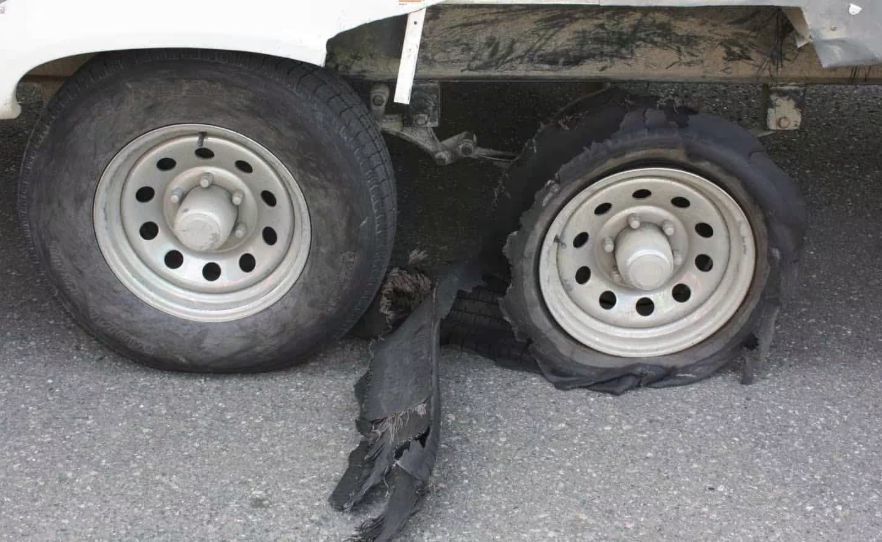
Two vehicle wheels on the same side, with the rear tire blown out and the front tire intact.


Let's talk about a suspension failure on the road. A shackle breaks. You are not patching this on the side of the highway — your rig has to go to a shop. Maybe you are three states from where you started. Maybe you are a full-timer and your RV is not just your vehicle. It is your home. Everything you own is in it.


The shop gives you a timeline. Six weeks.


Now what?


  • Where do you sleep tonight?
  • Where do you sleep for the next six weeks? An Airbnb? A hotel? A rental unit near the shop so you can check on the rig?
  • Are those costs covered by your insurance policy under emergency expense coverage — or are they coming out of your pocket on top of the deductible, on top of the repair, on top of everything else that just went sideways?
  • Do you know the answer to that right now?
  • What does your policy actually say about emergency living expenses?
  • What is the dollar limit? What triggers it?
  • How many days does it cover?
  • Does it require receipts?
  • Does it have a daily cap?


If you are a full-timer or even a seasonal traveler and your policy does not include emergency expense coverage, or if you have it but the limit is $750 and a six-week Airbnb costs $4,000 — that gap is now yours to cover. Out of pocket.


While you are already dealing with the stress of a broken rig, an uncontrollable repair timeline, and a life that just got upended.


This is not a worst-case scenario. This is the kind of thing that happens to real people on real roads every single week. And the RVers who navigate it without financial devastation are the ones who knew their policy before they needed it.


Know your deductible. Know your emergency expense coverage. Know your limits. Know what is covered and what is not before you are sitting in a parking lot outside a shop in a town you have never been to, trying to figure out where your family sleeps tonight.


Filing a Claim Should be a Decision, Not a Reflex

A history of claims — even legitimate, fully covered ones — can affect your premium at renewal and in some cases your insurer's willingness to renew your policy at all. This does not mean you should avoid filing claims you are entitled to.


It means the decision to file should be a considered one, not automatic.


If damage is close to your deductible, have a conversation with your agent before you file. Ask how a claim of that size is likely to affect your renewal. Get that information first, then decide.


White bus parked near palm trees and a chain-link fence in warm sunlight.


The Full Series Checklist: Questions to Ask Your Insurer


You've made it through all four parts.


Here is the complete checklist — print it, screenshot it, send it to your partner, stick it in your glove box.


These are the questions every RVer should be able to answer about their own policy.


My RV Insurance Policy At a Glance

Name on Policy: ____________________________

Policy #: _________________________________

VIN: ____________________________________


  • What is my deductible for each coverage type? Collision, comprehensive, roof, contents — know every one.
  • If I have a high deductible, do I have the cash reserve to cover it today? Not theoretically. Actually. Today.
  • Does my policy match how I actually use my rig? Full-time, seasonal, or recreational — make sure they align.
  • What is my total loss valuation method? ACV, Agreed Value, or Total Loss Replacement?
  • If it is TLR, is my rig still in the eligible window?
  • What are my personal property limits?
  • Are all the contents covered at ACV or Replacement Cost?
  • What is my liability coverage when parked?
  • Vacation liability or full-timer's liability — what are the limits?
  • Do I have emergency expense coverage? What are the limits and what triggers it?
  • Is roadside assistance included? Is it RV-specific?
  • What are the towing limits?
  • How are permanent attachments covered? Solar, awnings, satellite — covered and at what limit?
  • What is my coverage territory?
  • Am I covered in Canada? Mexico? Alaska or Hawaii?
  • Does my policy meet my lender's requirements? Especially If financing, confirm you're in compliance.
  • If I carry Roof Protection Plus or similar coverage, what are the maintenance requirements, age restrictions, and exclusions?


The Bottom Line

Your RV is your home, your vehicle, and one of the largest investments you will make. The policy that protects it deserves more than a glance at the premium line.


We are not insurance agents, and this series is not professional insurance advice. Every policy is different, every provider is different, and your specific situation matters. What this series is meant to do is give you the questions — so that when you sit down with your agent, you know exactly what to look for and what to ask.


Learn it before you need it. That goes for your roof, your tires, your engine — and your insurance policy.


LEGAL NOTE: This series contains general educational information only. It is not professional insurance or legal advice. All policy details referenced are based on publicly available information at time of writing and are subject to change. Readers should consult their own insurance agent and read their own policy documents.


Coverage varies by state, provider, and individual policy terms


Other blogs you might like...

Person standing on the roof of a vehicle in a desert at sunset, looking into the distance.
By Jennifer Schillaci May 23, 2026
Your RV roof coverage has limits—and age makes it worse. Learn what insurance won't pay for, what aftermarket systems really cost, and the questions to ask before it's too late.
By Jennifer Sansford - Shield Your Journey May 23, 2026
My husband is the techie in our relationship. In my world, that means he's the one who thinks about things I don't and occasionally explains them to me in ways that stick. We were talking once about the risks of public WiFi. I wasn't thinking much of it—honestly, we have our own internet, we don't rely on campground networks, I figured we were pretty well covered.  And then he showed me something.
By Jennifer Schillaci May 21, 2026
We don’t do a blog post for every community spotlight. But sometimes God puts people in your path and you just know — their story has to be told. This is one of those times. We recently attended the Adventure Bandits Bash in Onalaska, Texas. It was a great rally — good people, good food, good campfire energy. But I knew from the very first day why we were really there. I was there to meet Thomas Stokes and his sweet wife, Denise. I’m not exaggerating when I tell you that sitting down with them was a conversation that reminded me why I do this.
Smiling white mascot s'more in orange pants at an outdoor RV show booth with tents and balloons
By Jennifer Schillaci May 20, 2026
RV Overnights gives RVers 1,500+ unique stays at farms, breweries & more for $49.99/year. Veterans save 40%. Hear the full story on Learn to RV The Podcast.
By Jennifer Schillaci May 19, 2026
I've been an Escapees member since 2014. I've been to rallies, I've parked at Rainbow's End, I've talked about what it means to belong to something bigger than your travels. But nothing quite prepared me for what I felt the afternoon I walked into the Escapees CARE Center in Livingston, Texas and sat down for fifteen minutes with a woman named Carol.  That visit changed something in me & I think it might change something in you, too.
Three people walking in a forest, holding hands as one child swings between them.
By Jennifer Schillaci May 15, 2026
Thinking about buying a Thousand Trails membership? Here's what new vs. used really means for your wallet, is it worth it, your campsite access, and your RV life.
Sticker collage of a van, white panels, tree, and street scene under the text “Every sticker tells a story”
By Jennifer Schillaci May 14, 2026
Wondering what a Rivet Supply Co. Adventure Board is? Joel and Kristina Bram sat down with founder Melissa Bond to find out — and yes, we all have one or three.
People walking between tall rocky cliffs toward the sea on a narrow road
By Jennifer Schillaci May 12, 2026
Most RVers don't find out about coverage gaps until something goes wrong. Here's what your policy may be missing — and what to ask before your next renewal.
By Jennifer Schillaci May 11, 2026
Welcoming New People Into Your RV Circle (Without Making It Weird)
Close-up of a red and gray flexible hose attached to machinery, with a blue gloved hand holding it.
By Betty Grant - RV Pocket Tech May 8, 2026
Hook up right and avoid the most common RV water and sewer mistakes. Betty Grand of RV Pocket Tech shares simple tips every camper needs before their next site.
Show More