The Coverage Gaps Nobody Warns You About

Jennifer Schillaci • May 12, 2026

Total loss, your belongings, parked liability, & where your policy stops following you.

Welcome back to our RV Insurance Miniseries. If you missed Part 1, we covered why your policy category whether you are full-time, seasonal, or recreational, matters more than most people realize, and why the policy that came with your rig may not match the life you're actually living.


Maybe go back & read this blog first.

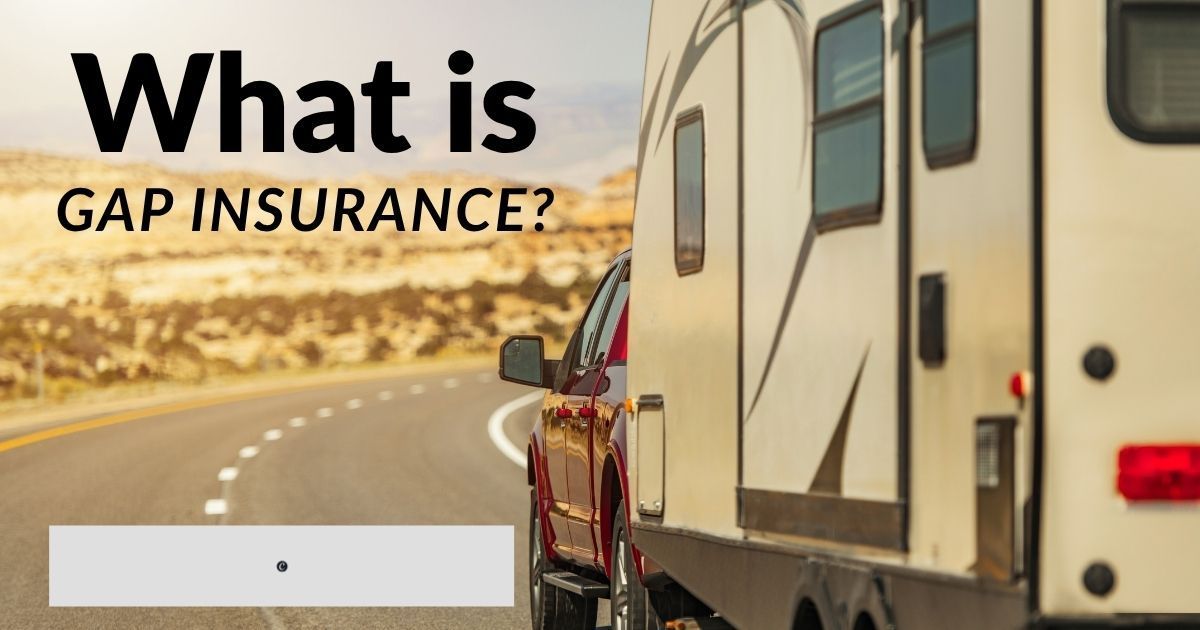
Text graphic asking “What is GAP INSURANCE?” with a car towing a camper on a road

Today we're going into the gaps.

The coverage that sounds like it's there... until it isn't.


The things nobody explains to you when you purchase the RV & the things that surprise people most when they actually need to use their policy when something happens.


The Coverage Gap Nobody Talks About: Total Loss

Here's a scenario. Your rig is totaled. Total loss. Gone.


What does your insurance pay you?

If your policy has Actual Cash Value (ACV) coverage, which is the standard, base-level total loss coverage included in most policies, it pays you the market value of your RV at the time of the loss.


That means depreciation has already been subtracted.


GAP insurance — or Guaranteed Asset Protection

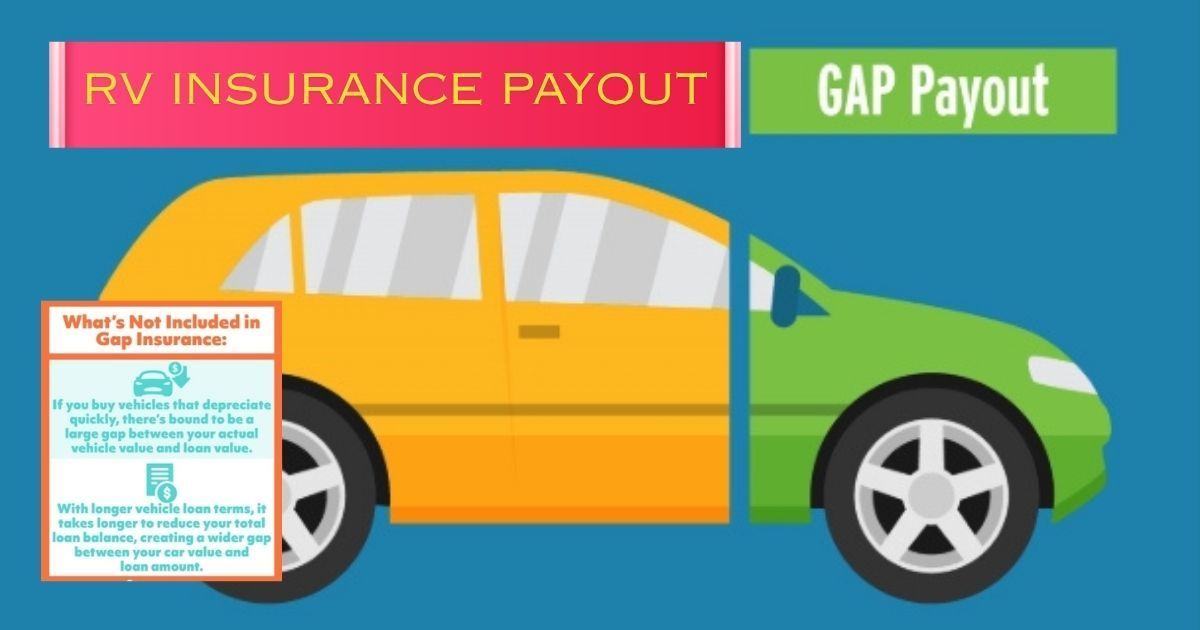
GAP Insurance covers the difference between what your RV is worth and what you still owe on it if your rig is totaled or stolen.

Car graphic showing RV insurance payout and GAP payout coverage areas in pink and green banners

An RV that cost you $80,000 three years ago may only be worth $50,000 or $55,000 on the current market. That is what ACV actually pays. Whatever gap exists between that payout and what you owe on your loan, or what it actually costs to replace your rig, is yours to cover.


There are two upgrade options worth knowing about:

  • Total Loss Replacement (TLR): Your insurer replaces your totaled rig with a new unit of similar make, model, and features.


This protects you from depreciation entirely. Most TLR policies are limited to RVs in their first five model years.


  • Agreed Value: You and your insurer agree on a value for your RV when the policy is written.


If it's totaled, you receive that agreed amount — no depreciation calculation at settlement. Not all RVs qualify.


If you are financing your RV, there is one more layer: gap insurance.


Gap coverage pays the difference between what your insurer pays out and what you still owe on your loan if your rig is totaled. It protects you from being upside down on a loan for a rig you no longer have.


Before your next renewal: open your policy and find the Physical Damage section. Look for the words 'Actual Cash Value,' 'Agreed Value,' or 'Total Loss Replacement.' That tells you exactly what you have.


Your Stuff Is in There Too (And It May Not Be Covered the Way You Think)

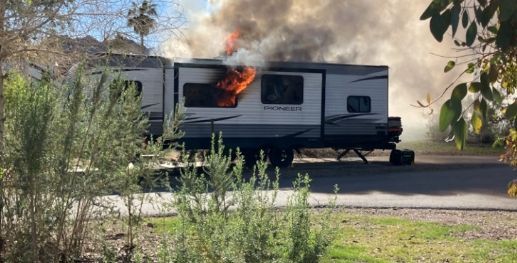
If you are a full-timer, your RV is not just a vehicle. It is your home. Your clothes, your electronics, your kids' school materials, your kitchen equipment, your craft supplies, your tools — everything you own is inside that rig.

RV trailer on fire, with flames and thick smoke rising near a roadside in a wooded area

So what happens if there's a fire, a break-in, or a catastrophic weather event?

Standard recreational policies often include limited personal property coverage — sometimes as low as $1,000 to $3,000. That number is not going to replace a laptop, a television, a camera setup, and a month's worth of clothing.


Full-timer policies typically include higher contents limits & can be structured more like a renters or homeowners policy.


Replacement Cost vs. Actual Cash Value

This also applies to your belongings. If your policy covers personal property at ACV, your three-year-old laptop pays out at its depreciated value — not what it costs to replace it today.


  •  Items stored outside your rig may not be covered. A storage unit or shed at your home base may require a rider or separate coverage.


  • Document everything now. Walk through your rig with your phone and record a video of every cabinet, drawer, and storage compartment. Store it in the cloud. Keep receipts for high-value items. This takes fifteen minutes and makes a claim significantly easier.


Road sign with RV icon and text: “Standard RV liability covers bodily injury and property damage.”

Liability: Parked Is Not the Same as Moving

Most RVers understand that they need liability coverage while driving.


Fewer realize that liability exposure doesn't stop when you park.


When your rig is parked and you're using it as a temporary residence, you have guests nearby, neighbors in adjacent sites, kids running between rigs. Someone trips on your awning cord. Your dog bites another camper. A loose connection causes a small fire.


These scenarios create liability that standard auto-style coverage may not address.


Full-timer policies

These typically include full-timer's liability — coverage that acts like personal liability on a homeowner's policy, covering you for incidents in and around your parked rig.


Recreational policies

They may include vacation liability.

But the limits and terms vary significantly between policies and providers.


Be sure to ask your insurer directly: what is my liability coverage when my rig is parked and I am using it as a residence? Get that answer in writing.


Emergency Expense Coverage: Because Your Rig Is Also Your House

If your rig is disabled in a covered incident more than a certain distance from home — Progressive, for example, specifies more than 50 miles — emergency expense coverage can help pay for transportation, hotel costs, food, and fuel while your RV is being repaired.


For a full-timer who has no other home to return to, this is not just something nice-to-have. It is a critical safety net.


Coverage limits vary by provider and policy.


Take the time to check your policy for the specific limit and the triggering conditions — each policy defines what 'disabled' and 'covered incident' mean differently.


Roadside assistance is a related but separate consideration. Standard programs are designed for cars. A large motorhome or fifth wheel may require specialized towing equipment.


Confirm that any roadside assistance you carry is RV-specific, and know the towing limits before you need them.

Rocky beach with parked RVs beneath green hills beside calm water

Coverage Area: Where Are You Actually Covered?

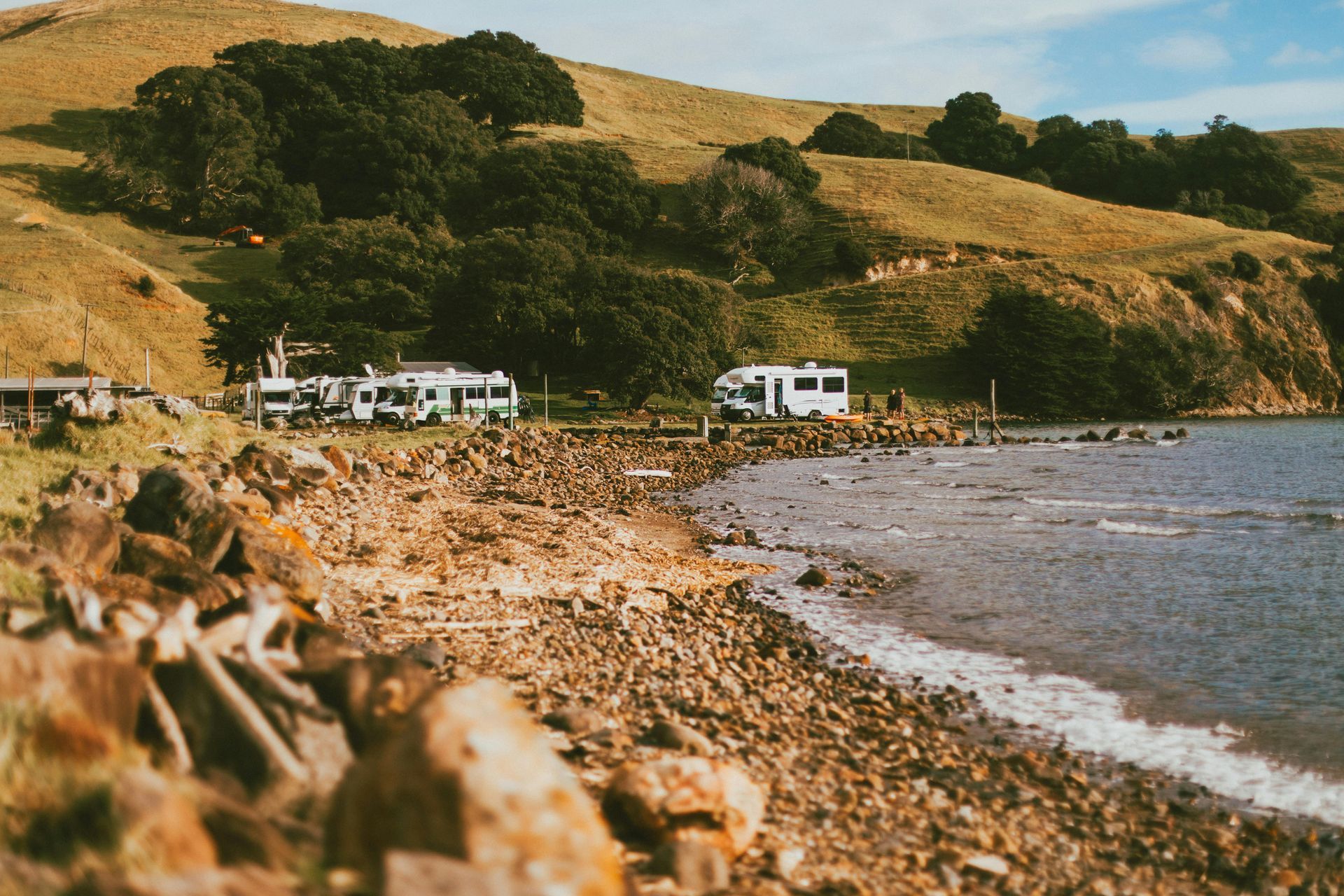
Most standard U.S. RV policies cover you throughout the contiguous United States and Canada.


Mexico is typically not included. If you are planning to cross into Mexico — even just a short trip across the border — your standard RV policy almost certainly does not cover you there. You will need to purchase a separate Mexican insurance policy before crossing.


If your travels take you to Alaska or Hawaii, or if you are considering international travel beyond Canada, contact your insurer to confirm your coverage territory.


Do not assume your policy follows you everywhere you go.


Lender Requirements: What Your Financing Demands

If you are financing your RV, your lender has a say in your insurance requirements, whether or not you realize it. Lenders typically require comprehensive and collision coverage at minimum, and may have specific requirements around deductible amounts or coverage limits.


If you are financing and thinking about adjusting your coverage to reduce premiums, check your loan documents or call your lender first.


Know exactly what is required before making changes.


If my truck or tow vehicle is insured, does that mean my trailer or 5th wheel is also insured?


Great question — and the answer is: it depends, and probably not as much as you think.


Here's exactly what your truck insurance does and doesn't cover for your trailer or fifth wheel:


What it probably DOES cover:

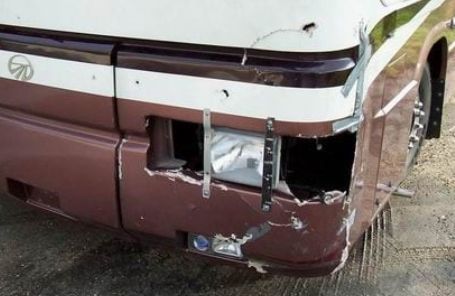
When you are hauling your travel trailer it is usually automatically covered by the liability coverage in your regular auto insurance policy. So if your rig sideswipes another car while being towed, the other driver's damages are usually covered.

Damaged maroon motorhome front bumper with broken headlight and scraped white trim

What it probably does NOT cover:

Your truck's liability coverage may extend to your trailer when it's hitched, but it offers zero protection for physical damage to the fifth wheel itself. If your trailer is damaged in an accident, storm, or fire, you would be responsible for all repair costs.


Standard auto insurance only covers your tow vehicle, not the fifth wheel trailer. Unlike standard auto insurance, fifth wheel insurance protects the trailer itself from collision, theft, weather damage, and liability when parked.


And the parked situation is critical especially if your tow vehicle's liability insurance extends to the fifth wheel while it's being towed, but you need additional coverage when it's parked and used as a residence.


So what does that mean? 

If you don't purchase a separate policy for your towed RV, most of the potential damage or loss will not be covered. 

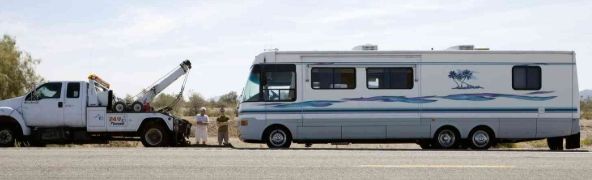
Tow truck towing a white RV trailer on a road

What If the Other Driver Doesn't Have Insurance?

Here's a question worth asking before you need the answer: what happens if the other driver doesn't have insurance?


Gap coverage pays the difference between your insurance payout and what you still owe on your loan — but it doesn't step in to cover what an uninsured driver should have paid.


That's where Uninsured/Underinsured Motorist (UM/UIM) coverage comes in.

Without it, you could be left holding a repair bill, a loan balance, and very few options.


This is exactly why having the right insurance for your RV matters — not just any policy, but one that was built for the life you're actually living. The gaps aren't always obvious until something happens. That's what this whole series is about.


Up next in Part 3: The RV roof coverage conversation — from someone who actually works on RV roofs. What Progressive's Roof Protection Plus covers, what it doesn't, and what the maintenance exclusion means for your claim. Plus a word on permanent attachments and warranties.


LEGAL NOTE: General educational information only. Not professional insurance or legal advice. Coverage varies by state, provider, and individual policy. Consult a licensed insurance agent for your specific situation.

Other blogs you might like...

By Jennifer Schillaci May 11, 2026
Welcoming New People Into Your RV Circle (Without Making It Weird)
Close-up of a red and gray flexible hose attached to machinery, with a blue gloved hand holding it.
By Betty Grant - RV Pocket Tech May 8, 2026
Hook up right and avoid the most common RV water and sewer mistakes. Betty Grand of RV Pocket Tech shares simple tips every camper needs before their next site.
Brown bear walking through green grass and dirt in a natural outdoor setting
By Jennifer Schillaci May 7, 2026
Bear spray isn't bug spray. Bells may not work. And the park isn't even full yet. 72 Bears lost in 2025. What every camper must know about bear safety in Yellowstone
Sunset over a grassy field, with orange clouds and sun rays spreading across the horizon
By Jennifer Schillaci May 6, 2026
RV weather hits different when you live on the road. Get real talk on driving in bad conditions, Dave Titley's top tools, what experienced RVers actually need to do.
Hands holding a turquoise booklet with a printed form on a black couch
By Jennifer Schillaci May 5, 2026
Full-time, seasonal, or recreational RVer — your insurance category matters more than you think. Learn each policy type, coverage and why a mismatch can cost you
Online shop page showing four graphic T-shirts in olive, olive, blue, and teal on a white background
By Jennifer Schillaci May 4, 2026
The Learn to RV Store is launching soon! See what Steve Gallaher of Campfires and Motors created — and find out how to design for us. Sign up today to get informed
Mountain stream flowing through dense evergreen forest under a cloudy sky
By Jennifer Schillaci April 29, 2026
Three generations. 65 years. One Oregon shop RVers drive hundreds of miles to visit. Tommy Henderson tells us why — and what your rig is likely missing out on
By Jennifer Schillaci April 27, 2026
What's Under Your Rig Matters More Than You Think. This week on Learn to RV the Podcast — we're going under the rig. And you're not going to want to miss it.
Four people posing in front of a white RV, smiling and holding up flexed arms
By Jeff & Monica Grant - Dean & Gertie Explore the World April 24, 2026
Thinking about RV life with kids? Learn how to get them excited, handle school, stay connected, and build a successful full-time travel lifestyle.
By Jennifer Schillaci April 23, 2026
If you've been RVing for more than five minutes, you've heard the word "rally." Maybe you've scrolled past one on Facebook, or seen a campground packed with matching rigs and wondered what was going on. But if you've never been to one — or never thought you belonged at one — this one is for you. We sat down with Don Florczyk, the force behind The Flock RV Rally Company , for our Community Spotlight series on Learn to RV The Podcast. We're not going to spoil it here — you need to go listen, because this conversation goes places we did not expect. What we can do is give you the lay of the land: what rally culture is really about, whether you need to own a specific brand to show up, and where The Flock is headed in 2026 and 2027. Grab your camp chair. Let's talk about it.
Show More