How to Build a Business on the Road & Find Your Community While You’re At It
Jennifer Sansford • May 30, 2026
Traveling full-time is one decision, but building a sustainable business from the road is a completely different one — and most of the advice out there wasn’t written for people whose “office” changes zip codes every two weeks.
If you’re running a business while living full-time in an RV, or thinking about it, here’s what actually works — and what most people don’t talk about.

1. Stop Trying to Replicate a Stationary Business Model
The instinct when you go full-time is to do what worked before — local SEO, city-specific directories, networking events in whatever town you’re passing through.
The problem: those strategies depend on staying put.
Road-based businesses grow differently. The most sustainable ones are built on:
- Community trust over geographic proximity
- Reputation that travels with you, not just in one market
- Peer referrals from people who know your work and your lifestyle
-
The RV community is tight-knit and word travels fast. That’s an advantage — if you’re showing up in the right places consistently.

2. Your Peers Are One of Your Most Valuable Business Assets
Here’s what nobody talks about enough: the isolation of building a business on the road isn’t just emotional — it’s a practical problem.
When you were stationary, you had colleagues, chamber breakfasts, industry peers you could call when you hit a wall. On the road, that informal network disappears. Without it, you end up reinventing wheels that other full-timers have already figured out.
The full-time RVers running successful businesses have usually figured out one thing in common: they found their people. Other entrepreneurs living the same life, wrestling with the same challenges — WiFi reliability, client communication across time zones, pricing work when your costs are unconventional.
A conversation with someone two steps ahead of you on a problem you’re stuck on is worth more than most courses. Seek those conversations out intentionally.

3. Think “Chamber of Commerce,” Not “Social Media”
Most RV Facebook groups fall into one of two traps: either all promotion is banned, or it’s a free-for-all that becomes noise. Neither is useful if you’re actually trying to build something.
What actually works is the model that’s worked in business communities for decades: a structured network with skin in the game. Think BNI or a local chamber — not because of the networking events, but because of what those structures create:
- Accountability (everyone has invested in being there)
- Quality (people with something to lose behave accordingly)
- Referrals (trust is built, not just assumed)
That same model can work for road-based entrepreneurs — it just needs to exist in a space designed for people who live in RVs. That’s exactly what RV Business Hub was built to be: a membership-based community where full-time RVer entrepreneurs can network, refer, and grow alongside each other — not just advertise to a passive audience.

4. Be Visible in the Spaces Your Clients Are Already Gathering
One underrated growth strategy for road-based businesses: show up consistently in communities your ideal clients already trust. This doesn’t mean spamming every RV group with your link — it means being genuinely helpful in conversations, answering questions in your area of expertise, and letting people come to you.
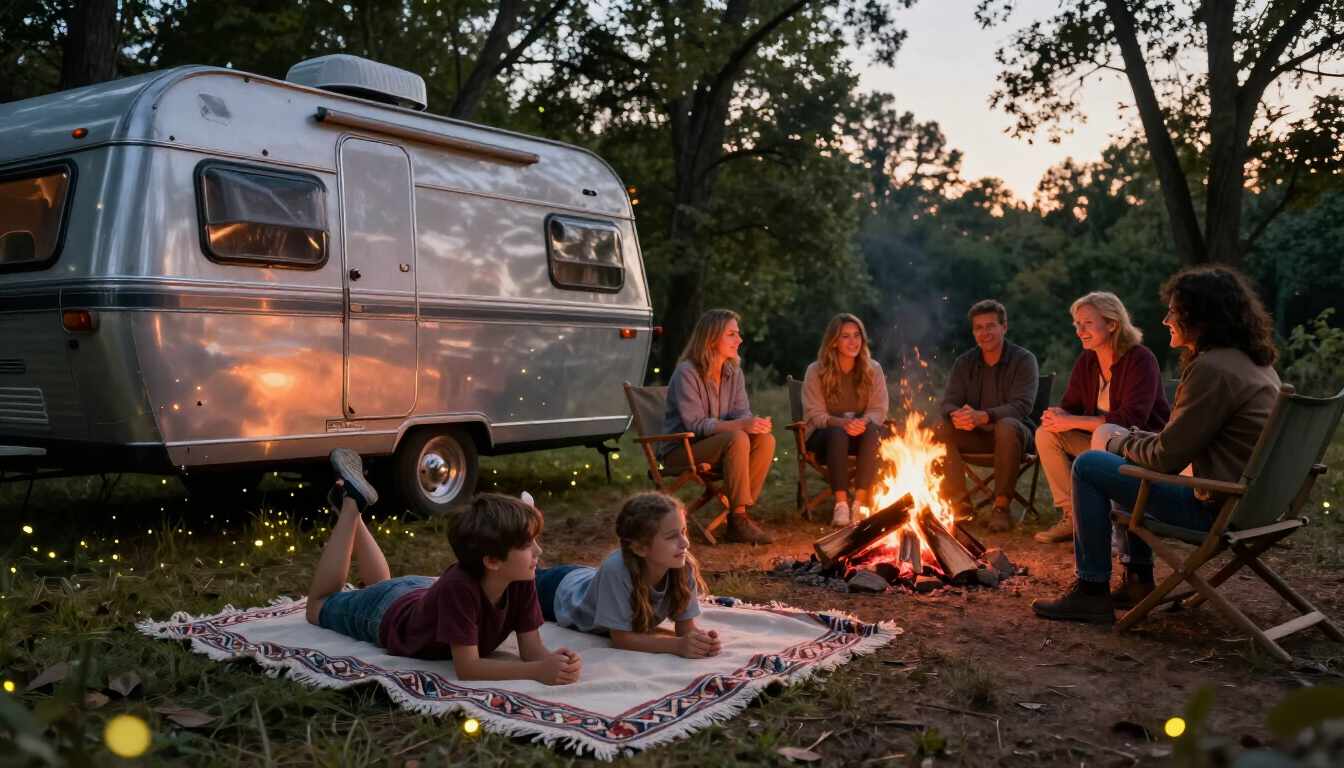
Rallies and in-person events are especially high-value. A five-minute conversation at a campfire does more for trust than a dozen social media posts. If you’re not building in-person appearances into your business strategy, it’s worth reconsidering.

5. Don’t Build in Isolation Longer Than You Have To
The full-timers who struggle most with business growth aren’t usually lacking skills or hustle. They’re lacking the infrastructure that stationary entrepreneurs take for granted: a peer group, a referral network, a community that has a stake in seeing them succeed.
Building that infrastructure deliberately — finding your people, investing in the right communities, showing up consistently — is one of the highest-leverage things you can do for a road-based business.
If you’re a full-time RVer running a business and you haven’t found that community yet, RV Business Hub is worth a look. It’s a membership-based community built specifically for this — peer networking, referrals, and the kind of conversations that actually move a business forward.
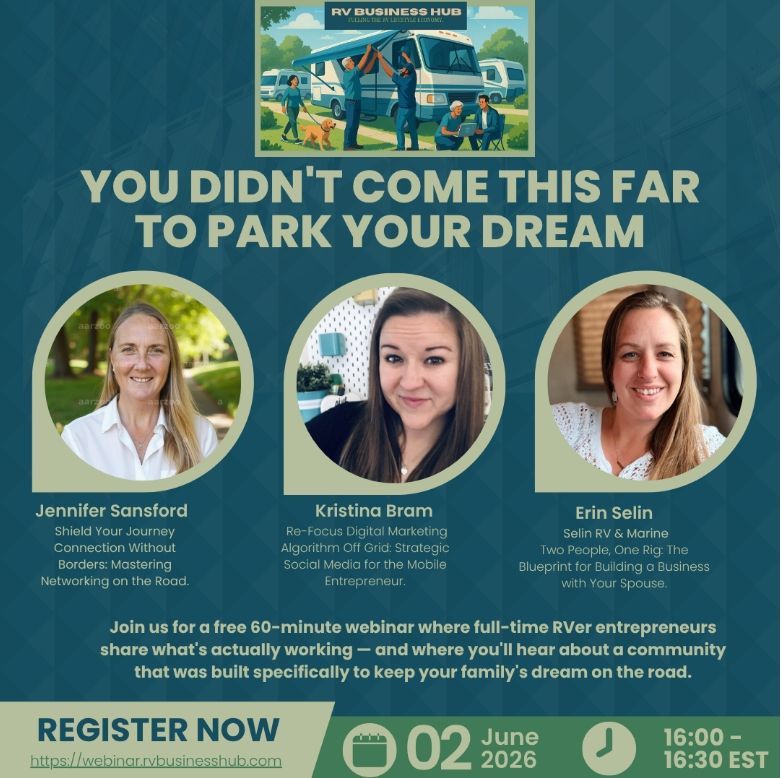
Join The RV Business Hub: Free Webinar
Want to see how this works in practice? Join us for a free upcoming webinar where we walk through how full-time RVers are building real businesses inside the community.
The Investment That Pays You Back
Land one client through the network. Have one conversation that saves you from a
mistake you were about to make. Get one referral from a fellow member because they
vouched for you.
That’s your membership paid back — and then some.
But the real return isn’t transactional. It’s the thing that’s hardest to quantify and
easiest to underestimate: not feeling like you’re building this alone.
Come Find Your People
RV Business Hub is a paid online community — business members are full-time RVers
running real businesses, not spammers looking for a free audience. That’s intentional.
Quality over noise, always.
If you’re ready to stop figuring it out in isolation and start building alongside people who
actually get the life you’re living, we’d love to have you.
A Note from Learn to RV
One of the trickiest parts of living and working on the road is finding your people, especially the ones who actually get the juggle of client calls from a campground and figuring out business strategy from a moving home base.
Jennifer Sansford over at RV Business Hub has built a space specifically for full-time RVers running real businesses. The free community group is open to anyone — browse member profiles, discover RV-based businesses, and jump into the conversation.
If you're ready to go deeper, the $10/month business membership unlocks a private networking group, monthly Zoom calls, one-on-one coffee pairings, and a referral dashboard. Worth a look if that's you.
Other blogs you might like...