
What Summer Heat Does to Your RV Roof

Jennifer Schillaci • June 13, 2026

Summer heat is one of the biggest threats to your RV roof.

Learn exactly what high temperatures do to your roof, the warning signs of damage, and how to protect your investment before a small problem becomes a costly repair

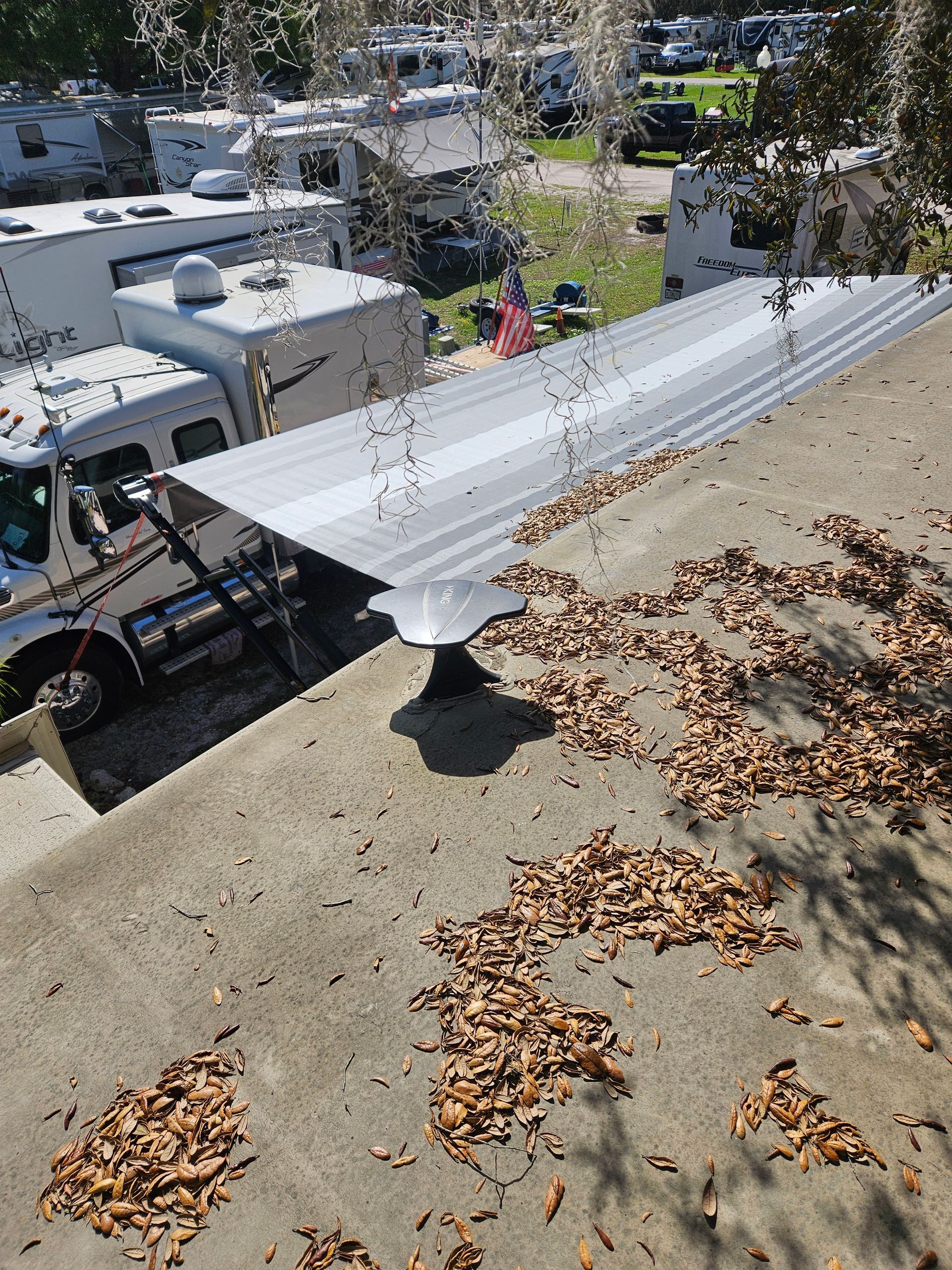
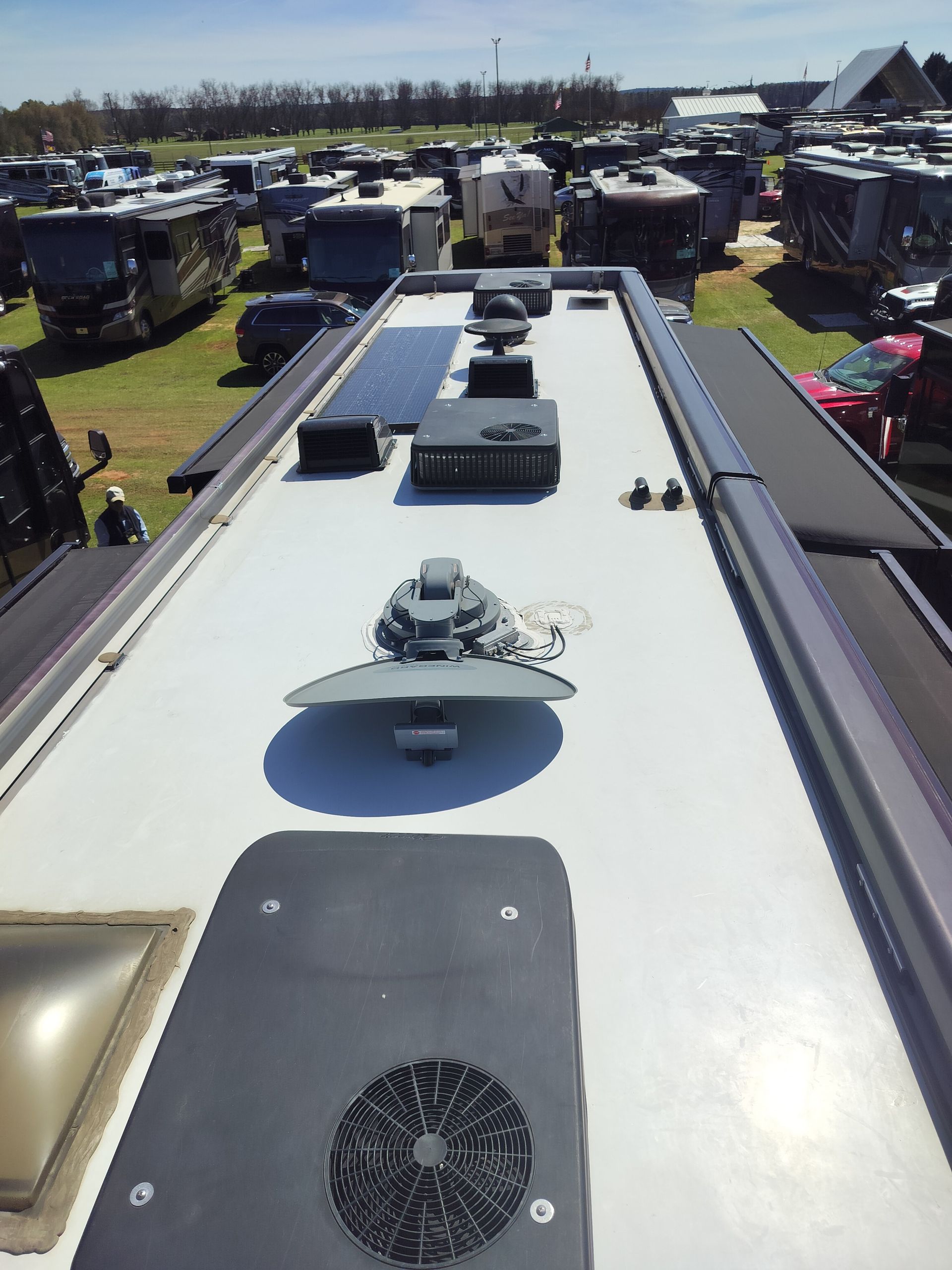
White corrugated roof panel on a rooftop, with trucks, trees, and a yard below in bright sunlight

If you are an RVer & spend any significant time on the road in summer, your RV roof is working harder than you probably realize. While you are enjoying the campfire and the open sky, that roof above your head is being cooked, expanded, contracted, and slowly broken down by one of the most relentless forces in nature — the summer sun.


As the owner of a nationwide RV Roofing company, our technicians are on rooftops across the country every single week.


What we see most consistently? Damage that started small, got missed at inspection, and turned into a very expensive problem by the time the owner noticed it inside the rig.


This guide is designed to help you understand exactly what summer heat does to your roof, what to look for, and how to stay ahead of it.

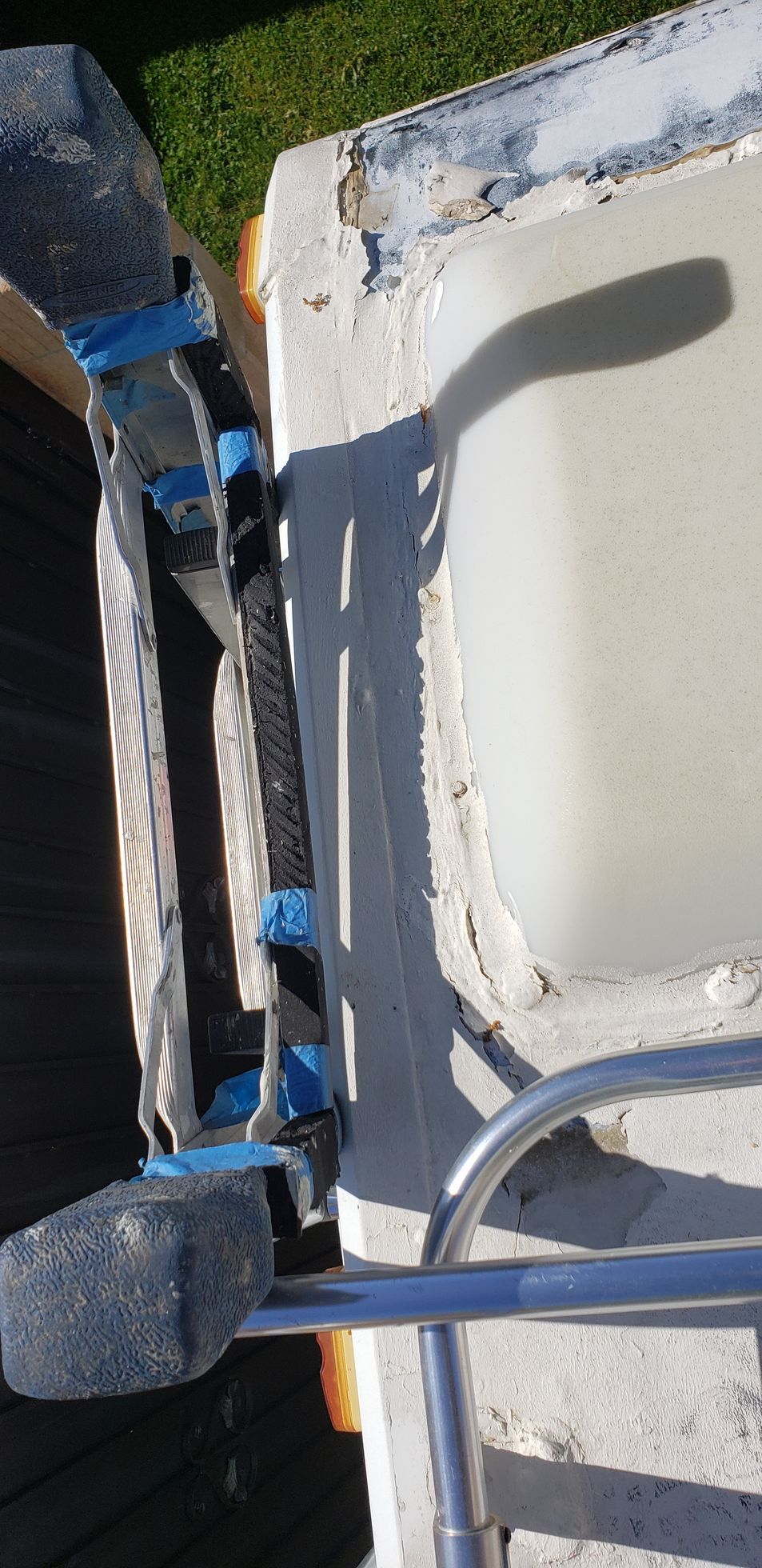
Rooftop view of white RV with solar panels, vents, and equipment at an outdoor RV show

Why Summer Is the Hardest Season for Your RV Roof

Your RV roof is exposed to conditions that most residential roofs never face. Unlike a stationary home, your rig is moving, flexing, vibrating, and sitting in full sun without the benefit of tree coverage or architectural shade. In the summer months, that combination becomes especially punishing.


Heat and UV Radiation

Rooftop surface temperatures on a parked RV in direct summer sun can exceed 150 to 180 degrees Fahrenheit which means that even when the air temperature is only in the 90s. That sustained heat degrades roofing materials at the molecular level over time.


UV radiation breaks down the chemical bonds in EPDM rubber, TPO membranes, and fiberglass coatings, causing them to become brittle, crack, and lose their waterproofing properties.


Thermal Expansion and Contraction

Every time your roof heats up during the day and cools overnight, the materials expand and contract. This is normal — but it is also cumulative.


Over months and years, that constant movement stresses sealants around vents, air conditioners, antennas, and skylights. Those sealants are your roof's first line of defense against water intrusion. When they fail, water finds a way in.


Humidity and Moisture Trapped Under Heat

In humid climates — the Southeast, the Gulf Coast, the Pacific Northwest — summer heat and high humidity create a particularly damaging combination.


Moisture that gets trapped under or inside roofing layers becomes superheated, accelerating delamination and mold growth inside your roof structure. By the time you see a water stain on your ceiling, significant structural damage may already be present.

Blue ladder beside a white boat hull with a black rope or hose on a dockside surface

The Warning Signs of Summer Roof Damage & What to Look For

Early detection is everything with RV roofing.


Here is how to read your roof before a small issue becomes a catastrophic one.


On the Roof Surface (Exterior Inspection)

Get up on that roof. Do it before summer hits hard, and again mid-season.

Here is what you are looking for:

• Cracks, crazing, or chalking on EPDM rubber — a chalky white residue or fine surface cracks indicate UV breakdown


• Bubbling or blistering — trapped moisture or delamination underneath the membrane


• Shrinkage at the edges — rubber that has pulled away from the sidewalls or trim is a serious warning sign


• Soft spots — any area that feels spongy underfoot indicates water has already gotten into the substrate


• Discoloration or staining — dark streaking or green patches can signal algae growth or trapped moisture


• Separated or missing lap sealant — check every seam, vent, skylight, AC unit base, and antenna penetration


• Lifted or peeling seams — seams that are separating are an active water intrusion risk


Around Penetrations and Seams (The High-Risk Zones)

The vast majority of RV roof leaks originate at penetrations — any place where something passes through or is mounted to the roof.


In summer, the thermal expansion of these components puts enormous stress on the sealant around them.


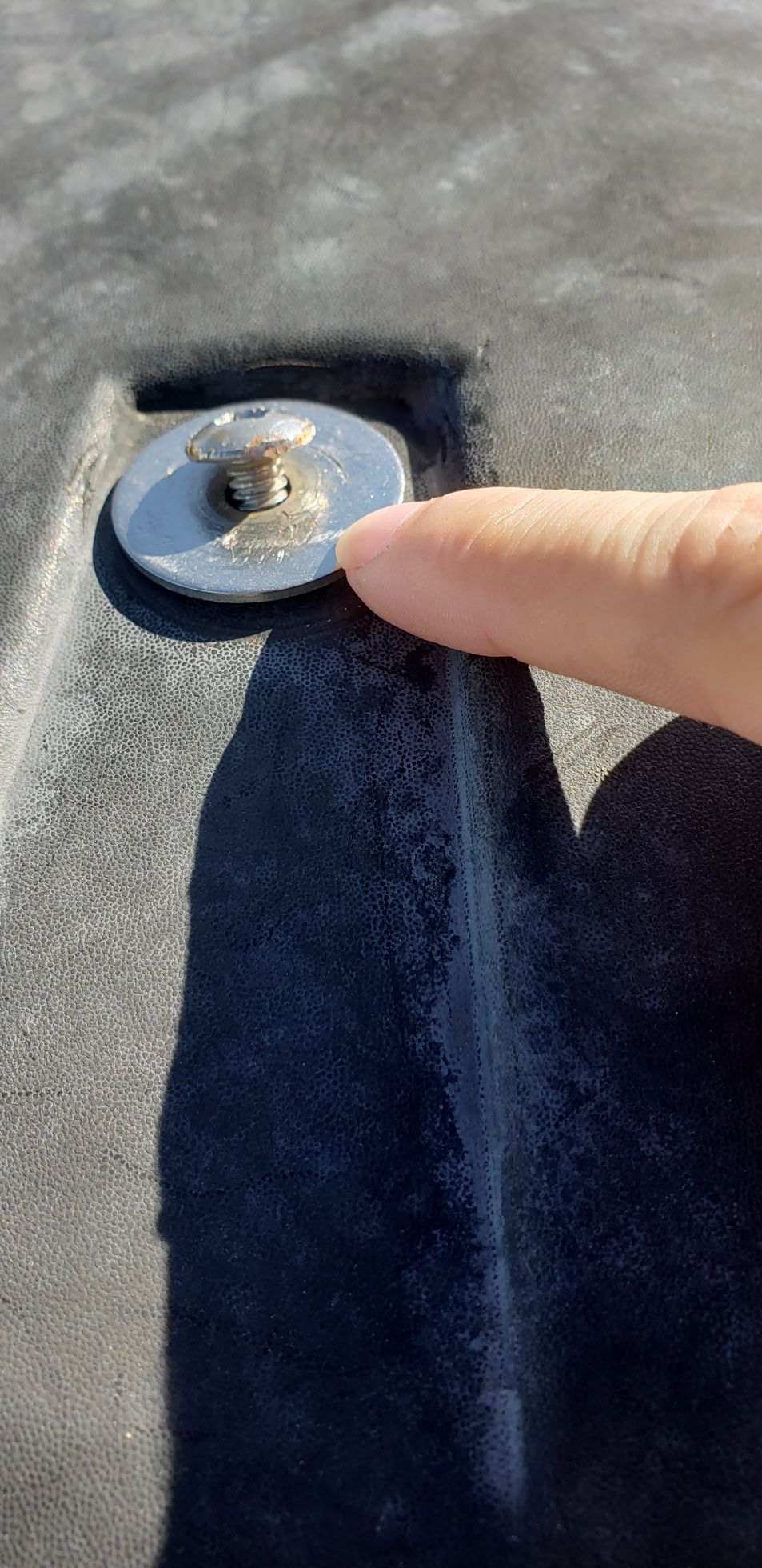
Pro Tip: Run your finger around every penetration on your roof.

If the sealant feels hard, brittle, cracked, or pulls away easily, it needs to be replaced. Fresh sealant should feel slightly flexible, not rock hard.


• Air conditioner base gaskets and mounting points

• Roof vents and fan cutouts

• Skylights and sunroof perimeters

• Antennas, solar panel mounts, and satellite brackets

• Roof-to-sidewall seams along the entire perimeter

• Any repair patches from previous work


Inside the Rig (Interior Warning Signs)

Sometimes the first sign of a roof problem shows up inside.

Do not ignore these:

• Water stains on ceiling panels, especially near vents or the AC unit

• Soft or warped ceiling material

• A musty or mildew smell, particularly after rain

• Delamination on interior walls near the roofline — bubbling or separation of the wall material

• Rust stains around screws or fasteners on the ceiling

• Condensation appearing in unusual places

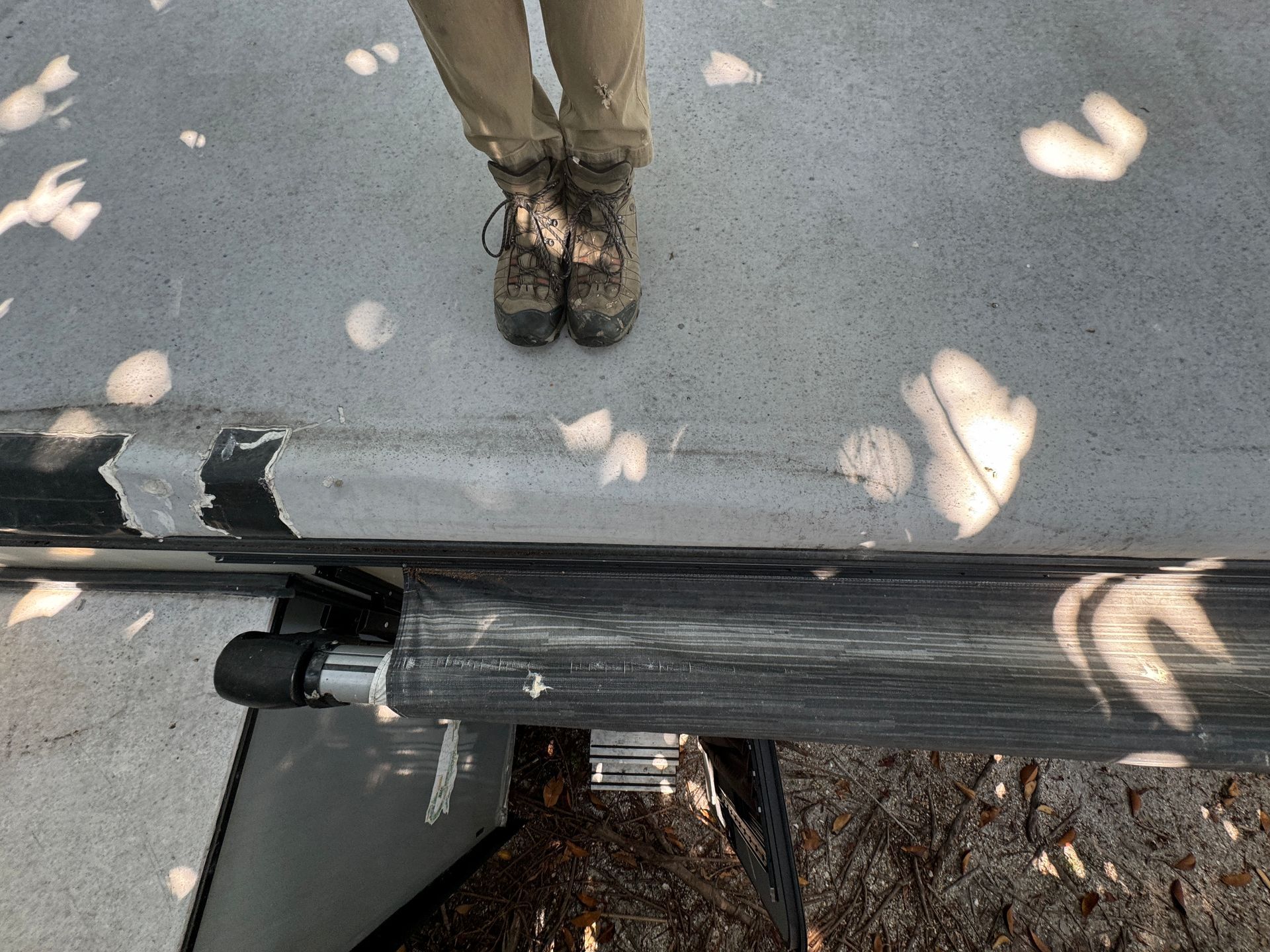
awning cover on an RV roof with a person’s boots on top of RV with scattered light and shadows

Summer RV Roof Inspection Checklist

Use this checklist at the start of summer and again mid-season.

It takes about 20 to 30 minutes and can save you thousands of dollars.


Exterior — Top of Roof

• Inspect the full membrane surface for cracks, crazing, bubbling, or discoloration

• Check all four perimeter seams where roof meets sidewall

• Inspect sealant around every penetration (AC, vents, antennas, skylights, solar mounts)

• Press gently on multiple areas to check for soft spots

• Look for any lifted, separated, or peeling seams

• Check for debris accumulation in low spots that holds moisture

• Note any areas where water pools after rain


Exterior — Sidewalls and Trim

• Inspect the drip rail and roof edge trim for separation

• Check the upper corners of slides where they meet the roof

• Look for streaking or staining on sidewalls below roof level — a sign of water tracking


Interior

• Walk the full length of the ceiling and look for any staining or soft spots

• Check inside overhead cabinets near the roofline

• Smell for musty odors, especially in slide toppers and around the AC unit

• Open roof vents and check the frame seal from inside

• Look at the ceiling around the AC unit — this is the highest-risk interior location


After Any Significant Rain

• Go inside and check for new stains or wet spots

• Check floor areas near the slideouts and slides

• Look for dripping inside any roof vents that were open


Hail of any size can create microfractures and pinholes in your roof membrane that you simply cannot see. No visible dents. No obvious damage.


But months down the road your roof starts to swell, water is getting in, and you have zero documentation connecting it back to that storm — which is a real problem when you are trying to make an insurance claim.


If your rig gets caught in hail this summer, take pictures & document EVERYTHING.


Do not wait for the water stain to show up on your ceiling to find out you had a problem.


We wrote a whole piece on exactly this: Hail Storms and Your RV Roof: Can Your Rig Take a Beating and Still Be OK?


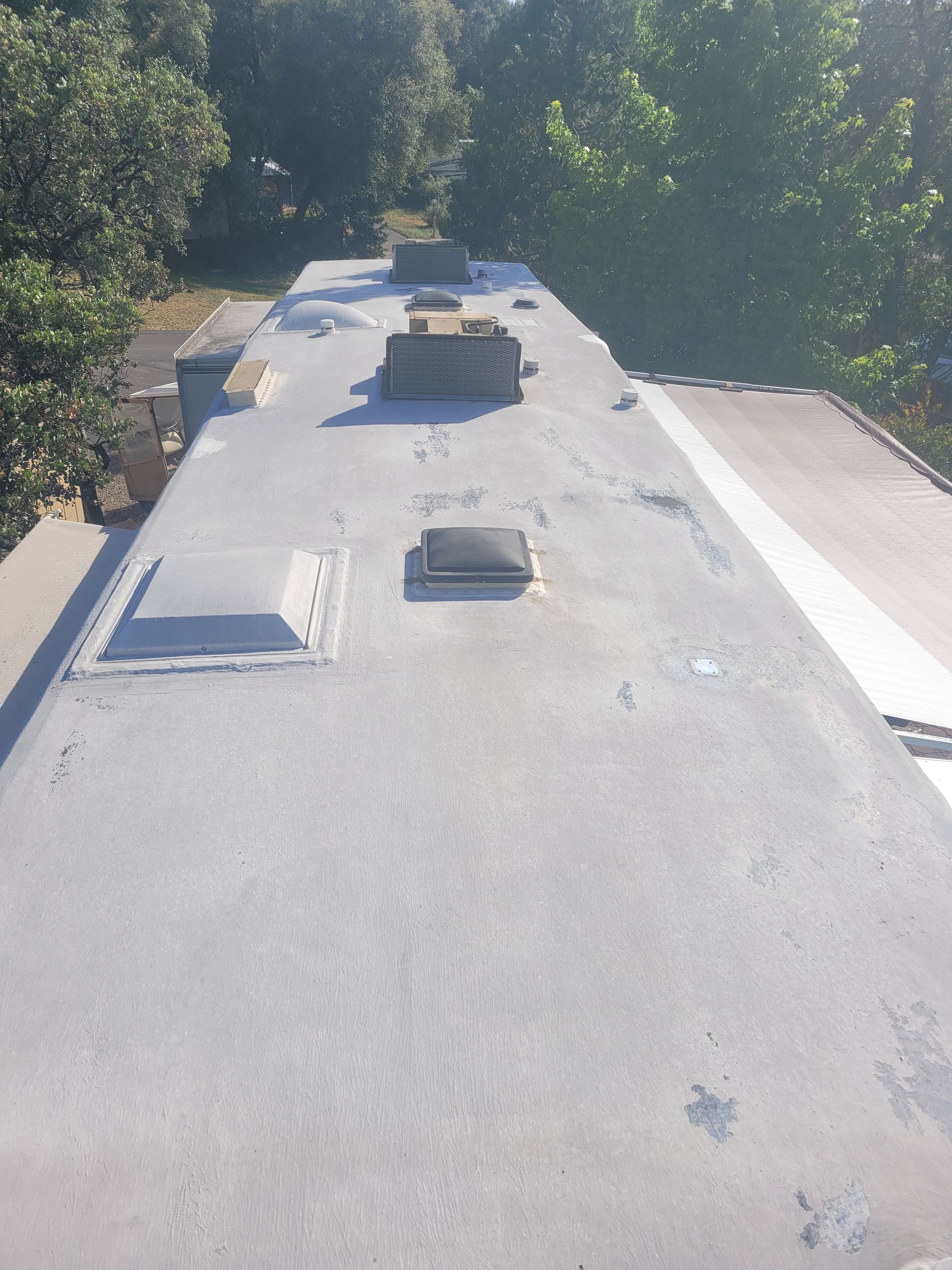
Flat RV rooftop with several vents and HVAC units, bordered by trees in bright sunlight

How to Protect Your RV Roof from Summer Heat


1. Keep It Clean

Debris — leaves, pine needles, dirt — holds moisture against your roof surface and accelerates breakdown. Clean your roof at least twice during the summer season with a roof-safe cleaner appropriate for your roof type (not all cleaners are safe for every roof). Rinse thoroughly.


2. Apply a UV Protectant

EPDM rubber roofs benefit from a UV protectant applied annually.

This is different from a sealer — it conditions the rubber and slows UV degradation. Ask your roofing professional which product is right for your specific roof membrane.


Fiberglass roofs should also get a UV protectant regurlarly.


3. Reseal Proactively — Do Not Wait for a Leak

Sealants around penetrations have a lifespan.


On most rigs, they need attention every one to three years depending on exposure. Proactive resealing is a fraction of the cost of a water damage repair. Use the correct sealant for your roof type. Keep in mind that not all sealants are compatible with all membranes, and using the wrong product can actually accelerate failure.


4. Keep Your RV Roof under Covered Storage

If your rig sits in storage or at a campsite for extended periods in summer sun, covered storage can significantly reduce surface temperatures and UV exposure.


5. Get a Professional Inspection

A trained eye catches things that even experienced RVers miss. If your rig is more than three years old and has not had a professional roof inspection, summer is the time to schedule one — before you are dealing with a water damage repair in the middle of a trip.


Finger pointing at a small metal fastener on a dark fabric surface on rv roof with gap in sealant

When It Is Time to Call a Professional

DIY maintenance and inspection are valuable and we strongly encourage them. But there are situations where you need a professional & sometimes trying to patch your way through them costs more in the long run.


• Any soft spot on the roof — this indicates substrate damage that requires professional assessment


• Visible delamination or bubbling across a large area of the membrane


• A roof that is more than 10 to 15 years old and has not been replaced


• Water intrusion & you cannot locate the source of after a thorough inspection


• Shrinkage or pulling away from the edges across multiple areas


• Any prior patch repair that is now failing


A professional consultation does not automatically mean a full replacement. Often, targeted repairs and a full reseal can extend the life of your roof significantly. Often, you do need an honest assessment from someone who has seen enough roofs to know the difference.


The Bottom Line on Age and Aftermarket Systems

A quality roof system, applied correctly on a sound substrate by someone who knows RV roofs specifically, can genuinely extend the life of your rig and protect your investment. But a cheap coating slapped over a compromised membrane by someone who doesn't know the difference between TPO and EPDM? That's not necessarily a solution. That's a problem you paid for.


Do your homework. Ask the questions. And when in doubt — pick up the phone and call a professional RV roofing company. Not a residential roofer. Not just a handyman with a caulk gun.


Someone who works on RV roofs for a living and can tell you in five minutes whether what you're dealing with.


Your roof is your responsibility. Protecting it starts with making informed decisions — with qualified people, not just whatever product you found online and rolled on yourself.


Other blogs you might like...

Person in a white T-shirt pinching their nose while standing indoors by a beige wall.
By Jennifer Schillaci June 8, 2026
Do you really need a sewer hose to dump your RV tanks? RV black tanks, Grey tanks and Freshwater tanks tips. Get the complete RV tank guide from Learn to RV.
By Jennifer Schillaci June 5, 2026
The best classroom doesn't have four walls — it has four wheels.  This summer, the whole country is your curriculum.
By Dealora Snyder June 4, 2026
If you’re a full-time RVer, you already understand something most people don’t....that life doesn’t always go according to plan. You’ve chosen freedom. Flexibility. The ability to wake up in a new place whenever you want. But with that freedom comes a unique responsibility—especially when it comes to your health insurance. Because when you’re constantly on the move, having the right coverage isn’t just important… it’s critical. And recently, I was reminded exactly why.
Hand holding a scrambled Rubik’s cube against a plain brown background
By Amanda Pelser June 3, 2026
Full-time RVing families can road-school around a passion — how to find WCA speedcubing competitions and make your child's Rubik's Cube hobby a reason to travel.
Hands arranging letter cards on a yellow table during a group learning activity
By Jennifer Schillaci June 1, 2026
Your child is just wired differently. Learn the signs of dyslexia, what actually works, and how roadschooling families can take action today. with Russel VanBrocklen
RV Business Hub sign with people setting up a campsite beside two RVs in a sunny park.
By Jennifer Sansford May 30, 2026
Where Can RV Entrepreneurs Find Business Resources and Support? The RV Business Hub connects RV entrepreneurs with tools, tips, and resources to build and grow.
Hand refueling a vehicle with a green fuel nozzle at a gas station
By Jennifer Schillaci May 27, 2026
Fuel prices got you second-guessing your summer? Open Roads is too good to be true — except it's not. Free to join, diesel savings, VIP perks, tolls and more.
Black pickup truck driving through smoke, front view on a road
By Jennifer Schillaci May 26, 2026
Most RVers don't know what their policy won't cover until it's too late. Learn the most common coverage gaps & the questions to ask before you need to file a claim.
Person standing on the roof of a vehicle in a desert at sunset, looking into the distance.
By Jennifer Schillaci May 23, 2026
Your RV roof coverage has limits—and age makes it worse. Learn what insurance won't pay for, what aftermarket systems really cost, and the questions to ask before it's too late.
By Jennifer Sansford - Shield Your Journey May 23, 2026
My husband is the techie in our relationship. In my world, that means he's the one who thinks about things I don't and occasionally explains them to me in ways that stick. We were talking once about the risks of public WiFi. I wasn't thinking much of it—honestly, we have our own internet, we don't rely on campground networks, I figured we were pretty well covered.  And then he showed me something.
Show More