
Is My Child Dyslexic?
Jennifer Schillaci • June 1, 2026
How to Navigate Dyslexia While Roadschooling in an RV
If your child is smart, curious, and verbally strong but struggles with reading, writing, or spelling — dyslexia may be the reason. It is not a vision problem, a discipline problem, or a reflection of your homeschooling. And it is never too late to help. Here is what to look for, what actually works, and why there is real hope at every age.
My husband Frank has dyslexia. He also has a college degree and twenty years of Marine Corps service. Those two facts are not in spite of each other.
Several of my own kids have struggled with dyslexia too. And as a roadschooling mom who has been full-timing since 2013, I can tell you that navigating learning differences on the road comes with its own particular set of challenges. There’s no resource room. No school nurse handing you a referral slip. It is you, your rig, and your kid & sometimes a knot in your stomach that you can’t quite name.
This blog is for you. The one who knows something is going on, but doesn’t know quite where to start.
I also want to point you to today’s episode of Learn to RV The Podcast “Is My Child Dyslexic? What Every Roadschooling and Homeschooling Family Needs to Know” — featuring Russell Van Brocklen, a New York State Senate-funded dyslexia researcher and founder of DyslexiaClasses.com.
Today on this blog, everything below pairs with that conversation.

Dyslexia: What It's Not
Let's start here, because I think this is something that needs to be said out loud before anything else.
Your child is not stupid. Not slow. Not lazy. Not behind because you chose to roadschool. Not struggling because you picked the wrong curriculum — though if you're anything like me, you've burned through enough of them to wonder.
Your child's brain is wired differently. That is not a consolation prize. That is just the truth.
Dyslexia is not a vision problem. It is not a character flaw. It is not the result of too much screen time or not enough phonics worksheets.
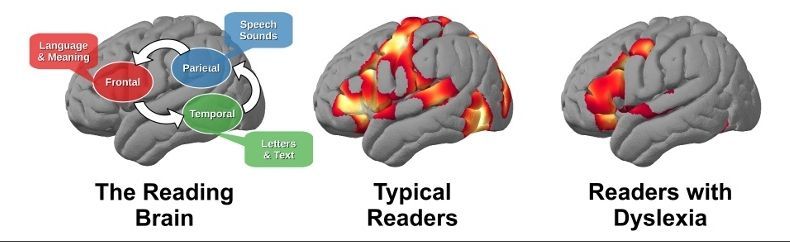
It is an actual neurological difference in the way the brain processes written language — specifically the connection between letters, sounds, and words.
Often things get lost in the clinical definitions: dyslexic brains are frequently remarkable.
Strong in spatial reasoning, big-picture thinking, creative problem-solving, verbal communication.
The child who cannot get through a paragraph without shutting down emotionally might also be the one who figured out the electrical system in your rig at age eleven. The one who remembers every trail they've ever hiked but cannot spell the word "trail."
The goal was never to fix them. The goal is to give them tools that work with how their brain is already built.

An Honest Confession
I am not dyslexic. Not even close. I read about three times faster than average & I always have.
For a long time, that actually made it so much harder for me to understand what my kids and Frank were experiencing. I could not feel what they felt. I would hand a child a page and think, just read it, not because I was unkind, but because I genuinely could not imagine what was standing between them and those words.
Three of our kids have been dyslexic. And it started with my oldest daughter.
The tears she shed over reading a single page were very, very real.
By the time we realized what was happening, she was in third grade.
We had been homeschooling, and in three years we had worked through six different curriculums. Six. I was second-guessing myself as a homeschool mom on a regular basis.
She was so clearly smart — curious, engaged, great attention span.
She loved to listen to stories and would sit absorbed in them for hours. But she hated to read. Our librarian suggested books on tape, and she consumed them like they were candy. (She's 31 now, so we are not talking about the Libby app. We are talking actual cassette tapes.)
Then one day — she was fifteen or sixteen — I walked into her room and found a book on her bed. I opened it. On the pages, drawn in the margins and between the letters on the page, were the most intricate pictures. She looked at me shyly and said she couldn't read the words because she saw pictures like that inside them all the time.
I stood there with that book in my hands and I finally understood.
That was my aha moment. Not a test result. Not a curriculum review.
A drawing inside a book and a teenager who had spent years trying to navigate a world built for a kind of brain she didn't have — quietly, without complaint, finding her own way through.
That is what dyslexia looks like in real life. And that is why this conversation with Russell Van Brocklen matters so much to me.

How Do You Know If Your Child Is Dyslexic?
This is the question. Especially for roadschooling and homeschooling families, where there is no system to flag it for you.
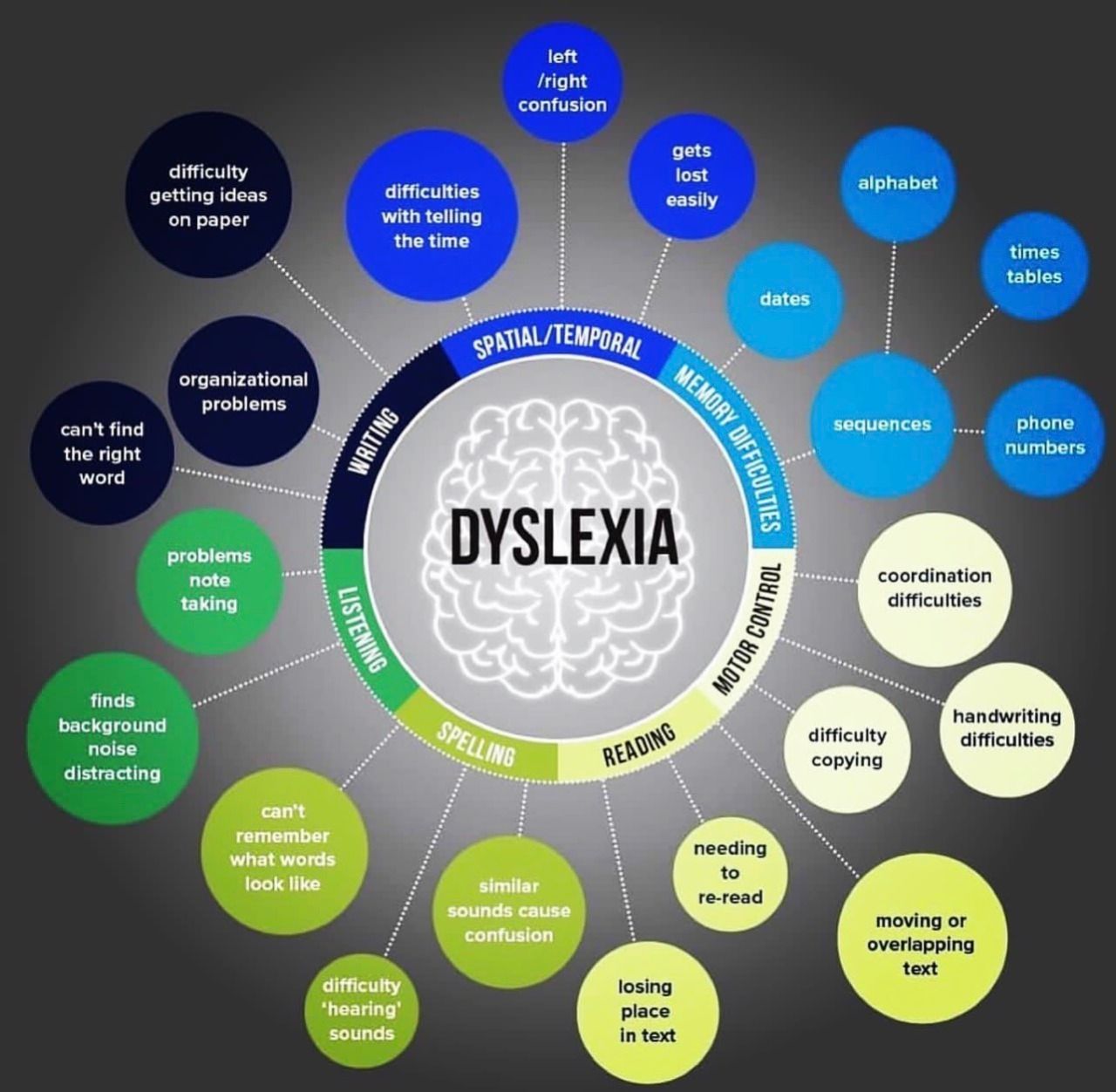
Signs that may point to dyslexia:
- Letter or number reversals that persist past age 7–8 (b/d, p/q, was/saw)
- Reading the same word correctly in one sentence, incorrectly in the next
- Knowing the answer verbally but being unable to write it down
- Avoiding reading aloud — or refusing altogether
- Slow, labored handwriting that doesn’t match how they speak
- Strong verbal intelligence paired with weak written expression
- Difficulty rhyming or breaking words into individual sounds
- Spelling that doesn’t improve even with repetition
- Brilliant at hands-on tasks, but shuts down when given text-heavy work
Keep in mind.... No single sign is a diagnosis.
But a cluster of these — especially the combination of high verbal ability and low written output — is worth taking seriously.
One of the most important things Russell shared in our conversation on the podcast: you do not have to wait for a formal diagnosis to start helping your child.
Observation is the first step. Begin documenting what you’re seeing — specific examples, specific patterns & start there.

What’s Different About Roadschooling with a Dyslexic Child?
Here’s what I’ve discovered: roadschooling is actually a genuinely good environment for dyslexic learners but you have to lean into it intentionally.
Russell made this point beautifully in our episode.
He’s an Eagle Scout, and he talked about how outdoor settings reveal what people care about most. Real interest, he said, is the doorway to confidence and growth.
And traveling forces you to start with what is concrete, hands-on, and real before you can navigate the broader territory & that is exactly how dyslexic brains learn best.
We have been roadschooling the right way all along. We just didn’t always have the language for it.
What does that look like practically?
- A national park becomes a reading comprehension lesson without the pressure of a worksheet
- A campfire conversation about how an engine works builds vocabulary in context
- A roadside historical marker becomes a research project born from genuine curiosity
- A broken water hookup becomes a problem-solving lesson that a dyslexic brain often excels at.
The challenge comes when we try to replicate a traditional classroom inside the rig, textbooks, worksheets, timed reading tests, because that is exactly the environment dyslexic brains struggle most in.
If you’ve been wondering why your child thrives everywhere except “school time,” this might be your answer.
What Actually Helps? (What the Research Says)
Russell's program is built on a principle he calls Word Analysis First.
The idea is that most literacy interventions skip the foundational bottleneck and pile on strategies that never address the root issue.
Word analysis — understanding how words are actually built, how syllables work, how roots and prefixes create meaning — is what most dyslexic students have never been explicitly taught.
His results speak for themselves: students moved seven to eight grade levels in writing in a single school year, for less than $900 per student — and every one of them went on to graduate college.
What you can do at home, starting now:
- Focus on phonological awareness — the ability to hear and manipulate sounds in words — before worrying about spelling rules
- Use multisensory methods: say it, trace it, build it with letter tiles, write it in sand
- Read aloud together — audiobooks count and are not "cheating"
- Remove time pressure wherever possible; speed is not the goal, accuracy is
- Lean into your child's genuine interests as the entry point for reading and writing practice
- Visit DyslexiaClasses.com for Russell's resources and program information
If your child is in high school and you feel like the window has closed — it hasn't. Russell's program was specifically designed for juniors and seniors who had fallen through the cracks. The brain retains plasticity far longer than most people assume.
And I'll tell you this: since recording this episode, we have joined Dyslexia Classes with Russell and his team. We are in it right now. The results will take time. But they will happen. I believe that with everything in me — and I don't say that lightly.
A Word to the Parent with the Knot in Their Stomach
If you have read this far, you probably have a child on your mind.
Maybe you’ve been watching them struggle for a while.
Maybe you’ve wondered if you’re the problem — if your curriculum is wrong, if you should put them in a traditional school, if you are failing them by being on the road.
You are not failing your child.
The knot in your stomach is not a verdict. It’s just information. And now you have more of it.
The fact that you’re asking these questions, that you’re paying close enough attention to notice, is exactly the kind of parent your child needs.
Every kind of brain has room on this road. You just might need to adjust your route.
Start with the episode. Listen to Russell.
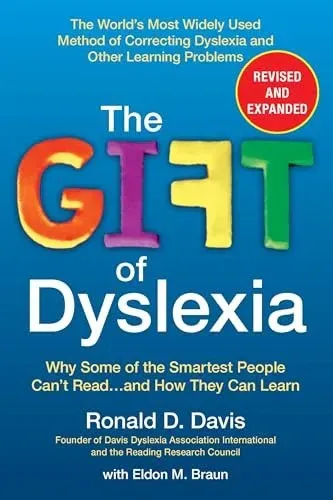
Let it shift something in you the way The Gift of Dyslexia shifted something in me. And then just take the first step.
A Word to the Parent Whose Child is Still Struggling at 14, 15, 16...
I'm going to tell you something I'm not proud of.
Years ago I was at a homeschool group and someone mentioned that their fifteen-year-old was still reading comic books. And I remember the thought that crossed my mind. How does that happen?
I didn't understand yet.
Now I do. And if you are the parent of that kid — the fourteen-year-old who isn't reading at grade level, the sixteen-year-old who still reaches for the graphic novel, the teenager who has been quietly working harder than anyone around them realizes just to get through a single page — I want to say something directly to you.
Who cares what they're reading. As long as they are still trying to read.
Comic books are reading. Graphic novels are reading. Captions on YouTube videos are reading. The menu at the diner and the trail marker at the state park and the text from their friend — all of it is reading.
A child who is still reaching for words at fifteen, after years of struggle, after years of feeling like everyone else got something they didn't — that child has more grit than most adults I know.
The window is not closed. Russell's program was built specifically for older students who fell through the cracks of a system that wasn't designed for their brain.
The brain retains plasticity far longer than anyone told you. It is not too late. It was never too late.
And if you needed someone to tell you that today — here it is.
It is not too late.
I have to be honest with you. Even recording this episode, hearing Russell explain how a dyslexic brain actually works — I had "aha" moments.
Me. The fast reader. The one who thought she understood.
Russell is brilliant. And Russell is dyslexic.
What sets him apart isn't just the research or the results, it's that he genuinely understands the dyslexic mind. Not just from the outside looking in. From a place of deep, hard-won knowing.
This is not an episode to have on in the background while you're driving. This is one you sit down for. Pull over if you have to. Watch it on YouTube, don't just listen — because the way Russell explains this, you'll want to see his face when he talks about the kids he has helped.
🎧 Listen to the Episode
“Is My Child Dyslexic? What Every Roadschooling and Homeschooling Family Needs to Know” featuring Russell Van Brocklen is available now on Learn to RV The Podcast — on Apple, Spotify, Amazon Music, Pandora, iHeart, YouTube, and wherever you listen.
Other blogs you might like...