
Weather and RV Life — What Nobody Tells You Before You Hit the Road
Jennifer Schillaci • April 13, 2026
Learn It Before You Need It · RV Safety · Seasonal Travel

Once upon a time, a summer thunderstorm was my love language.
The kind that rolls in slow, rattles the windows just enough, and sends you straight to sleep on the couch with a blanket. I was a fan. A genuine, unashamed, rain-on-the-roof enthusiast.
And then I moved into an RV.
Here is the thing nobody puts in the brochure: weather is louder in an RV.
Not just a little louder. Significantly louder.
Rain that would have been a gentle white noise machine in a house sounds like someone is rhythmically dumping gravel on your roof from a height. A thunderstorm that would have let you sleep straight through now has you sitting upright at 2 a.m. wondering if that last one hit something.
Wind that you would not have noticed indoors is now making the whole rig sway just enough to remind you that you are, in fact, living in a vehicle.
It is not bad. It is just different. And like most things in this lifestyle, the more you know before you need it, the better your experience is going to be.

Does the Type of RV Actually Matter When It Comes to Weather?
This is a fair question and we get it a lot. Some rigs do have thicker walls — higher-end Class A motorhomes, aluminum-sided fifth wheels, and well-insulated four-season builds are all going to handle extreme weather differently than a lightweight travel trailer or a pop-up.
There is no one best RV for weather. There are better-insulated rigs, four-season packages, and more aerodynamic profiles & all of those things matter at different moments, but, in reality, weather is going to find every rig eventually.
The goal is not to find the perfect weather-proof RV. The goal is to become the kind of traveler who knows how to read what is coming and make smart decisions before it arrives.
That starts with what you do on travel days.

The Don'ts for Driving in Inclement Weather
Don't drive into high winds. Wait it out.
This is the one we want to start with because it is the something a lot of people don't actually take seriously. Wind does not feel that threatening when you are standing outside watching the trees sway.
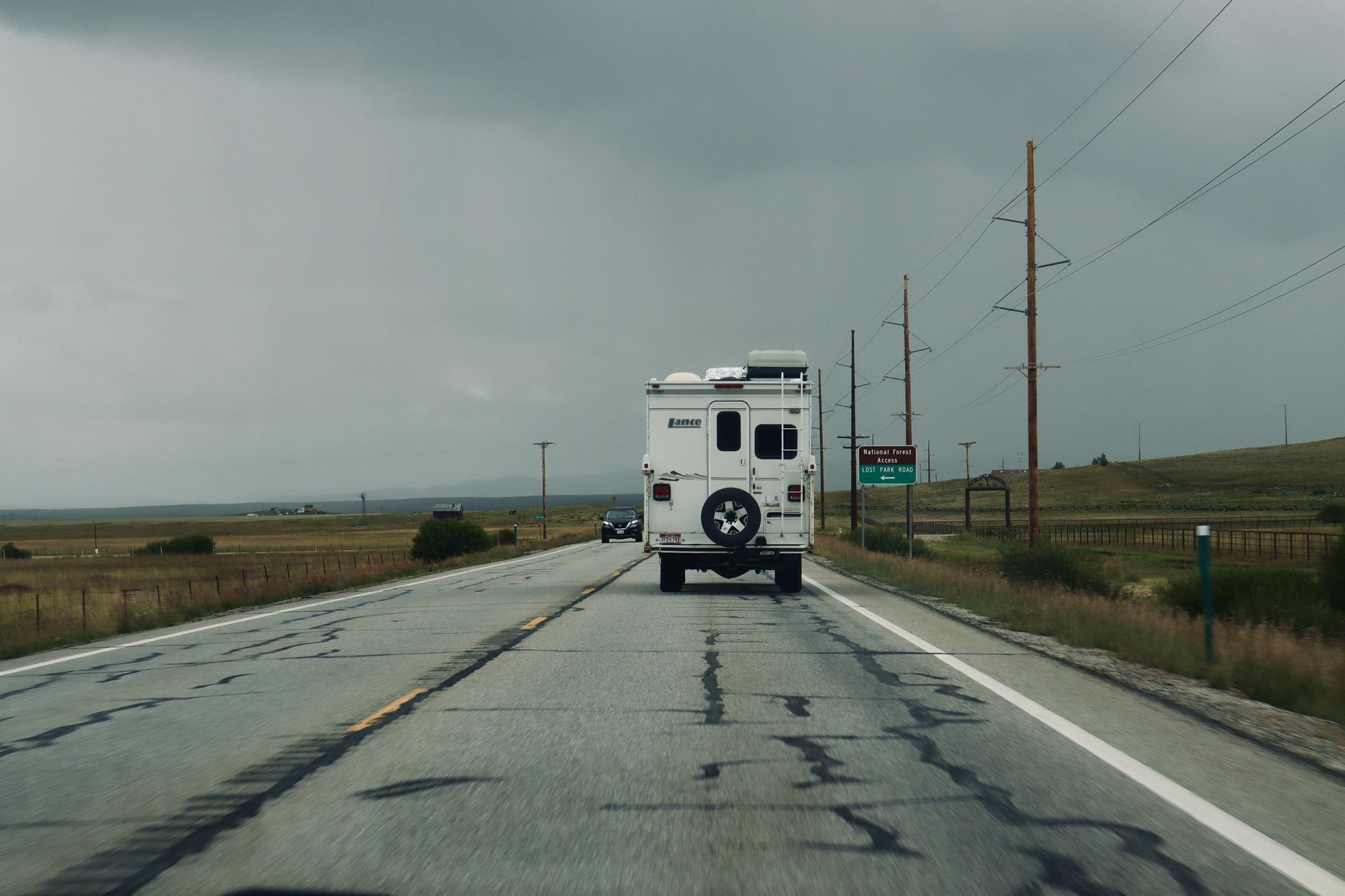
Wind feels very different when you are behind the wheel of a 40-foot fifth wheel at highway speed and a gust catches you broadside.
High-profile vehicles & that includes EVERY towable and most motorhomes — are significantly more vulnerable to crosswinds than a passenger car.
If the forecast shows sustained high winds or gusts along your route, the right call is almost always to stay put for a day or two. That is not failure. That is exactly what experienced RVers do. The campsite will still be there. The destination is not going anywhere. The risk of pushing through is not worth the stress, the tire wear, or the very real possibility of losing control.
Don't assume rain means the road is at its most dangerous once it's been raining a while.
Did you know that the most dangerous time to drive in the rain is right at the beginning of a rain event, not the middle of it. Over time, road surfaces accumulate oil drips, rubber particles, and debris from traffic.
When the first rain hits, all of that lifts to the surface and creates a slick film before the rain has had a chance to wash it away. That first 15 to 30 minutes of a rainstorm on dry pavement is statistically one of the highest-risk windows for loss of traction. If you can pull off and wait it out for a bit, do that.
Don't rush your departure to beat the weather.
We have all done it — set an alarm for early, rushed through the breaking-down process, and pointed the rig down the highway trying to get ahead of what is building to the west. Sometimes that works. Sometimes you drive straight into it anyway.
A better approach is to check the forecast the night before, plan your departure time around what the weather is actually doing, and build enough flexibility into your schedule that waiting an hour or two does not throw off your whole trip.
Don't forget that mountain weather is its own category entirely.
If you are heading into the Rockies, the Cascades, the Sierra Nevada, Yellowstone, or any other elevated terrain — your flatland weather instincts are not enough.
Mountain weather changes fast, dramatically, and in ways that do not always match what the forecast said three hours ago. And yes... places like Yellowstone can see snow in every single month of the year. Every month. If you are a summer traveler who packed light and assumed the mountains would behave like July everywhere else, the mountains have some news for you.

The Quirky Weather Realities of RV Life Nobody Warns You About
Hail sounds apocalyptic. It is not, usually, but it can certainly sound like it is. If you have never heard hail on an aluminum roof, you are in for an experience.
Humidity at a campground is a different creature. Especially in the Southeast in summer. The kind of humidity that makes you question your life choices by 8 a.m. Ventilation, awnings, and knowing which direction to park for shade are all worth thinking about.
Desert heat is not just hot — it is hard on everything. Seals, tires, your fresh water lines, your fridge working overtime. The Southwest is spectacular and the heat is real. Plan your driving for mornings when you can.
Fog in coastal areas can go from zero to zero-visibility fast. The Pacific Northwest and Northern California coastlines especially. Know when to pull over and know that the campground is not going anywhere.
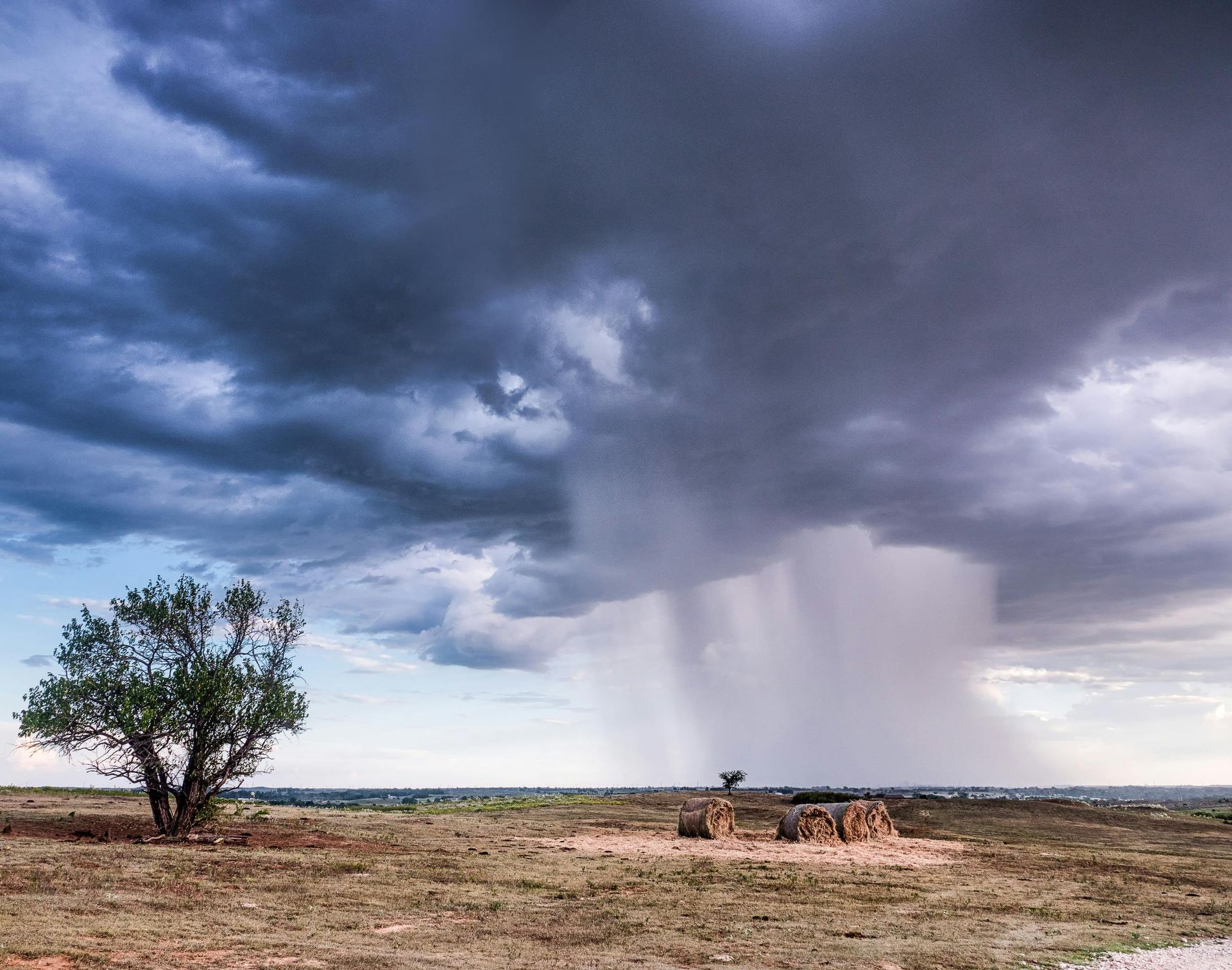
Tornado alley is exactly what it sounds like. If you are traveling through Oklahoma, Kansas, Nebraska, or the Texas panhandle in spring and early summer — know what the sky is doing, know where the nearest shelter is at any campground you stop at, and have a plan.
The Weather Tools We Actually Use
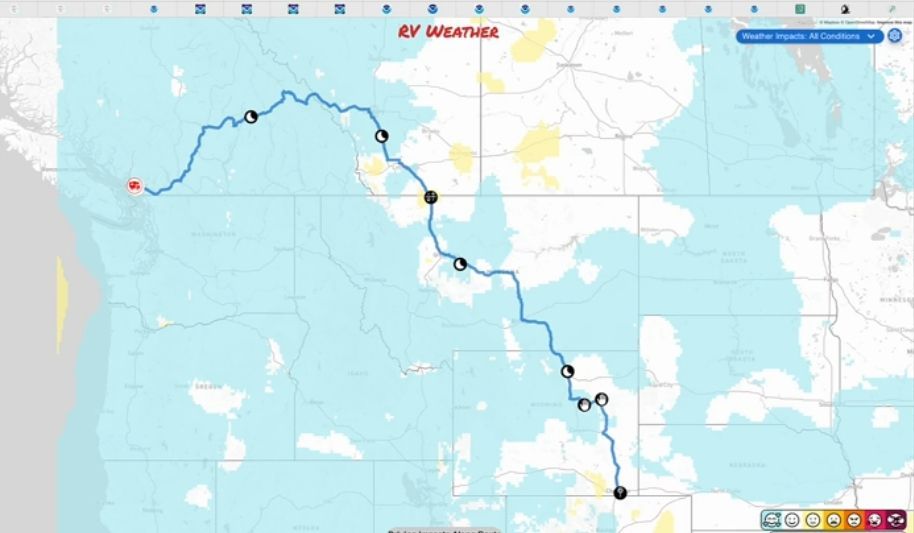
RVweather.com — and we cannot say enough about this one.
This is our newest find and we are genuinely excited about it. The mind behind RVweather.com is Dave Titley — a retired US Navy meteorologist with nearly 50 years of weather forecasting experience and 40,000 miles of experience living in and towing an Airstream. That combination matters.
RV Weather is not a generic weather service that slapped an RV label on it. This was built by someone who actually understands what a high-profile towed vehicle does in a crosswind.
RV Weather uses the US National Weather Service National Blend of Models — a blend of up to 171 national and international weather models — to build its forecasts. Rather than picking one model and hoping it is right, this approach blends multiple models for better accuracy, similar to index investing versus stock picking.
The feature we keep coming back to is SureRoute. SureRoute is a planning tool that finds a route avoiding unsafe driving conditions. It takes into consideration your trip preferences — driving speed, destination, and preferred weather impact level — and suggests a route including overnight stops and possible weather delays.
For anyone who has ever spent an hour on weather apps trying to figure out whether to take I-40 or jog north to I-70, this is a game changer.
A daily national forecast highlights the significant impacts RVers can expect over the next 48 hours, laid out by time zone and impacted roadways. You can also sign up to have it emailed to you every morning — which means before you pour your first cup of coffee, you already know what the weather is doing along your planned route for the day.
There is text and email support from real meteorologists which is not something you get from a weather app. RVweather.com comes with a 30-day money-back guarantee, so it is genuinely low-risk to try.
Head to RVWeather.com and explore what they have. We think you are going to add it to your travel routine fast.

Other apps worth having in your rotation:
- Windy — for visualizing wind patterns, especially when you are deciding whether to move a travel day. The visual wind map is something most RVers find immediately useful.
- Weather Underground — hyperlocal and often more accurate for specific campground locations than broader national apps.
- RadarScope — for serious weather watchers who want to see what is actually happening on the radar rather than an interpreted graphic.
- The National Weather Service app — free, reliable, and the source data that most other weather apps are pulling from anyway.
- And don't forget a NOAA weather radio. Not an app.
An actual radio with a battery backup.
The issue with weather forecast apps on your phone is not the forecast quality but what happens with your phone when you are on the road.
Apps running in the background only update periodically, and virtually every app wants access to your location data. A NOAA weather radio does not have those limitations. It updates constantly, broadcasts to your actual location, and works when your cell signal does not.
What RV owners need to know about weather is happening this week with Jennifer & Tasha on the Learn to RV The Podcast
This blog is the companion piece to our weather episode on Learn to RV The Podcast, where we go deeper on all of this, including our personal stories of weather moments that made us rethink how we travel, the specific apps in our rotation, and everything you need to know to make smarter decisions when the forecast gets interesting.
Which one of us do you think got caught in a snowstorm in May?
Had a run in with a Haboob?
Had to find a storm shelter more than once?
And next time that summer thunderstorm rolls in while you are parked at a campsite — maybe crack the window a little, make a cup of something warm, and appreciate that the rain sounds louder now.
You are living in it, after all.
Have a wild weather story from the road? Email us at connect@learntorv.com — if it gets read on the podcast, we will send you a sticker.
This post contains general travel safety information. Always use your own judgment when making driving decisions in inclement weather. If conditions are unsafe, wait it out.
Other blogs you might like...