
Health Insurance For Travelers

Dealora Snyder • May 4, 2025

There are so many people traveling the U.S.A now. I’m one of them! Being from a whole community of travelers, or nomads, if you will – I understand the importance of being able to use health coverage no matter what state you’re in. I have helped so many full-time RVers, travel nurses and other transients navigate their way through coverage that does just that!

Traveling Options

  • Explore group coverage that you already have to see if it works across state lines
  • ACA, or Marketplace Insurance
  • Private Plans
  • Short-Term Plans
  • Medi-Share

Group Coverage

You may already have coverage through your employer that you’re able to keep while traveling. If this is the case, then you should review your plan documents to see how it will cover across state lines. In my experience, most group plans do not cover well, or at all, but there are some instances that they do, so it’s worth taking a look at. 


If your group plan does cover you while you travel, I also recommend getting an accident policy in place that will help “buffer” you from the higher expenses you’ll see from being out-of-network. There is a really great option from a private plan that pairs really nice with group coverage. It offers accident coverage, hospital confinement benefits and my favorite, a tele-doc service. There are tons of other benefits that come with it too.

ACA or Marketplace

Marketplace insurance, or you may know it better as ObamaCare, is a common place for people to look when they transition out of group plans, or into a traveling lifestyle. 

Two of the biggest benefits of a marketplace plan are that they will give coverage to everyone, regardless of pre-existing conditions, and they are income based so a lot of people have low cost or even free health coverage. Let’s talk about these two things for a moment. 


First, finding coverage with a pre-existing condition can feel overwhelming. The marketplace is really the only choice you have to be covered outside of a group plan. It will be important for you to look closely at the networks the plans use to be sure you can use it out of state. Most often, the marketplace does not offer a plan that can be used outside of the state. Or, they do cover, but you will be out-of-network so your expenses will exceed what you may be willing to pay. 


Pairing a marketplace plan to the accident coverage I mentioned above, is recommended, and you can even get it when you have pre-existing conditions. This will off-set those big expenses you may see when traveling across state lines. 


Second, knowing that you can obtain health coverage for little to no cost is really enticing! If your income level is low enough, then you will receive a subsidy to help you pay for the monthly premium for health coverage. Again, looking at the plan documents before you choose is crucial. You’ll need to note if you are able to use the plan across state lines and what your deductible and out-of-pocket max will be. Putting a family on a marketplace plan will offer you a deductible of about $17,000. And typically, if you’re out-of-network, then there is no out-of-pocket max. This means that there is no cap as to what you will pay for care outside of your state. This makes ObamaCare risky. 


A key point to remember about marketplace plans is that enrollment only happens during a certain time each year. Usually enrollment is November 15 – January 15. If you are getting coverage outside of that time, ObamaCare will not be an option unless you fall into a special enrollment category. 


In order to qualify for a special enrollment period, you have to have had a life changing event – loss of coverage (not due to just choosing not to take work coverage offered), marriage, divorce, adoption, etc. If you do not qualify for those, then you’ll need to find coverage elsewhere. To find out if you may qualify for a special enrollment period, or a subsidy and other information, visit healthcare.gov

Private Plans

Most travelers choose a private plan. There is only one private plan out there that offers long-term, guarantee-renewable coverage. This is a sought after plan, because it means that you will never be kicked off the plan, no matter your diagnosis. It also offers a PPO network so you can use it across state lines. The best part is they don’t charge you more no matter what state you’re in to use it! 


Having this PPO plan allows you to travel with no worries if something major were to happen. Likewise, you’ll be able to visit doctors and urgent care also, for the more minor scenarios. Most states even allow the plan to offer a tele-doc service which is free and you can use it in any state. That’s money-saving and time-saving! 


Obtaining this plan does require you to have a health insurance advisor. You’ll have someone walk you through each of your options and help you with medical underwriting. I’d be happy to help assist you with this here

Short Term Plans

Short-term plans are exactly that. Short-term. People are often enticed by short-term plans because they are less expensive than the other options listed above. They can definitely work for some situations, but there are a few things to know about these plans before you choose one. 


First, short-term plans are really made for people in between jobs, when their new coverage doesn’t start for a few months. This offers them a “bridge” to wait for the new coverage to become effective. Of course, anyone can purchase a short-term plan, but if you plan to need insurance for more than a couple months, this might not be the best option for you. Short-term plans are not underwritten until the time of claim. That means that you purchase the coverage and then you go to the doctor or hospital thinking you’re covered, only to find out the plan denied your claim because of a pre-existing condition.This is risky because if you previously had a cold or flu, and then go to the hospital because you have pneumonia or an asthma attack, they can and most often will, tell you the cold or flu was the pre-existing condition. Likewise, if you have a big diagnosis while you’re on the policy, they will not renew your coverage. So, at the end of the term, you’re left with an illness that needs to be treated, and no coverage. 


Second, most short-term plans are indemnity policies. An indemnity policy is one where the insurance company pays a certain amount for the physician, facility, treatment, tests, etc. and then you pay the rest of the bill – no matter the amount. So you are taking the burden of the majority of the bill. Oftentimes people obtain a short-term plan and then find out later that they will not have the financial means to cover whatever illness they’re dealing with. Reading the plan details is crucial when choosing any health policy so that this doesn’t happen to you. 


Short-term plans are anything you find on the internet that is not ObamaCare. So beware. They do not always advertise themselves clearly that they are short-term. Being educated on what they are and how they work could save you tens of thousands of dollars. I also recommend using a healthcare agent like myself, to help you navigate this world. If you’d like help reviewing policies, you’re welcome to set up a time to chat here. My services are free. 

Medi-Share

There are some different medi-share companies out there, but they essentially all work the same. Basically, the consumers pay a monthly premium into a “pool” and then when someone needs the funds for a treatment, they get to submit their claim on their own, and hopefully receive a portion of the pooled money to help. 


Now, I said “Hopefully” because just like short-term plans, there is no guarantee this will actually work like this. Medi-shares decide when the claim comes in, whether or not they will pay it. In my experience, oftentimes consumers are left with money already spent and no reimbursement. 


A Medi-share plan is NOT insurance. It is so important for you to know this because when you go to a hospital or anywhere else for care, they will not recognize this as health insurance, and you will be a cash payer and responsible for the financials upfront, before treatment is rendered. If you cannot pay upfront, then they will turn you away. Hospitals do not have to treat you. 


Once someone finds themselves in this situation, they turn to the Medi-share thinking that the Medi-share will front the money for them. This is not the case. The Medi-share, most often, requires the consumer to go ahead and pay the required fee, get treatment, and THEN submit the claim for reimbursement. Are you comfortable and able to do that, no matter the cost? If you are, then a Medi-share might be for you. If you cannot comfortably come up with a couple hundred thousand dollars, then maybe you should find another option. 


Technically speaking, a Medi-share will work for a traveling person or family. They can be used anywhere and may provide you that catastrophic coverage you’re looking for. But, buyer beware – you won’t know if it will actually work for you until something happens and you need care and start submitting claims. What’s worse, is that unlike true insurance, there is no contractual binding with a Medi-share for you to even “fight” them for the claim. If they say they’re not covering, there is no appeal process. 

A Little About My Traveling Family

Did you know that I am actually a traveling family? We’ve been on the road since August 2019 – so almost 5 years now. We live in our RV and we’ve been to 40 states so far. At the start of our travels, I was using ObamaCare for coverage, and was faced with finding coverage that would travel with us. I’ve been where you are as an individual, and I have access to all the coverage that is available to you as a Health Insurance Advisor. I’m here to help and walk you through all of your choices. I will equip you with knowledge about how each option will impact you financially if something were to happen. You will then be able to make an informed decision about the best option for your situation. My services are free. You’re welcome to set up a time for us to chat here.

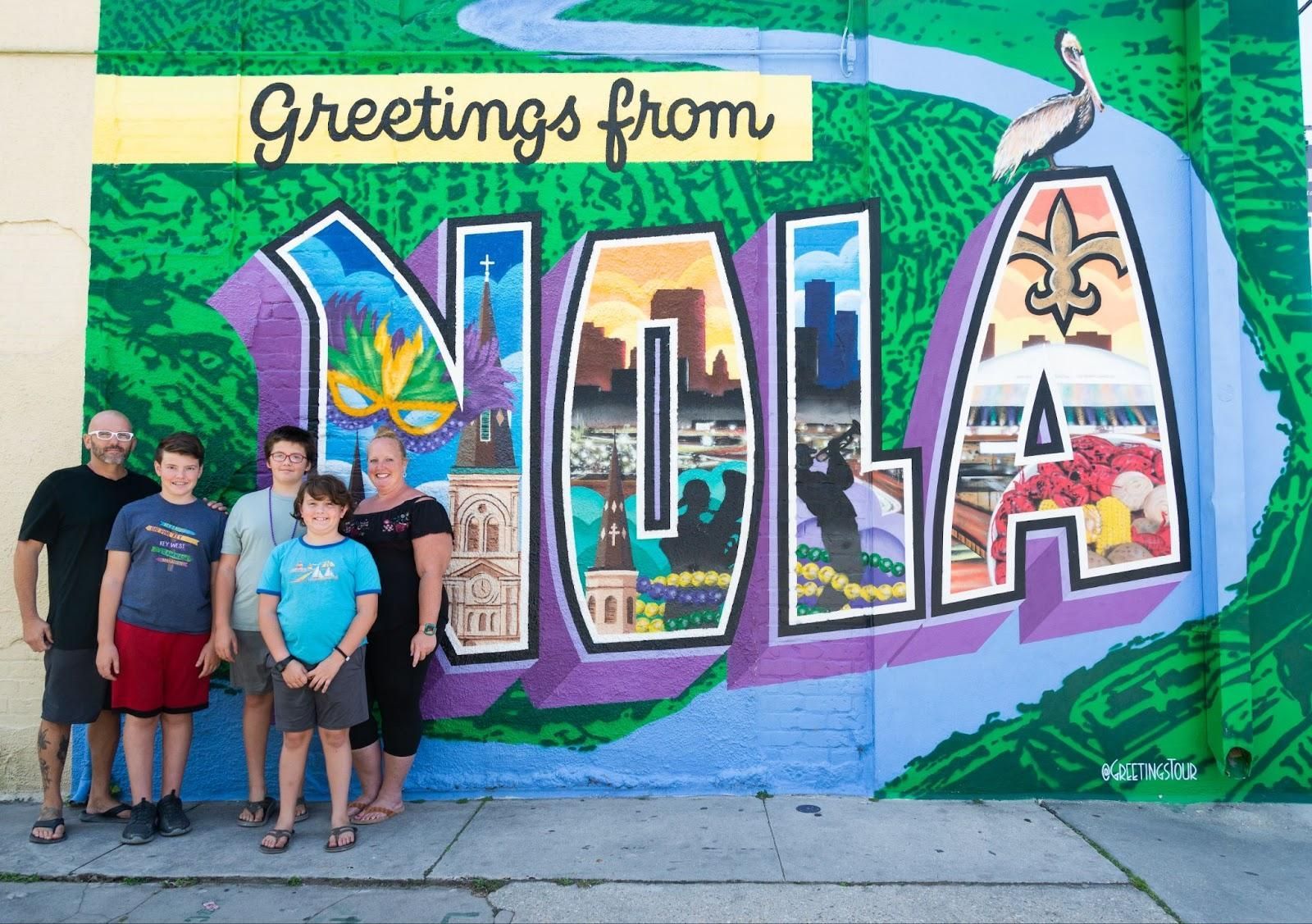
A family standing in front of a mural that says greetings from nola

Other blogs you might like...

Close-up of a red and gray flexible hose attached to machinery, with a blue gloved hand holding it.
By Betty Grant - RV Pocket Tech May 8, 2026
Hook up right and avoid the most common RV water and sewer mistakes. Betty Grand of RV Pocket Tech shares simple tips every camper needs before their next site.
Brown bear walking through green grass and dirt in a natural outdoor setting
By Jennifer Schillaci May 7, 2026
Bear spray isn't bug spray. Bells may not work. And the park isn't even full yet. 72 Bears lost in 2025. What every camper must know about bear safety in Yellowstone
Sunset over a grassy field, with orange clouds and sun rays spreading across the horizon
By Jennifer Schillaci May 6, 2026
RV weather hits different when you live on the road. Get real talk on driving in bad conditions, Dave Titley's top tools, what experienced RVers actually need to do.
Hands holding a turquoise booklet with a printed form on a black couch
By Jennifer Schillaci May 5, 2026
Full-time, seasonal, or recreational RVer — your insurance category matters more than you think. Learn each policy type, coverage and why a mismatch can cost you
Online shop page showing four graphic T-shirts in olive, olive, blue, and teal on a white background
By Jennifer Schillaci May 4, 2026
The Learn to RV Store is launching soon! See what Steve Gallaher of Campfires and Motors created — and find out how to design for us. Sign up today to get informed
Mountain stream flowing through dense evergreen forest under a cloudy sky
By Jennifer Schillaci April 29, 2026
Three generations. 65 years. One Oregon shop RVers drive hundreds of miles to visit. Tommy Henderson tells us why — and what your rig is likely missing out on
By Jennifer Schillaci April 27, 2026
What's Under Your Rig Matters More Than You Think. This week on Learn to RV the Podcast — we're going under the rig. And you're not going to want to miss it.
Four people posing in front of a white RV, smiling and holding up flexed arms
By Jeff & Monica Grant - Dean & Gertie Explore the World April 24, 2026
Thinking about RV life with kids? Learn how to get them excited, handle school, stay connected, and build a successful full-time travel lifestyle.
By Jennifer Schillaci April 23, 2026
If you've been RVing for more than five minutes, you've heard the word "rally." Maybe you've scrolled past one on Facebook, or seen a campground packed with matching rigs and wondered what was going on. But if you've never been to one — or never thought you belonged at one — this one is for you. We sat down with Don Florczyk, the force behind The Flock RV Rally Company , for our Community Spotlight series on Learn to RV The Podcast. We're not going to spoil it here — you need to go listen, because this conversation goes places we did not expect. What we can do is give you the lay of the land: what rally culture is really about, whether you need to own a specific brand to show up, and where The Flock is headed in 2026 and 2027. Grab your camp chair. Let's talk about it.
Blue banner reading “Anchored in Freedom” over a lake and evergreen forest with mountains.
By Jennifer Schillaci April 22, 2026
RV Entrepreneur Summit: Build a Mobile Business That Actually Works on the road | Learn to RV Anchored in Freedom with Kimberly Henrie & Living the Good Life Podcast
Show More