
Can You Fix Your RV Yourself?
Jennifer Schillaci • November 2, 2026
An ASE Master Mechanic Tells Us When to Put the Tools Down
You can fix many RV problems yourself when you know where your components are, own a multimeter, and test before you replace parts. Call a professional for propane work, roof or structural repair, or anything you are not comfortable doing. Below, an ASE master mechanic shares the questions to ask first.
Friday, 4 p.m., and the slide won't go out
It's 4 p.m. on a Friday. You just pulled into the campground, you're two hours from home, and your slide won't go out.
Do you call a mobile RV tech and hope for a weekend visit? Wait five days? Or pick up a screwdriver?
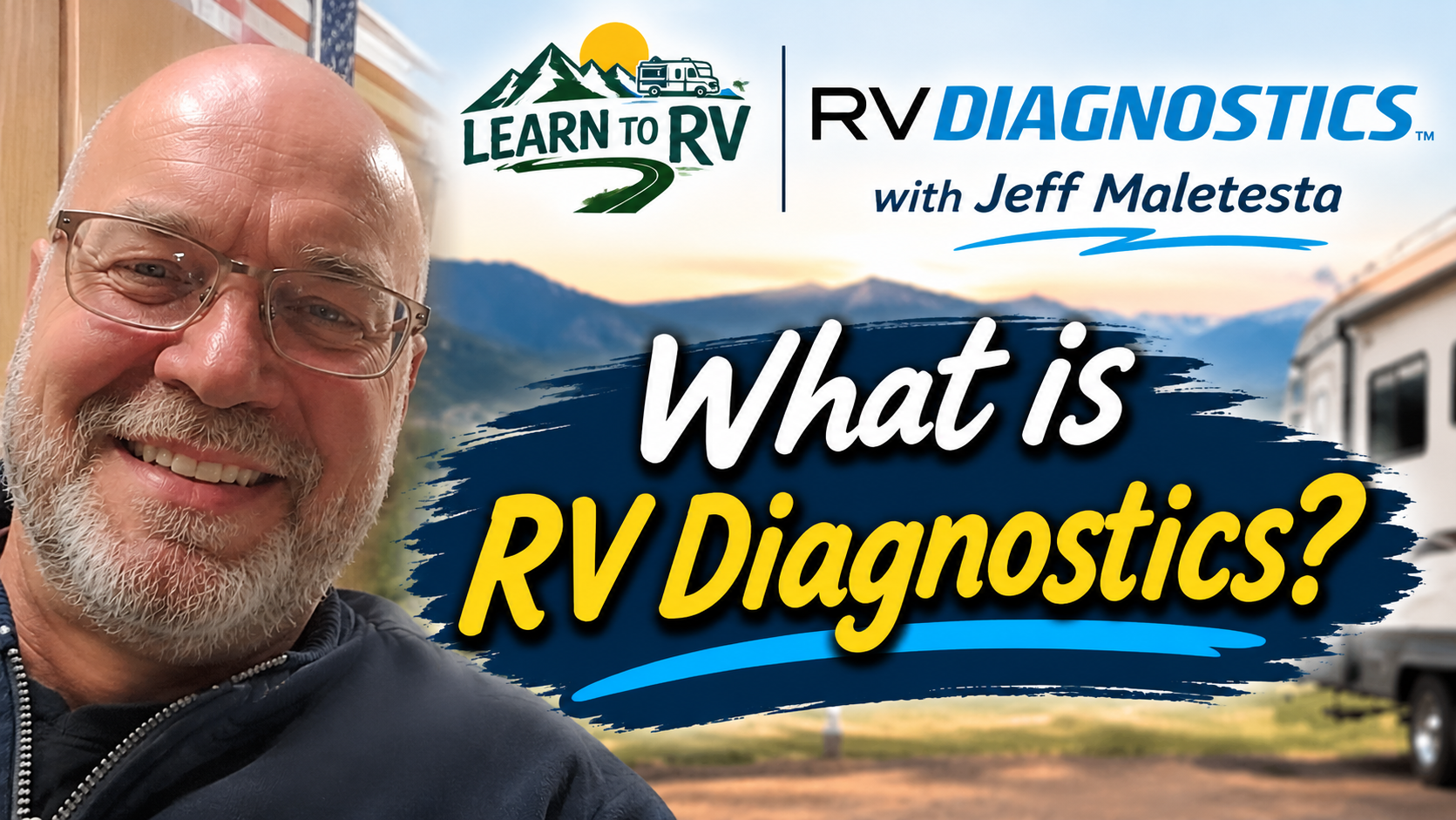
I put that question to Jeff Malatesta of RV Diagnostics, an ASE master certified mechanic and Army veteran who spent years teaching soldiers to troubleshoot M1 tanks. He has a motto short enough to fit on a bumper sticker, a list of three questions he asks before anyone touches a tool, and a surprisingly specific idea of when you should put the tools down.
Ashliy Sutterfield from Wander About Fulltime RV joined us too, and she brought stories from five years on the road: a hot water heater that quit at 19 degrees in Deming, New Mexico, and a tire that shredded on the very first day of full-timing.

Who Is Jeff Malatesta of RV Diagnostics?
Jeff Malatesta is the founder of RV Diagnostics, a remote RV troubleshooting service that helps owners by phone, video, audio and shared files. He is an ASE master certified mechanic with L1 and L2 advanced-level certifications, an Army veteran, and by his own count has been turning wrenches for at least 56 years.
RV Diagnostics is more than eight years old. Jeff also works in a garage three days a week to keep his hands-on skills sharp, and he and his wife own a 2007 Tiffin Allegro Bus 42 QDP.
His approach comes from the military: he can only be in one place at a time, so he teaches people to find the answer themselves. That is why his YouTube channel has more than 860 videos, his Facebook group has more than 33,000 members, and his paid membership at rvdiagnostics.com is built around learning your own rig.
What Should You Ask Before You Pick Up an RV Tool?
Before Jeff ever says "grab your screwdriver," he asks three questions.
They sound almost too simple, and the third one quietly connects the first two. If you can answer all three honestly, you are already ahead of most callers.
Should You Work on Your RV Propane System Yourself?
Propane is one of the few areas where even confident DIYers pause, and in many states a technician has to be certified to touch it.
Jeff's first move is not what you would expect, and it is not about the leak. He also points to one safety item most owners forget to replace, then asks the one question he says matters more than skill.
What Is the Most Common Mistake RVers Make Before They Call a Tech?
Jeff did not have to think about this one. It involves something sitting in your rig all winter, and he sums up the two places to look first with a joke about music that I have not stopped thinking about.
Is Your "50 Amp" RV Really Plugged Into 50 Amp?
When someone says they have 50 amp service, Jeff has learned to ask a qualifying question before he believes it. The answer decides how much he can actually accomplish that day, and it points to a setting many owners never touch.
What Tools Should Every RV Owner Own?
Ashliy's first day full-timing ended on the shoulder of the I-5 with a shredded tire and a jack that was never going to lift her trailer.
Jeff explains why the tool you own matters less than whether it matches your rig, shares two rules for working safely on the side of the road, and names the tool he says most RVers do not have.
How Often Should You Check RV Tire Pressure, and What Happens After a Blowout?
We got into tires, spares and a commom mistake I hear about in horror stories all the time: the second blowout that happens a few hours down the road.
Jeff has a firm answer on how often to check and how many spares he wants a full-timer to carry.
Can AI Troubleshoot Your RV as Well as an Experienced Tech?
I asked Jeff what you get from a real conversation that you do not get from an AI chatbot. His answer starts in a barracks in Germany and ends with a lesson about how people actually learn.
Is DIY RV Roof Repair as Easy as the Internet Says?
One of the biggest mistakes I see in my work at RV Roofing Solutions is people trusting that it is easy and picking the wrong product. Jeff has watched owners spend 33 hours on a roof job and still end up at his door. We compare notes on how long a proper roof wash really takes, and the numbers may surprise you. The roof talk also continues in the bonus YouTube episode below.
The 76-Year-Old Who Rewired Her RV From Scratch
Near the end of the episode Jeff tells a story about a woman who pulled every wire out of her RV, and the 120 hours he spent helping her put it back together. It is the reason he says word of mouth beats any ad he could buy. Keep a tissue nearby.
Bonus Episode is on YouTube Only
When the main recording ended, we kept the cameras rolling and put Jeff in the hot seat. That bonus episode lives only on our YouTube channel, and it is where Jeff gets the most candid.
Here is a taste of what we asked. The answers are on the video.
- Which three popular RV gadgets does Jeff think are overrated?
- What is the one tool he says nine out of ten RVers do not own?
- When something electrical quits, what does he check first?
- What is the weirdest thing anyone has asked him to fix over a video call? (Fair warning: it gets messy.)
- Water heater, fridge or furnace: which one calls him the most?
- Should you cover your RV? He has a firm yes and a firm no, and the difference is one word.
- What is the best $20 he has ever spent on an RV?
- What is the sentence he hears right before something breaks?
- Which RV job do people find scariest, and which looks easy but is not?
- What does he call the biggest myth in the RV community?
- What should a full-timer check every week?
- What does he hope you remember when you hang up the phone?
Watch the lightning round on YouTube: [YouTube bonus episode link]. If it helps you, don't forget to like the video and subscribe so you see the next technically speaking episode first.

Frequently Asked Questions About Fixing Your RV Yourself
Can I fix my RV myself?
Yes, many RV repairs are well within reach when you know where your components are, have basic hand tools and a multimeter, and test before replacing parts.
Call a professional for propane work, roof or structural repair, and anything you are not comfortable doing. Comfort and safety matter more than pride.
What should I check before calling an RV technician?
Gather the basics first: how long you have owned the RV, whether you have kept up with maintenance, and what last gave you trouble. Then check the simple items: power source, fuses, breakers, battery condition and shutoff valves.
A technician can help you much faster when you can already describe what you already ruled out.
What tools does every RV owner need?
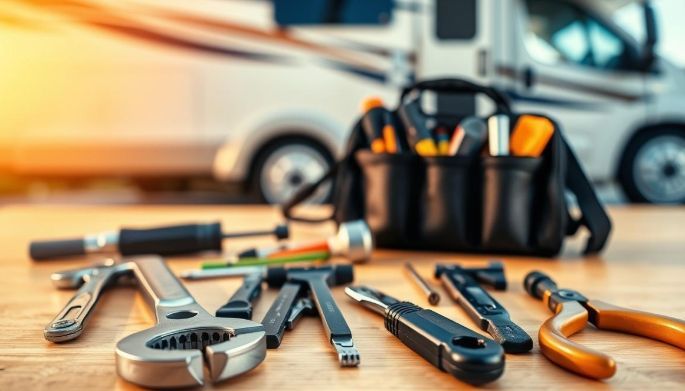
At minimum: a multimeter, a screwdriver set, sockets and wrenches, a tire pressure gauge or TPMS, wheel chocks, and a jack rated for the weight of your RV. Add a torque wrench and a cordless impact driver as you gain experience. Buy the best tires and safety gear you can afford.
What is the first thing to check when something electrical stops working in an RV?
Start with the simple items: fuses, breakers, and what your RV is actually plugged into. Then use a multimeter to confirm voltage rather than guessing. Replacing a part before testing it is the most expensive way to find out you were wrong.
Do I really need a multimeter for my RV?
Yes. A multimeter lets you measure AC and DC voltage so you know whether a circuit is getting power before you replace anything. For most RV troubleshooting you only need to understand two settings: AC volts for shore power and the lower DC volts range for 12-volt systems.
How often should I check my RV tire pressure?
Check pressure before every travel day, with the tires cold. Jeff Malatesta suggests checking once a day after the rig has sat for at least 12 hours, since sun exposure can heat one side. A tire pressure monitoring system (TPMS) helps, but verify it is actually reading each tire, including your tow vehicle.
Where should an RV propane detector be installed, and when should it be replaced?
Propane is heavier than air, so a propane detector belongs low, near the floor. Carbon monoxide detectors are mounted higher. Detectors expire, so check the date printed on yours and replace it on schedule. Test them regularly, and shut off the propane and ventilate if you ever smell gas.
Do RV batteries need maintenance?
Yes. Traditional flooded lead-acid batteries need their water level checked regularly, and they can suffer when stored over winter without a maintenance charger. Sealed AGM batteries do not need watering, though they cost more upfront. Whatever type you own, check the connections and charge level before every trip.
Should I cover my RV when it is parked?
Only with a high-quality, breathable cover made for RVs. Cheap covers can trap moisture and rub the roof edges, which can lead to leaks. A covered RV carport protects the roof better than any cover. Whichever you choose, get on the roof and inspect it about every six months.
Is it safe to use AI to diagnose my RV problem?
AI can explain terms and general concepts, but it cannot see your rig or measure anything, and it may tell you what it thinks you want to hear. Use it to prepare better questions, then confirm the diagnosis with test results or a qualified technician before you spend money on parts.
When should I call a professional instead of fixing my RV myself?
Call a professional when the job involves propane, roof or structural repair, high-voltage AC wiring you do not understand, or any task where you are uncomfortable. Mistakes on those jobs often cost more than the original repair. When in doubt, a remote RV diagnostics service can help you decide before you commit.

Connect with Jeff and RV Diagnostics
- Website and paid membership
- ($200 a year, as Jeff described it in the episode): Learn more at rvdiagnostics.com
- YouTube channel with 860+ videos: RV Diagnostics YouTube
- Free RV Diagnostics Facebook group (33,000+ members): [Facebook group link]
Jeff's biggest ask of every owner: take pictures of your components and part numbers now, before you need them, so troubleshooting goes faster later.
More from Learn to RV:
choosing an RV tech · RV roof First Aid Kit · Being prepared Tire Safetey
Other blogs you might like...