Raising Little Entrepreneurs: Teaching Kids to Earn, Save, and Think Like Business Owners
Jennifer Sansford • July 14, 2026
Our kids still ask for things. The difference now is what happens next.
Over the past year, we've been showing our children, ages 9 and 11, different ways to start and run a business while we travel. It started as a way to keep them engaged and give them a sense of ownership on the road, and it's turned into something we're genuinely committed to. When they ask for extras now, the answer is almost always the same: that's what your money is for. Not as a punishment, but as a real lesson in what things actually cost and what earning something means.
The result is kids who think before they spend — because they know what it felt like to earn it. I am not saying they spend it wisely every time, but they are learning.
Here's how we've been doing it.

It Started Simply — With Lemonade
Every entrepreneur starts somewhere.
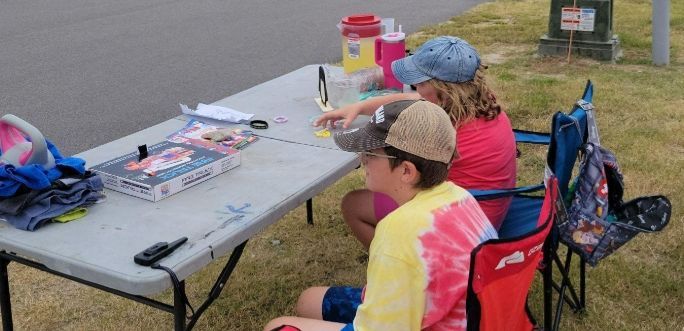
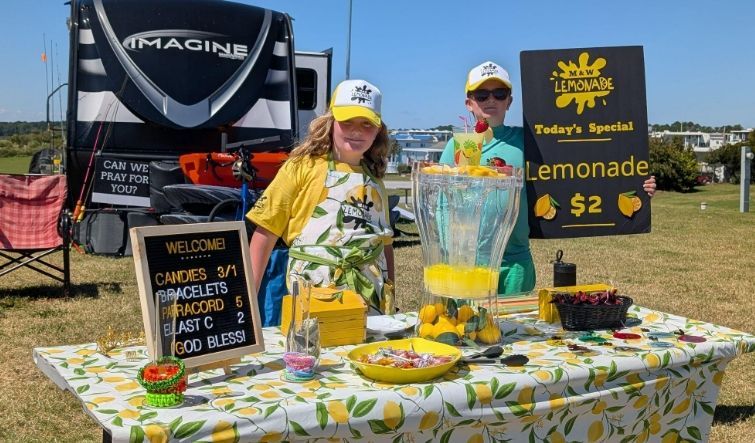
For our family, it was a folding table, a pitcher, & a hand-lettered sign.
The lemonade stand sounds almost too simple to mention, until you're watching a kid learn that people don't automatically stop just because you've set up shop. You have to smile. You have to call out. You have to figure out that pricing matters, that location matters, that a slow hour doesn't mean you pack up.
At some point, the kids decided they wanted to take it seriously. That's when things got interesting.
We started having conversations about the look of the table — what makes someone stop versus walk past, what a professional setup actually signals to a customer. They put together a real plan: outlined what they wanted, priced out the items they'd need, and identified the gap between what they had and what it would cost. Then they did something we hadn't prompted — they pitched their grandparents as investors (noted as such, in brackets, in their own plan) and raised the money to make it happen.
They bought the supplies, set up the table the way they'd envisioned it, and it worked. Sales went up. People stopped more. It looked like somewhere worth stopping at. That experience made something click that we couldn't have just explained to them: presentation is part of the product, and sometimes you have to spend money to make money — which is exactly what an investor is for.
We still set up the stand on weekends when we're camping. Some campgrounds host a Saturday market, and we've taken advantage of those when we can — a built-in crowd is its own education. We've also posted in local Facebook groups to let people know we're there. That one move taught our kids that marketing is just telling people you exist, and you don't need a big budget to do it.

Each Kid Has Their Own Business Now
What started with lemonade has grown into something more personal for each of them.
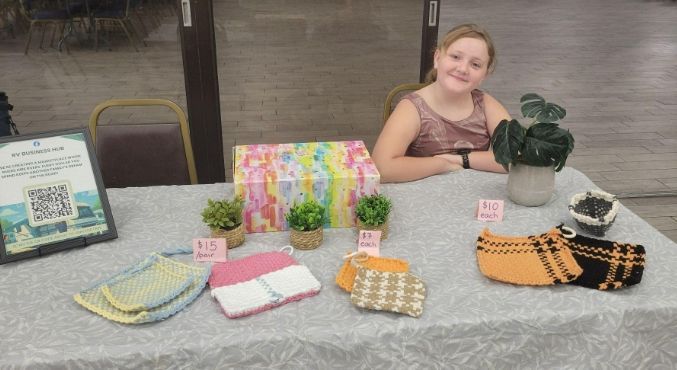
Our daughter, makes and sells handmade crafts, including teapot holders, that she designs and creates herself. We're currently setting up an Etsy store for her, which has opened up conversations we didn't fully anticipate: How do you photograph something so people want it? What do you charge for four hours of work? How do you build inventory when storage is limited?
She's also learned, firmly, not to underprice her work just to make a quick sale. That lesson took a few markets to land, but it's stuck.
The conversation around pricing handmade items is one of the most valuable we've had: your time has value, the materials cost money, and selling something for $3 that took two hours to make isn't a win.
Our son runs a service business: he's the family dog walker. Every single day, he takes out our dog, and every Friday he submits an invoice to us for the week. A real invoice, with his name on it, the dates, and the total owed.
We pay it like a bill, because it is a bill. He's not doing chores for an allowance. He's fulfilling a contract, and if the job doesn't get done, the invoice doesn't go out. That the distinction between being handed money and earning it & it changes how you spend it.
The Business Behind the Business
Here's where most kid entrepreneur stories stop: cute stand, made some money, spent it on candy.
We push a lot further than that.
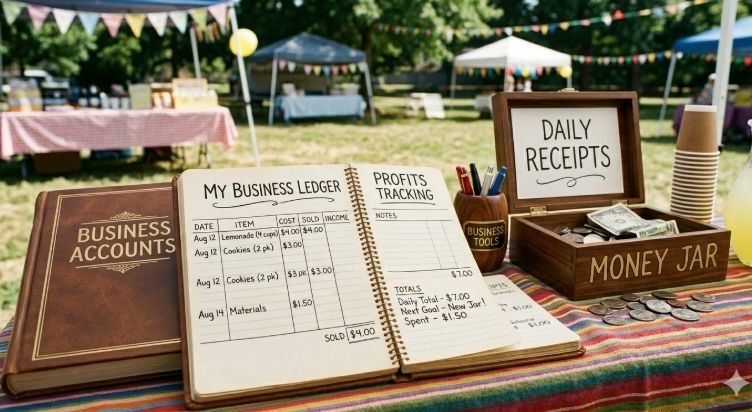
Every business has a ledger. My husband sits down with both kids regularly to go through income, expenses, and what's actually left. They see, in real numbers, that the $20 Marie made at the last market had $8 in supply costs, which means she really made $12. And if she wants to keep selling, some of that $12 goes back in before she touches a dollar of it.
That "money back to the business" concept is one of the hardest things to teach, and one of the most important. When you make money, the instinct is to spend all of it. We require that a portion always gets reinvested first. The business has to feed itself before the owner gets paid.
Then we split what's left three ways:
- A portion goes to giving — they choose where
- A portion goes to savings — non-negotiable
- Whatever remains is theirs to spend however they choose
That last part matters. We don't manage their spending money.
The lesson there teaches itself.

Acorns Early Keeps It Real
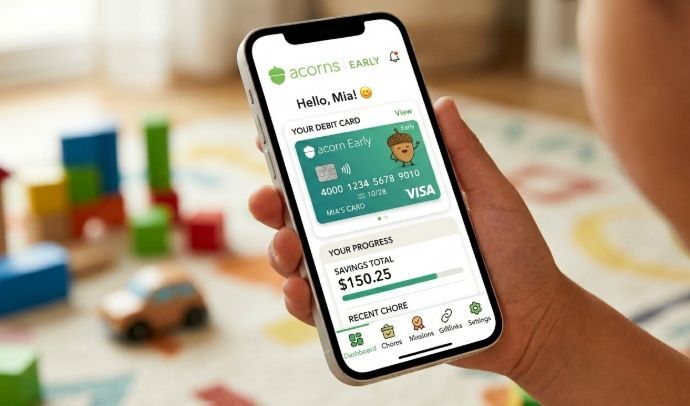
We use Acorns as our kids' banking platform — each of them has their own debit card. They also earn a small amount per financial literacy video they watch through the app, which means they're getting paid to learn about money on top of earning it through their businesses.
But the card itself is the real teacher.
If you leave it behind, you can't buy anything. If you want something that costs more than your balance, you wait. There's no "cover me and I'll pay you back", because that's debt, and we'd rather they understand it as a concept than develop it as a habit.
Watching a child check their balance and decide whether something is actually worth it is one of the quietest, most satisfying parenting moments we've had.

When It Doesn't Work — And Why That's the Point
Just last weekend, we paid $5 to set up a table at a park we were staying at. Marie spent the whole day there. She sold nothing.
Zero. Not one item.
That's a real day, with a real table fee and real effort and in the end there was nothing to show for it financially. It would have been easy to pack up early or skip it next time.
Instead, Marie started talking to the other vendors.
She figured out on her own that she could barter. She traded one of her handmade items, and a lemonade while they had the stand going, for things from other sellers' tables. Every trade was well received. The other vendors loved it. She walked away with things she genuinely wanted, having spent nothing beyond what was already there.

What We're Actually Teaching
When I step back, the businesses are almost beside the point. What we're really teaching is this:
Your time has value. If something takes two hours to make and sells for $3, that's not entrepreneurship — that's underselling yourself. We don't want our kids to learn to devalue what they create.
Income isn't the same as profit. The ledger makes this concrete. Revenue minus expenses equals what you actually made. That gap matters.
Responsibility has real consequences. The dog gets walked or the invoice doesn't go out. The card stays home or you can't buy the thing. These aren't punishments — they're just how the world works.
Creativity is a business skill. The day Marie sold nothing but walked away with a full barter haul showed us she understood that better than we'd taught it.
How to Start With Your Own Kids
You don't need a market booth or a special setup. You need something your kid can make, do, or sell & the willingness to treat it like a real business rather than a cute activity.
Start with lemonade if you need to start somewhere. Find out if your local park or campground hosts a weekend market. Post in a Facebook group. Help them set a price, track what they spend, and look at what's actually left at the end.
Then sit down and go through the numbers together. That's where it stops being a hobby and starts being an education.
We're still figuring this out as we go — but watching our kids work through a pricing decision, send an invoice with their name on it, or barter their way through a slow market day makes us pretty confident we're on the right track.
Other blogs you might like...