America’s 250 Became Our Classroom: A Full-Time RV Family’s History Lesson on the Road

Jeff and Monica Grant from Dean and Gertie Explore the World • July 25, 2026

Most kids learn about the American Revolution from a textbook.


Ours have spent the summer walking through the places where it actually happened.

When we planned our 160-day RV adventure, we knew travel would become a big part of Dean and Gertie’s education. We expected museum visits, historic sites, nature programs, and plenty of lessons that would never appear on a worksheet. What we did not fully realize was how perfectly our route would line up with America’s 250th anniversary.


On July 4, 2026, the United States marked 250 years since the Declaration of Independence. Communities and historic sites across the country have used the anniversary to revisit the people, events, and ideas that shaped the nation. 


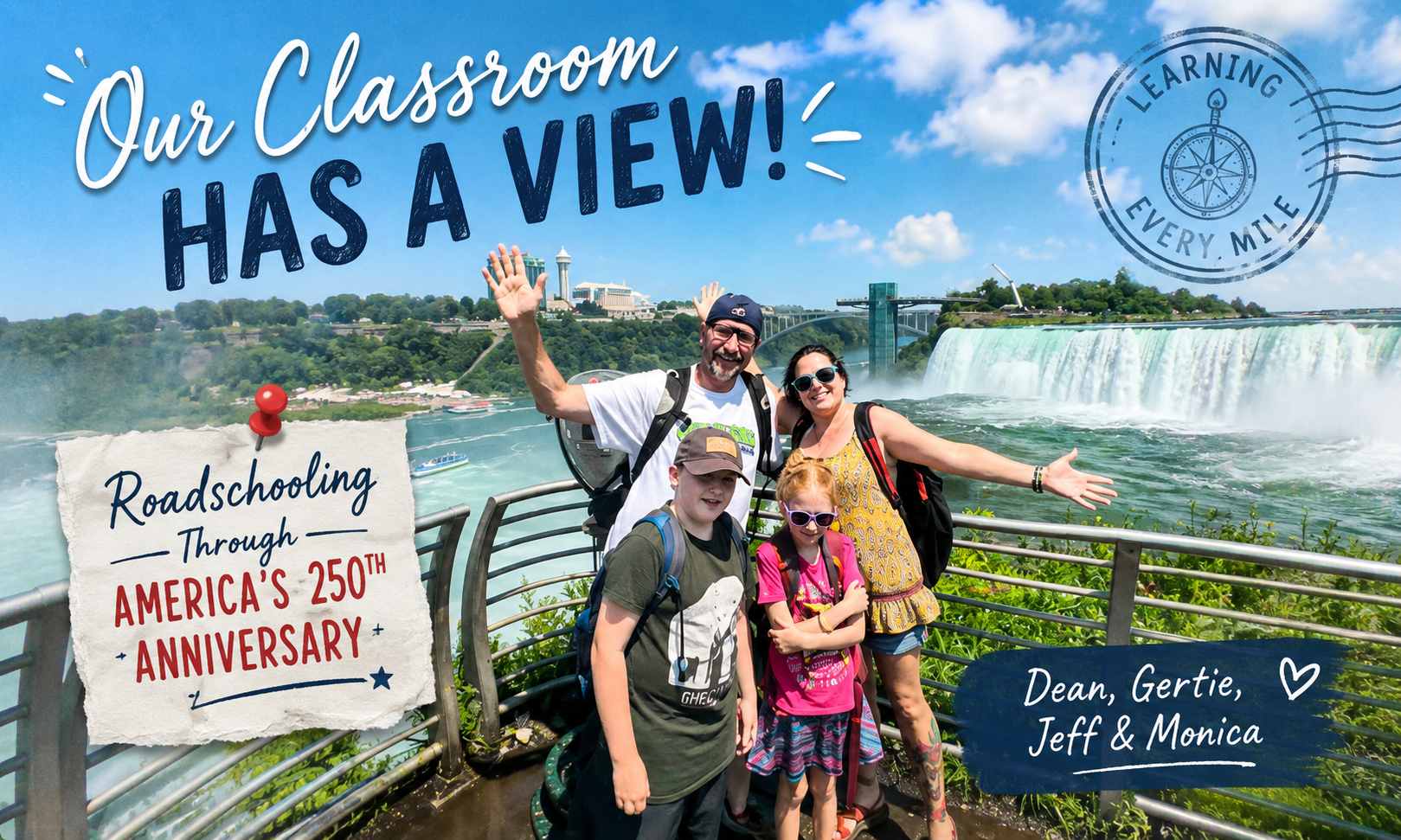
For our family, that history did not come together through one carefully planned curriculum. It unfolded naturally as we moved from Virginia to Maine, through New York, and on toward Niagara Falls.


Each stop added another part of the story, and the road became one very large classroom.


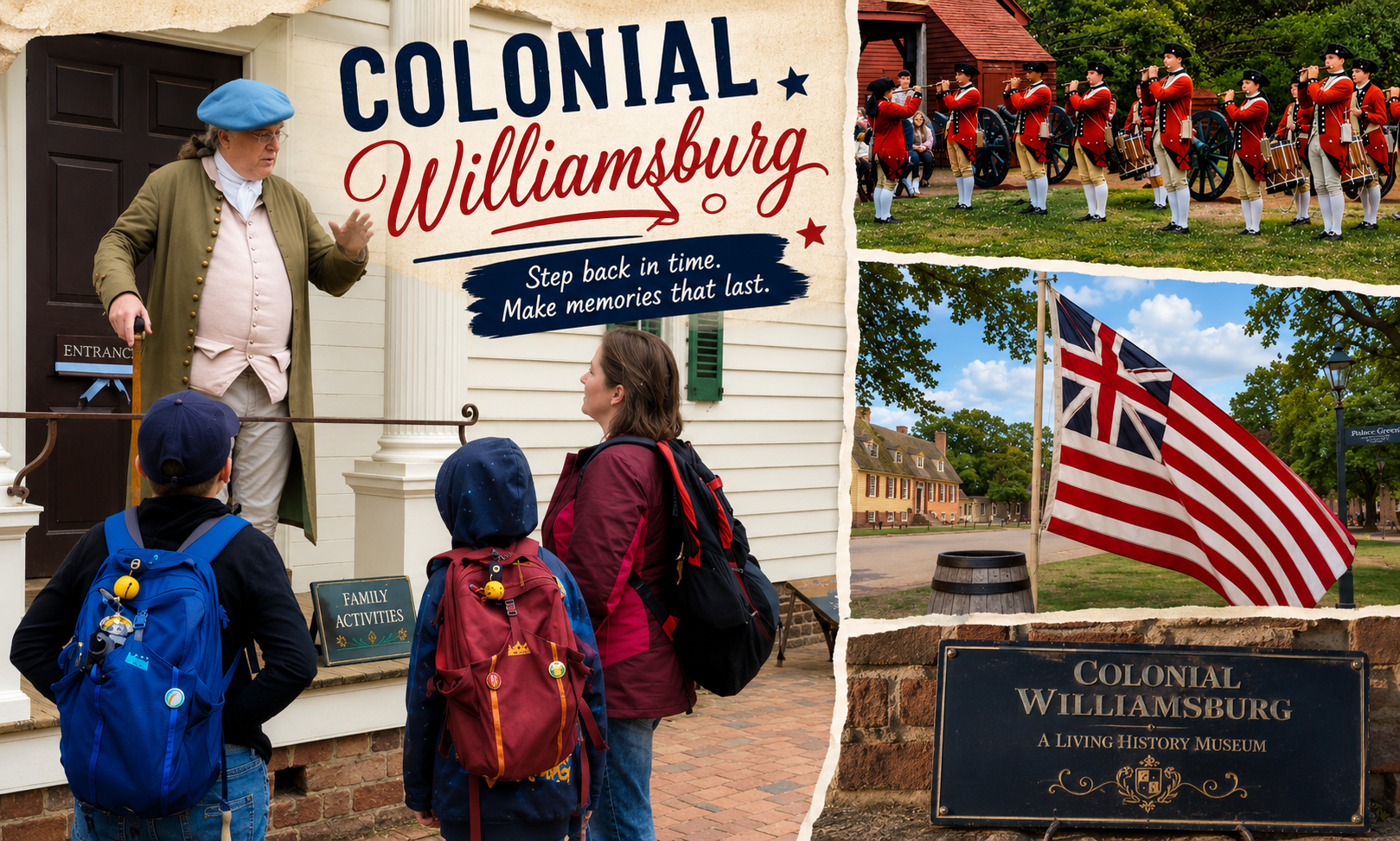
Colonial Williamsburg sign with blue-clad guide and children; inset of marching reenactors and a Union Jack flag.


A Fitting Start in Colonial Williamsburg

Our adventure began in Colonial Williamsburg, and we could not have chosen a more fitting place to start.


Williamsburg served as Virginia’s capital from 1699 to 1780, during the years when the ideas and disagreements that contributed to the American Revolution were taking shape. 


That sounds important in a history book. It feels much more real when you are walking its streets.


Dean and Gertie watched tradespeople work with tools that would have been used during the eighteenth century. They saw military demonstrations, explored historic buildings, and listened to interpreters explain what daily life was like before the United States became an independent nation.


The best part was watching their questions develop naturally.


  • How heavy was a musket?
  • How did children go to school?
  • How long did it take to make something without modern equipment?
  • Why did some colonists want independence while others did not?


We did not have to turn the visit into a formal lesson. The surroundings did most of the work for us. They could hear the blacksmith’s hammer, see the clothing, walk into the buildings, and picture real people living through a complicated period of change.


That is when roadschooling works best for our family. We give the kids enough information to understand what they are seeing, but we leave room for curiosity, fun, and the unexpected.


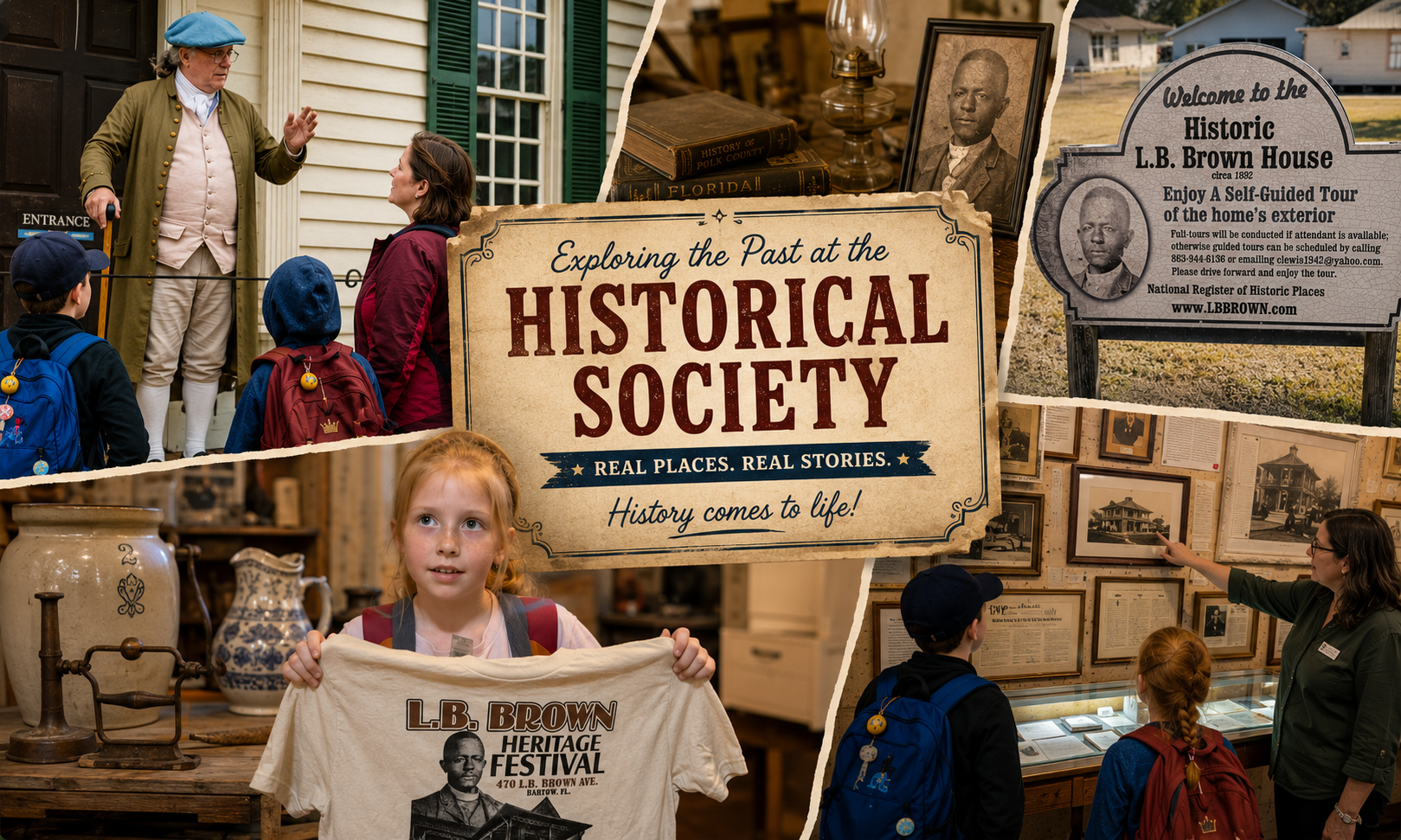
Historical Society exhibit with signs, vintage photos, and visitors, including a child holding a shirt.


Finding an Unexpected Lesson in Wells, Maine

From Virginia, we traveled north to Wells, Maine.


We arrived expecting beaches, seafood, and plenty of coastal fun. We found all of that, but one of our most memorable educational experiences happened inside the local historical society.


During our tour, we learned about Colonel John Littlefield and his connection to the community. His story gave us an opportunity to talk about something that is easy to miss when history focuses only on the most famous names: the country was shaped by thousands of local people whose stories are still preserved in the towns where they lived.

That visit also reminded us why small museums and historical societies are roadschooling gold.


They are often quieter and less overwhelming than major attractions. The people giving the tours usually care deeply about the community, and they can turn an old photograph, document, tool, or piece of furniture into a story children can understand.


We may have gone to Wells for the coast, but we left knowing much more about the people who helped shape the area.


That is one of our favorite parts of RV travel. A destination does not have to be famous to provide a great lesson. Sometimes the best discoveries are inside the small building you almost drove past.


Fort William Henry tourist sign with visitors in a rustic outdoor historical display


Lake George Helped Connect the Timeline

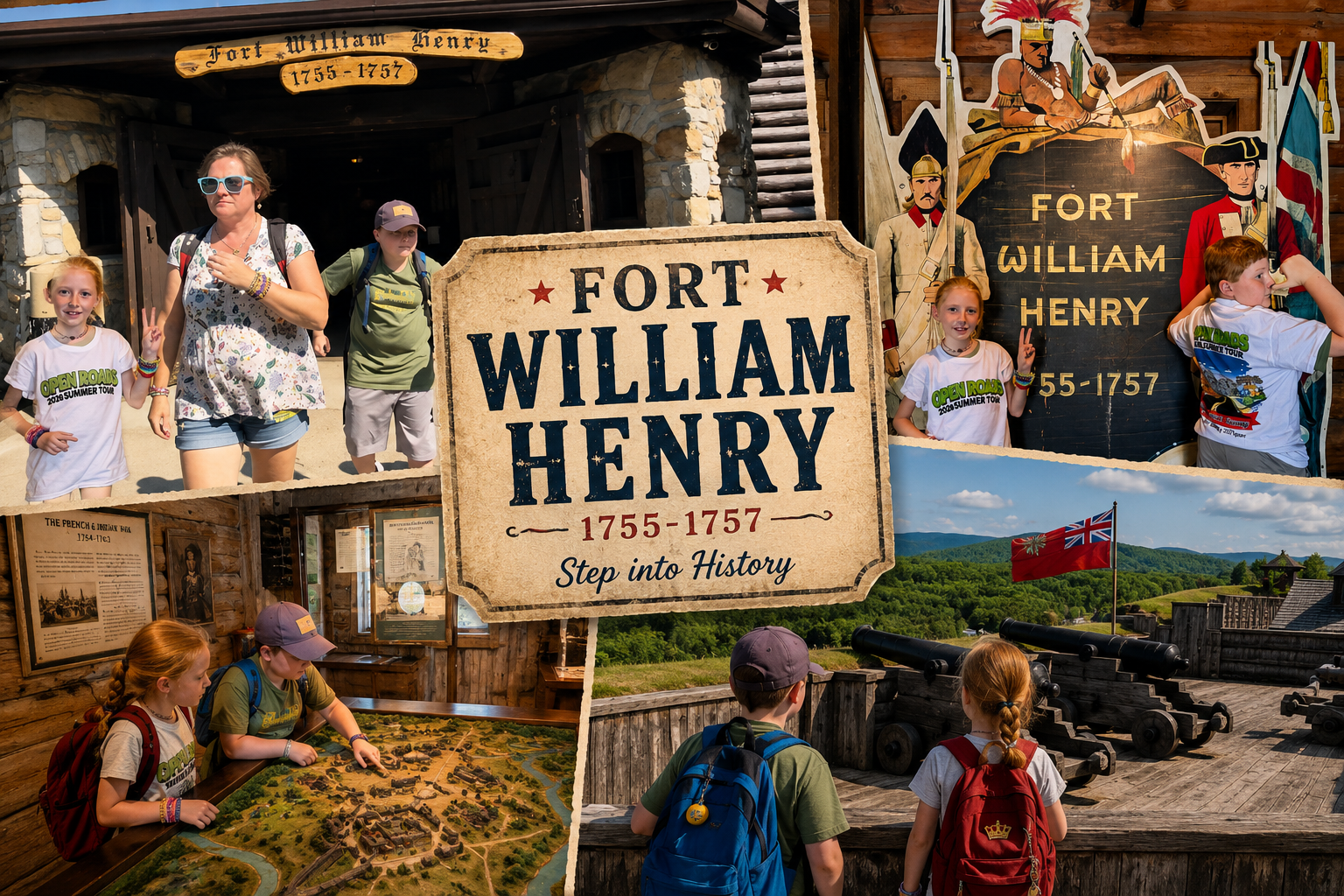
Our next major stop was the Lake George region of New York, where we visited Fort William Henry and Fort Ticonderoga.


This was where several pieces of history began connecting for the kids.


At Fort William Henry, we learned more about the French and Indian War and why the waterways running through this region were so important. Looking across Lake George made it much easier to explain why armies fought for control of certain forts and travel routes.


A map can show where a fort was built. Standing there helps kids understand why it was built there.


We could point to the lake, the mountains, and the narrow routes through the region. Geography was no longer a separate school subject. It was part of the history happening in front of us.


It also opened the door to a simple conversation about how the French and Indian War contributed to the tensions that eventually led to the American Revolution. We did not give the kids a two-hour lecture or ask them to memorize a list of dates. We simply helped them connect one place and conflict to the next.


That was enough to make the larger timeline feel much less confusing.


Fort Ticonderoga on the Fourth of July for the Win

Then came Fort Ticonderoga.


The fort’s location between Lake George and Lake Champlain helped make it strategically important during both the French and Indian War and the American Revolution. In May 1775, forces led by Ethan Allen and Benedict Arnold captured Fort Ticonderoga in an early American victory. Its artillery later became important to the American cause. 


That is meaningful history on any day.


Experiencing it on the Fourth of July during America’s 250th anniversary took it to another level.


The fort was alive with interpreters, military demonstrations, flags, activity, and the sound of cannon fire carrying across the landscape. The kids were not standing silently in front of a display case. They were watching history unfold around them.


It was educational, but it was also just plain fun.


That balance matters. We never want every family outing to feel like a disguised school assignment. Kids are much more likely to remember a lesson when they associate it with something exciting, funny, surprising, or slightly louder than Mom expected.


Fort Ticonderoga checked all of those boxes.


We have visited many historic places during our travels, but celebrating the Fourth of July there will be difficult to beat. It brought together the history we had been following since Williamsburg and gave our family a memory that will always be connected to America’s 250th.


Ticonderoga on the Fourth of July was absolutely the win.


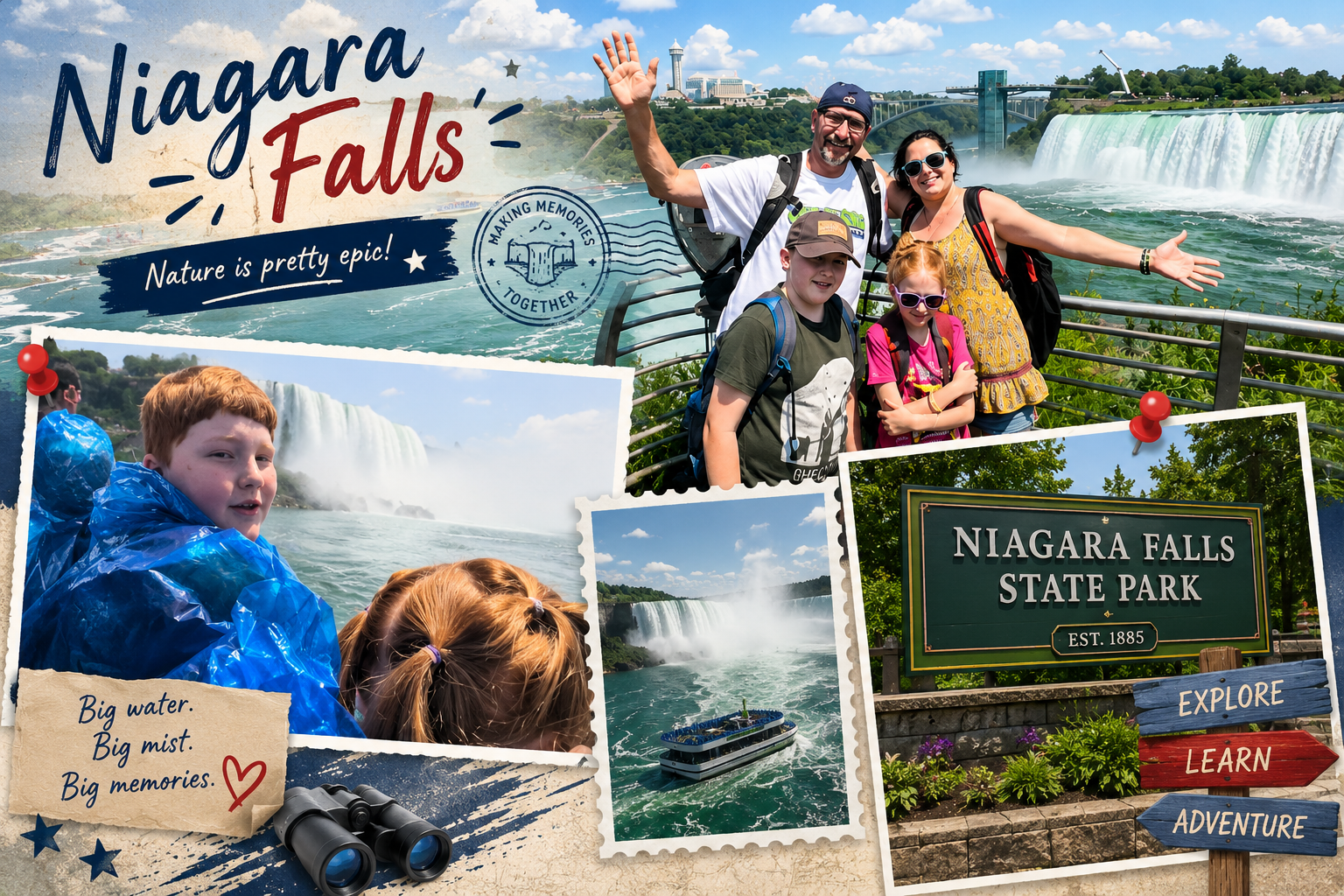
Niagara Falls Gave Us Science and History

Niagara Falls was next, and it proved that one destination can cover far more than one subject.


The falls provided the obvious science lesson. We could talk about water, erosion, geology, energy, and the Great Lakes while standing close enough to feel the mist.


Then Old Fort Niagara added another layer to the visit.


Located where the Niagara River meets Lake Ontario, the fort helped us understand why the river was important for travel, trade, and military control. The French began constructing the stone building now known as the French Castle in 1726, and the site later passed through British and American control. 


Once again, the geography made much more sense in person. The kids could see the river, the lake, and the location of the fort. They could begin to understand why different nations wanted control of the area and why Niagara Falls created such a major challenge for moving people and supplies.


We originally thought of Niagara as a natural-wonder stop. It became a lesson in science, geography, engineering, transportation, and history—all without opening a workbook.


What This Has Taught Us About Roadschooling

This stretch of travel reinforced something we have learned repeatedly: roadschooling does not have to mean creating a full lesson plan for every destination.


Our children still have structured online classes, teachers, assignments, and regular academic responsibilities. Roadschooling is how we expand those lessons once the laptops close.


Sometimes that means spending a full day at a major historic site. Other times, it is a one-hour museum tour, a conversation in the truck, or stopping to read a historical marker.


The goal is not to squeeze an educational objective out of every family activity. That would become exhausting for the kids and for us. The goal is to stay curious and take advantage of the learning opportunities that naturally appear along the route.


A few things have made that easier for our family:


  • We look beyond the main attraction.

The beach brought us to Wells, but the historical society introduced us to its people. Niagara Falls brought us to the region, but Old Fort Niagara helped explain its history.


  • We search for demonstrations and guided programs.

A musket demonstration or conversation with an interpreter usually holds the kids’ attention better than a wall filled with text.


  • We let the kids ask questions.

Their questions often lead us in directions we never would have planned.


  • We connect new stops to places we have already visited.

Williamsburg, Fort William Henry, and Fort Ticonderoga became more meaningful because the kids could begin connecting them.


  • We allow the experience to be fun.

Not every outing needs a worksheet, report, or quiz afterward. Sometimes the family memory is the lesson.


The Real Roadschooling Win

America’s 250th gave our summer travels a theme, but it also showed us why this lifestyle can be such a powerful educational experience.


Our kids are not going to remember every date we discussed or every museum display we passed. They will remember hearing cannon fire at Fort Ticonderoga. They will remember walking through Colonial Williamsburg. They will remember the small museum in Maine and the incredible power of Niagara Falls.


Those memories give future lessons somewhere to land.


The next time Fort Ticonderoga appears in a book, it will not be only a name. The next time they study colonial America, they will remember the blacksmith, the soldiers, and the streets of Williamsburg. When science class covers erosion or water power, they will remember standing in the mist at Niagara Falls.


That is what we hoped roadschooling would be when we began traveling full-time: not replacing education, but making it feel real.


Our America 250 journey is far from finished, but it has already been a pretty incredible run.


And Fort Ticonderoga on the Fourth of July?


Still the winner.


About our Writers

Jeff and Monica travel full-time with their children, Dean and Gertie, exploring the country through history, nature, family adventures, and real-world learning. Through Dean and Gertie Explore the World, they share the honest side of RV life while encouraging other families to make memories, stay curious, and never stop exploring.

What historic site, museum, or unexpected roadside stop has created a memorable lesson for your family?


We would also love to know which destination belongs on our America 250 roadschooling list as we continue traveling across the country.


Helpful Resources

  • America250 official anniversary information 
  • Colonial Williamsburg 
  • Historical Society of Wells and Ogunquit 
  • Fort William Henry Museum 
  • Fort Ticonderoga 
  • Old Fort Niagara 
  • Dean and Gertie Explore the World: https://pillar.io/deanandgertie


Affiliate Disclosure

This post may contain affiliate links for Dean & Gertie. If you book or purchase through these links, they may earn a small commission at no extra cost to you.


Your support helps them continue traveling and sharing educational family adventures across America. Thank you!


Learn to RV receives no monetary compensation if you support their travels. It goes directly to their adventures!


Other blogs you might like...

Adult carrying a child on shoulders under leafy trees, looking up and smiling
By Missy Jack of Jack Adventures Await July 24, 2026
Life with Littles Real talk on full-time RVing with babies, toddlers : the constant mess, the mental load, and the radical presence that makes it all worth it
Two children sit at an outdoor folding table with snacks and crafts beside a road.
By Jennifer Sansford July 14, 2026
Our kids still ask for things. The difference now is what happens next. Over the past year, we've been showing our children, ages 9 and 11, different ways to start and run a business while we travel. It started as a way to keep them engaged and give them a sense of ownership on the road, and it's turned into something we're genuinely committed to. When they ask for extras now, the answer is almost always the same: that's what your money is for. Not as a punishment, but as a real lesson in what things actually cost and what earning something means. The result is kids who think before they spend — because they know what it felt like to earn it. I am not saying they spend it wisely every time, but they are learning. Here's how we've been doing it.
Friends gathered around a campfire beside a silver camper at dusk in a wooded campsite
By Jennifer Schillaci July 13, 2026
Is your RV summer feeling slower this year? Jennifer & Tasha talk fuel prices, burnout, comparison traps, and what's ahead for season 3 of Learn to RV the Podcast
By Meghan & Pete Williams - Our Captain's Logs July 9, 2026
The 'Grab-and-Go' System That Lets Busy Families Trade Friday Traffic for Friday Campfires
View from RV roof with solar panel, vents, and roof fan at an outdoor RV show
By Jennifer Schillaci June 13, 2026
Whether your RV roof is showing its age or you just want to stay ahead of summer damage, know when to DIY and when to call a pro. Learn the warning signs

Person in a white T-shirt pinching their nose while standing indoors by a beige wall.
By Jennifer Schillaci June 8, 2026
Do you really need a sewer hose to dump your RV tanks? RV black tanks, Grey tanks and Freshwater tanks tips. Get the complete RV tank guide from Learn to RV.
By Jennifer Schillaci June 5, 2026
The best classroom doesn't have four walls — it has four wheels.  This summer, the whole country is your curriculum.
By Dealora Snyder June 4, 2026
If you’re a full-time RVer, you already understand something most people don’t....that life doesn’t always go according to plan. You’ve chosen freedom. Flexibility. The ability to wake up in a new place whenever you want. But with that freedom comes a unique responsibility—especially when it comes to your health insurance. Because when you’re constantly on the move, having the right coverage isn’t just important… it’s critical. And recently, I was reminded exactly why.
Hand holding a scrambled Rubik’s cube against a plain brown background
By Amanda Pelser June 3, 2026
Full-time RVing families can road-school around a passion — how to find WCA speedcubing competitions and make your child's Rubik's Cube hobby a reason to travel.
Hands arranging letter cards on a yellow table during a group learning activity
By Jennifer Schillaci June 1, 2026
Your child is just wired differently. Learn the signs of dyslexia, what actually works, and how roadschooling families can take action today. with Russel VanBrocklen
Show More