




Traveling With Pets in an RV: What You Need to Know Before You Hit the Road
Jennifer Schillaci • March 23, 2026
RV life with animals — from cats and dogs to ferrets, snakes, and birds, OH MY!

The Question Every Pet Owner Asks Before Taking Pets Camping
Do you take your dog on weekend camping trips and leave the cat at home? Maybe you've got a neighbor who pet sits while you travel, or you've mastered the art of the quick overnight with your pup in tow.
That's one version of RVing with pets — and it's a great one.
But this blog is about something a little different. This is about what it actually looks like to travel full-time with your animals. All of them.
Everywhere. For years.
And yes, once you read it, you may think we are absolutely crazy. You wouldn't be wrong.
The truth is, not every animal thrives in an RV, and some aren't even legally allowed in certain states or campgrounds.
SO....Before you pack up your fur babies and pull out of the driveway, here's what 13+ years of full-time RV life with kids and animals has actually taught us.
When We First Hit the Road, We Made some Hard Calls
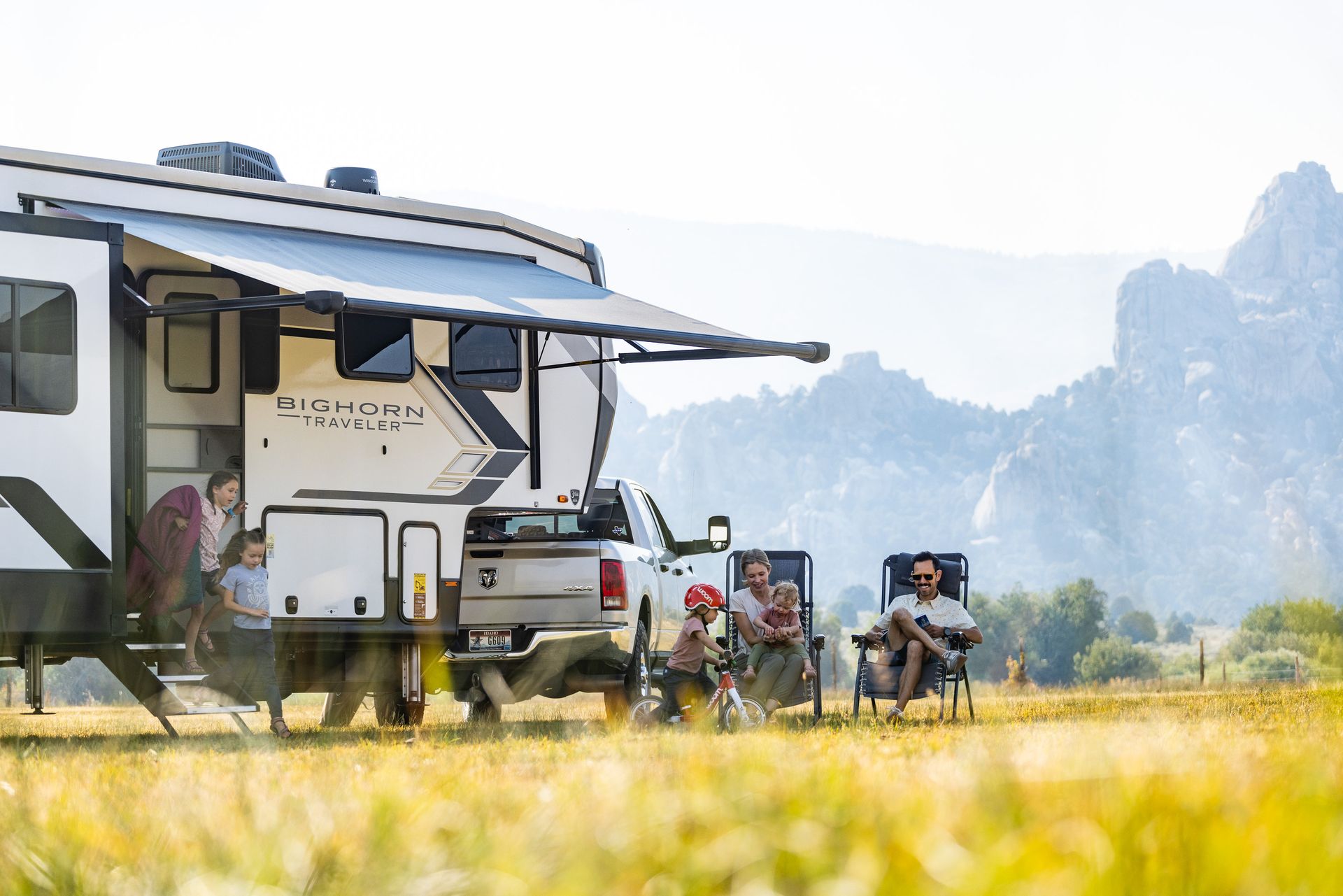
When our family pulled out of our driveway in 2013, we were six kids deep, two cats in tow, and squeezing into a 30-foot toy hauler with zero slides. That's a lot of people, a lot of personalities, and not a lot of square footage.
Pets We've Had on the Road (Yes, Really)
Over the years, we haven't exactly played it safe in the pet department. Here's a look at what we've traveled with:
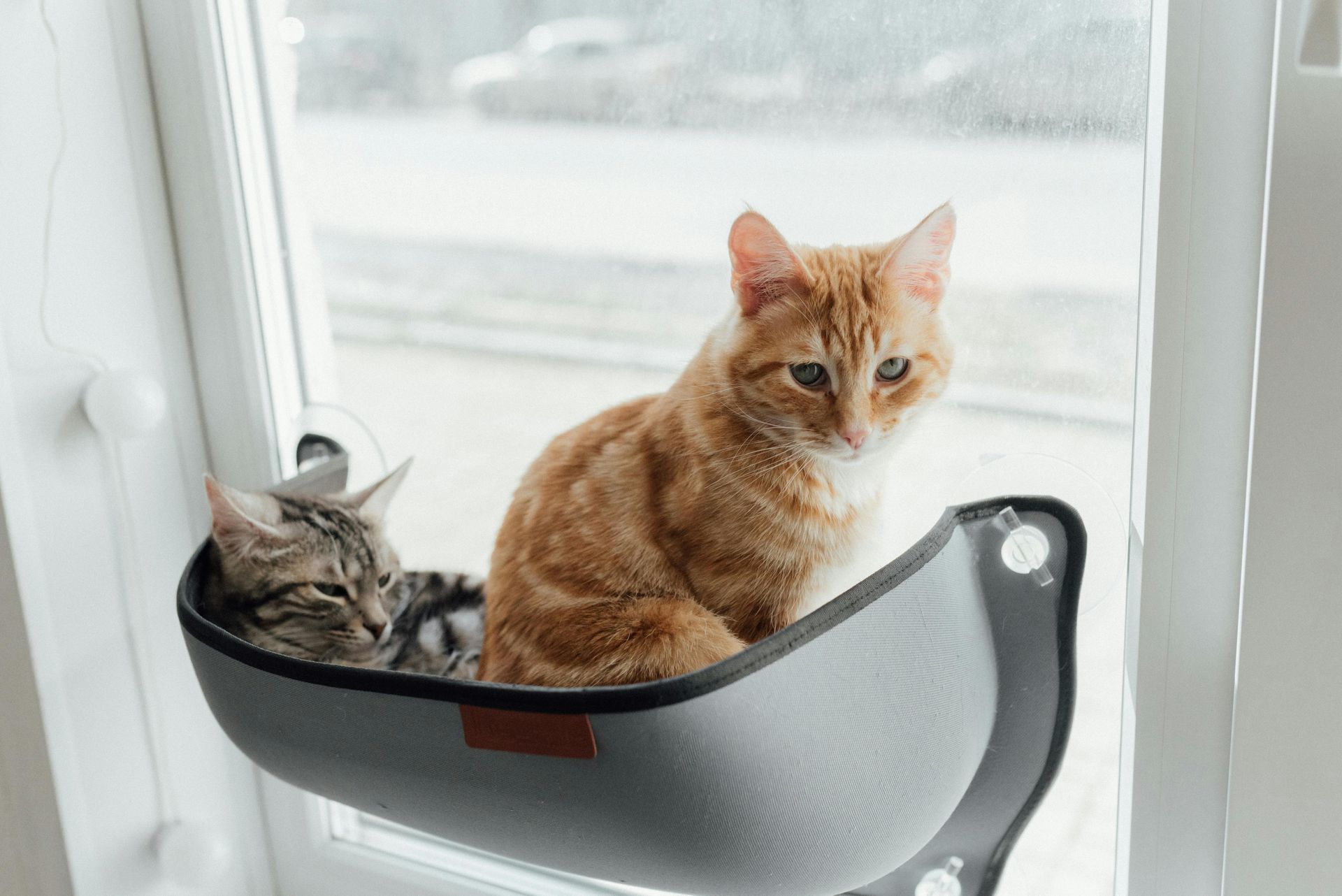
Cats — Our original road companions. Cats can adapt surprisingly well to RV life, especially if they're indoor-only and introduced to the rig gradually. Litter box placement matters more than you'd think in a small space.
Dogs — Probably the most common RV pet, and for good reason. Dogs love the adventure, the outdoor time, and being with their people all day. Breed, size, and energy level matter a lot for fit.
Ferrets — Yes, we did this. Ferrets are curious, entertaining, and surprisingly manageable in a small space — but they require secure storage, temperature control, and a lot of supervision. They're also not legal in every state. California and Hawaii have outright bans.
A Snake (Who Only Ate Live Food) — This one was an experience. Snakes can actually be low-maintenance travelers if their enclosure is secure and temperature-regulated. The live feeding requirement, however, adds a layer of logistical creativity that is not for the faint of heart.
Birds are both beautiful and complicated. Birds are highly sensitive to air quality, temperature swings, elevation & stress. Generators, propane fumes, and non-stick cookware can all be genuinely dangerous to birds. RV life is hard on them, and it's worth doing serious research before bringing a bird on the road.
Hermit Crabs If you find yourself exploring the beach scene and get lured into adopting a hermit crab — we see you, we have been there, and we are here to tell you what nobody at that little beach stand will. Just don't. Or if you absolutely must, please do not take him to the desert next. We learned that lesson so you don't have to.
Some Animals Do Well. Some Don't. Here's How to Tell the Difference.

Rodents on the Road — Frank's Rule and Why we Agreed He's Right
Let's just say my husband put his foot down early on this one. Rodents were off limits in our rig, no mice, no hamsters, no negotiation. At the time it may have felt like a firm and slightly unreasonable stance.
Turns out Frank knew exactly what he was talking about.
Here is the thing about rodents in an RV that nobody really thinks about until it is too late — if they get loose, and they will get loose, the inside of your RV walls is essentially an all-you-can-eat buffet of electrical wiring.
We are not talking about a chewed shoelace or a nibbled granola bar. We are talking about a small determined animal with nothing but time and razor sharp teeth working its way through the wiring that controls your slides, your leveling system, your electrical panels, and everything else that makes your home on wheels actually function.
The damage can be extensive, expensive, and in some cases dangerous. Exposed or chewed wiring inside walls is a fire hazard. And because it happens inside the walls where you cannot see it, you may not even know there is a problem until something stops working, or something worse happens.

Good fits for RV life:
- Dogs (especially calm or mid-energy breeds)
- Cats (indoor, adaptable)
- Small rodents (hamsters, guinea pigs) with secure enclosures
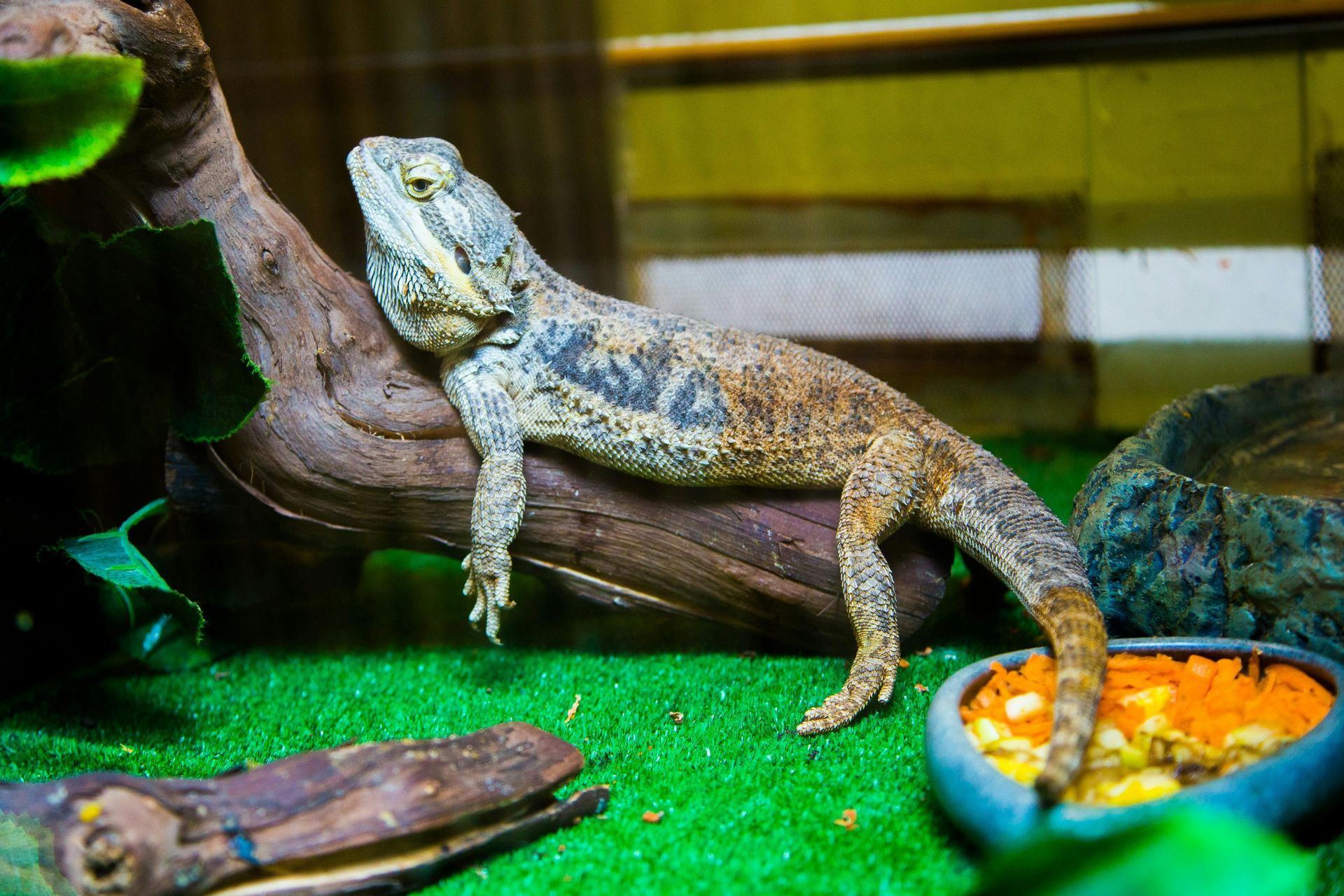
- Reptiles (with proper temperature regulation)
Harder fits:
- Birds (air quality and temperature sensitivity)
- High-energy large dog breeds in small rigs
- Animals requiring specialized veterinary care (exotic pets in rural areas)
- Any animal prone to stress or anxiety
The honest truth: An animal that struggles at home won't magically improve in a moving, ever-changing 300 square feet. If your pet is anxious, territorial, or high-needs, the road will amplify that — not fix it.

The Legal Side Nobody Warns You About
This is the part that can often catch people off guard.
Some exotic pets are outright banned in certain states. Ferrets are illegal in California and Hawaii. Some reptile species are restricted or require permits depending on where you're traveling. Even certain dog breeds face breed-specific legislation (BSL) in campgrounds, cities, and states which means your perfectly friendly dog may not be welcome in certain areas.
Before you travel with any exotic or non-traditional pet, research the laws for every state on your route. It's not just about campground rules — it's about state wildlife and animal control laws that can carry real penalties.
Campground Pet Policies: Know Before You Book
Most campgrounds welcome pets, but almost all of them have rules:
- Dogs must be leashed at all times outside the rig
- Pets cannot be left unattended outside (or sometimes inside)
- Breed restrictions apply at many private campgrounds
- Some campgrounds limit the number of pets per site
- Exotic pets may require advance approval or be prohibited entirely
Always call ahead if you're traveling with anything outside the standard dog or cat. Don't assume — confirm.

Pets in National Parks & What You Need to Know Before You Go
National parks are some of the most breathtaking destinations on any RV itinerary, but if you are traveling with pets, there are some important things to know before you pull through that entrance gate.
Can You Take Pets on the Trails?
The short answer is: it depends on the park & usually the answer is more no than yes. Most national parks have very strict pet policies on trails. In many cases pets are only allowed on paved roads, in parking areas, in campgrounds, and in picnic areas. The backcountry, most hiking trails, and any ranger-led programs are typically off limits entirely.
The reasoning is pretty straightforward, pets can disturb wildlife, damage vegetation, and create safety issues for other visitors. Even well-behaved pets on a leash can stress wildlife that is not accustomed to domesticated animals.
Can You Leave Your Pet in the Camper?
Technically yes, but temperature is everything. On a hot day, the inside of an RV can reach dangerous temperatures faster than most people realize, even with windows cracked. If you are exploring in summer heat, leaving a pet unattended in a closed rig is genuinely dangerous.
Some options worth considering:
- A generator running the air conditioning while you explore
- A quality pet camera so you can monitor remotely
- A trusted travel neighbor keeping an eye out
- Scheduling your biggest hikes for cooler morning hours
- Researching pet-friendly alternatives nearby so your pet is not sitting out every adventure
The Golden Rule for Pet Travel in National Parks:
Always check the specific park's pet policy before you arrive. The National Park Service website lists pet rules for every park & they vary more than most people expect. What is allowed at one park may be completely prohibited at the next.
Your pet is family. Plan ahead so they are safe, comfortable, and as included in the adventure as possible.
Yellowstone: Leave Your Pets at Home
If Yellowstone is on your bucket list & let's be honest, it should be, this is one destination where your pets will need to sit this one out entirely.
Yellowstone National Park has some of the strictest pet policies of any park in the system, and the reasons go far beyond the standard wildlife concerns.
The biggest issue is the thermal features. Yellowstone's geysers, hot springs, mud pots, and fumaroles are not just visually spectacular — they are genuinely dangerous. The ground around thermal areas can be deceptively thin and fragile, and the water temperatures in many of Yellowstone's hot springs are near or at boiling point. A curious dog following a scent or chasing a sound near a thermal feature could break through the crust in an instant. The park has documented cases of pets — and people — suffering fatal injuries in thermal areas. This is not a precaution. It is a matter of life and death.
Beyond the thermal danger, Yellowstone's wildlife is wild in every sense of the word. Bison, wolves, bears, and elk roam freely throughout the park. The scent of a domestic pet can provoke wildlife in unpredictable ways — putting both your animal and the wildlife at serious risk.
Pets are restricted to paved roads, parking areas, and campgrounds at Yellowstone & even then they must be on a leash no longer than six feet at all times and may never be left unattended outside.
Yellowstone is one of the most extraordinary places on earth — and the best way to experience it is to plan ahead, arrange safe care for your pets, and give yourself the freedom to explore it fully.

Feeding Your Pets on the Road: More Complicated Than You'd Think
Here's something that doesn't make the highlight reel: sourcing the right pet food when you're constantly moving.
Our dogs eat a high-end food that's often only available at Petco. That sounds simple enough until you're parked in a remote campground an hour from the nearest town and the container is getting low. In more rural areas, specialty pet food simply isn't available & switching foods abruptly can cause real digestive issues for your dog, which is the last thing you want to deal with in a small space on the road.
Our system: dry kibble lasts about a month, and the moment the container hits three-quarters empty, we're either placing an order for delivery or actively planning our route to make sure a Petco is within reach before we run out. It's become just another layer of route planning, like fuel stops and dump stations.
A few things that help:
- Order online for delivery to your next campground or a nearby Amazon locker when possible
- Know your container's timeline so you're never scrambling at the last minute
- Keep a small backup supply of a transitional food your dog tolerates in case you get stuck
- Check Petco and PetSmart store locators as part of your route planning, not as
Emergency Vet Care on the Road: Exhausting, Expensive, and Wildly Unpredictable
Emergency veterinary care on the road is not like having a trusted vet ten minutes from home. It varies dramatically by location, can cost two to three times what you'd pay in a normal market, and sometimes requires you to cross state lines just to find someone qualified to treat your animal.
We've lived this more than once.
The Ferret Who Couldn't Cross State Lines
When our ferret got sick, we were in a state where — technically — having him wasn't exactly above board. Finding emergency exotic vet care wasn't just about the illness. It was about quietly navigating the legality of the situation at the same time. We turned to Ferret Underground, a resource that helped us locate a vet who could actually help, and we drove to Las Vegas to get there.
By the time we arrived, he was in full renal failure. We had made a long, hard drive across state lines only to face one of the most heartbreaking decisions a pet owner can make. We let him cross the rainbow bridge in Las Vegas, far from wherever we'd started. That's the road version of losing a pet — no familiar vet, no familiar surroundings, just love and a hard goodbye in a city that never sleeps.
Millie and the Sting That Almost Took Her
Last year in Florida, our dog Millie got stung by something. We don't know exactly what — but her face told the whole story as it began to swell. We started taking photos immediately, watched her closely, and made the call fast. We were an hour away from the nearest emergency vet with traffic.
That visit required an overnight stay and was expensive. And that's the quiet fear that lives underneath every RV family with a pet: what happens if we don't have the money?
Because the reality is this — if we had not been in a financial position to cover that visit, our options would have been to surrender Millie to a local rescue and never get her back, or make a decision we would have regretted forever. That is not a hypothetical. That is what families face on the road when emergency vet costs run into the thousands and you're far from home with no options.
What You Can Do to Prepare
- Build an emergency pet fund. Even $500 set aside specifically for pet emergencies changes your options dramatically.
- Research pet insurance. It's not perfect, but for full-timers it can be the difference between a hard bill and an impossible one.
- Know your resources before you need them. For exotic pets especially, locate emergency-capable vets along your planned routes in advance. Resources like Ferret Underground exist for a reason — find the equivalent for your animal before there's a crisis.
- Keep photos and records. When Millie's face started swelling, having photos helped the vet assess the severity quickly. Document symptoms as they develop.
- Understand the reality of location. Emergency vet costs in Miami, Las Vegas, or any major metro will hit very differently than rural areas — and rural areas may not have the specialty care your pet needs at all.
The road gives you freedom. But it also means you are your pet's entire support system, wherever you are. Plan accordingly.

Practical Tips for Traveling With Pets Full-Time
Temperature is non-negotiable.
Never leave a pet in an RV without reliable temperature control, especially in summer. If your AC or heat fails, it can become life-threatening fast. Many full-timers use pet monitoring systems with remote alerts.
Vet access on the road is different.
You won't have a regular vet anymore. Build a relationship with a telehealth vet service and research emergency animal hospitals along your travel routes. Keep vaccination records and medical history digital and accessible.
Secure everything.
Pets explore. Slides, compartments, and small gaps can all become hazards. Walk through your rig from a pet's perspective before you move.
Motion sickness is real.
Some animals — cats especially — don't travel well while moving. Talk to your vet about options before your first long drive.
Identification matters more on the road.
Make sure your pet is microchipped and that tags always have a current phone number. Getting separated from a pet in an unfamiliar area is a very different situation than at home.
Keeping an Eye on Your Pets While You Explore
One of the best investments we have made for our traveling pets is our Furbo. For those who are not familiar, a Furbo is a camera system that lets you check in on your pets remotely from your phone, but it goes a step further than just watching. You can actually talk to them through it and even launch treats at them from wherever you are.
We tend to go easy on the treat-launching feature. Turns out it makes them a little crazy.
But honestly, having the ability to pop in and see that everyone is settled, comfortable, and not systematically destroying anything gives us real peace of mind when we are out exploring for the day. If something looks off, if a pet seems distressed, if the temperature in the rig feels wrong, if someone is getting into something they absolutely should not be getting into — we know about it in real time instead of coming back to a surprise.
The Furbo is just one option. There are actually quite a few devices and subscription-based monitoring systems on the market now that can keep tabs on the inside of your rig while you are away, temperature monitors, pet cameras, motion sensors, and more. If you are a pet-traveling family, it is worth exploring what works best for your setup and your animals.
Because the goal is simple — you want to explore freely, and your pets deserve to be safe and monitored while you do.
So Should You Bring Your Pets?
For many RV families, pets are non-negotiable, they're a member of the family. And with the right preparation, most dogs and cats can live a genuinely wonderful life on the road. Fresh air, outdoor time, and being with their people all day? That's a good life for an animal.
But it starts with honesty. Honest about your space, your travel pace, your rig's climate control, and your pet's personality. The families who make it work are the ones who plan for their animals the same way they plan for everything else, with your eyes wide open.
The road is big enough for your pets. Just make sure they're ready for it.
Hear It Straight From the Road: Learn to RV the Podcast
If this blog got you thinking, you're going to want to tune into the Learn to RV Podcast episode on traveling with pets — because we took this conversation audio and it got real fast.
Tasha & Jennifer co-host as we sit down and share stories with Ashley and Steve Gallaher of Campfires and Motors, who share the story of Tango's emergency vet visit firsthand — because nothing drives the point home quite like hearing it from someone who's lived it on the road. Then Teal Albert of Towed You So joins us with a very special guest appearance from her hedgehog, walking us through the surprisingly specific and dedicated care exotic pets require when you're a full-time traveler.
It's funny, it's honest, and maybe even a little chaotic & it might make you rethink everything you thought you knew about RVing with animals.
Listen to the Learn to RV Podcast wherever you get your podcasts.
Have a question about traveling with pets full-time? Drop it in the comments, we love hearing from our community.