
It's Spring. Time to Get Up on That RV Roof.
Jennifer Schillaci • April 3, 2026
Your Spring RV Roof Care Guide from RV Roofing Solutions

A Note Before We Dive In
You may already know that we own both RV Roofing Solutions and Learn to RV — and yes, we own an aftermarket RV roofing company as well as an education platform.
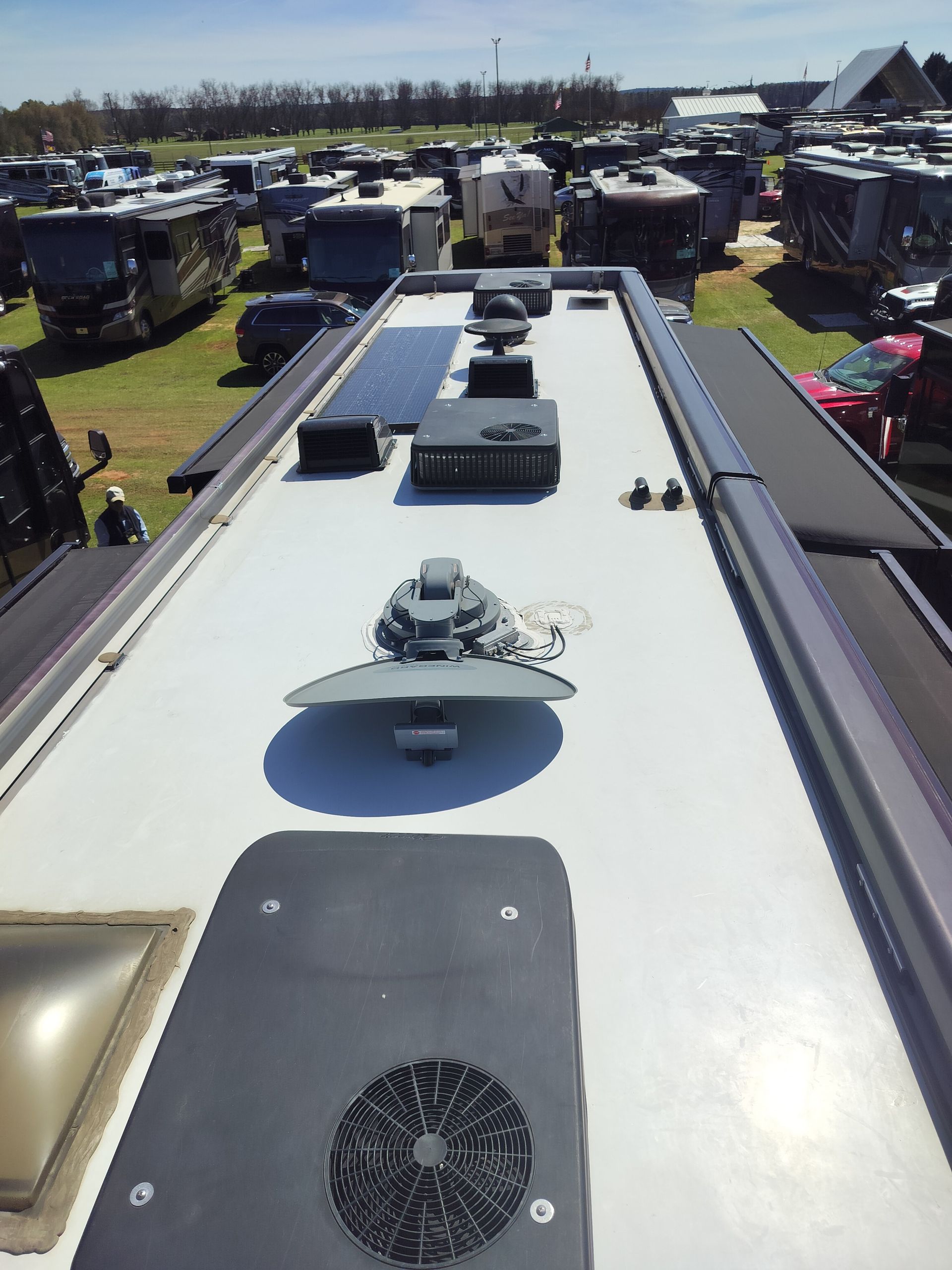
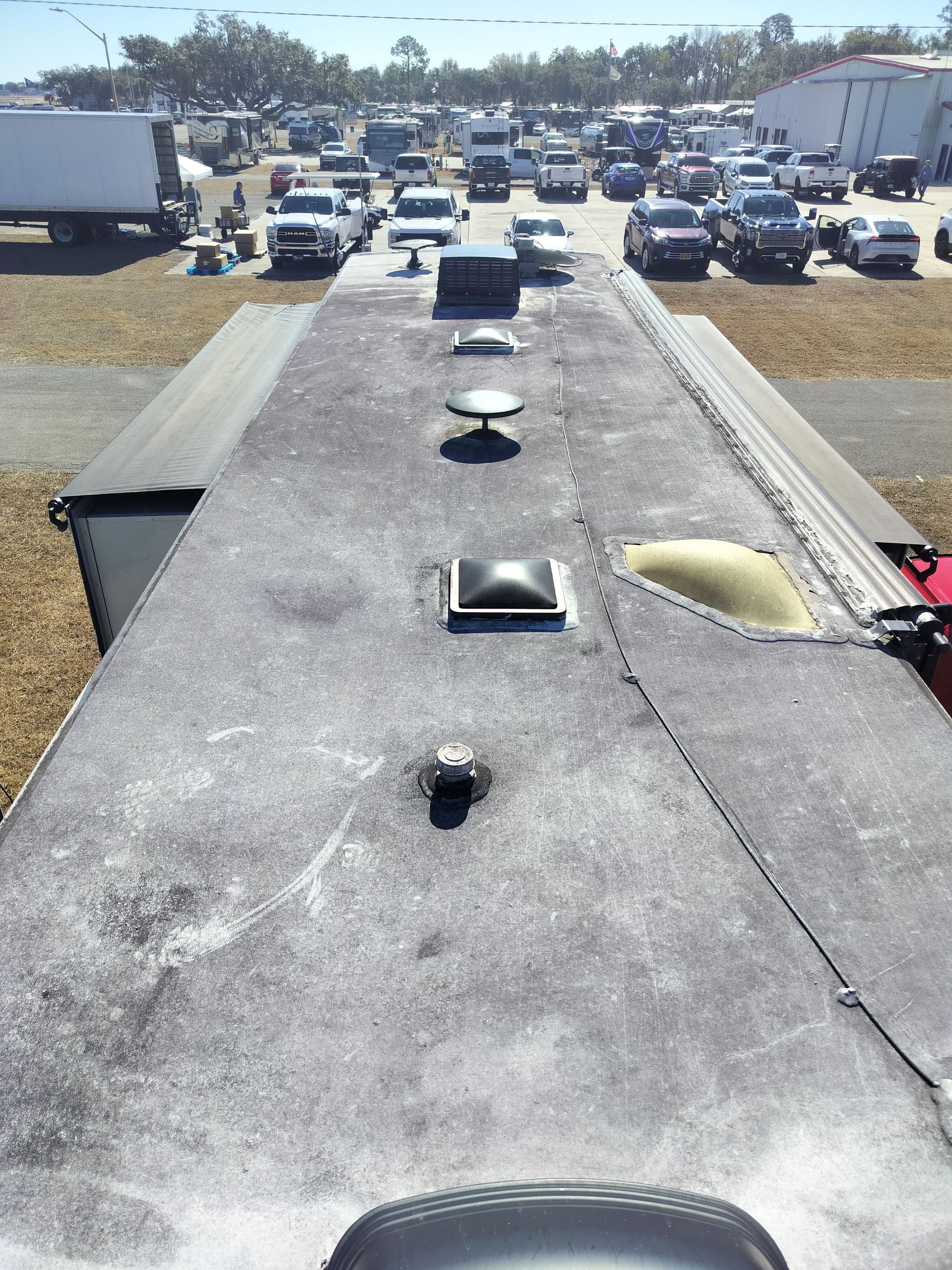
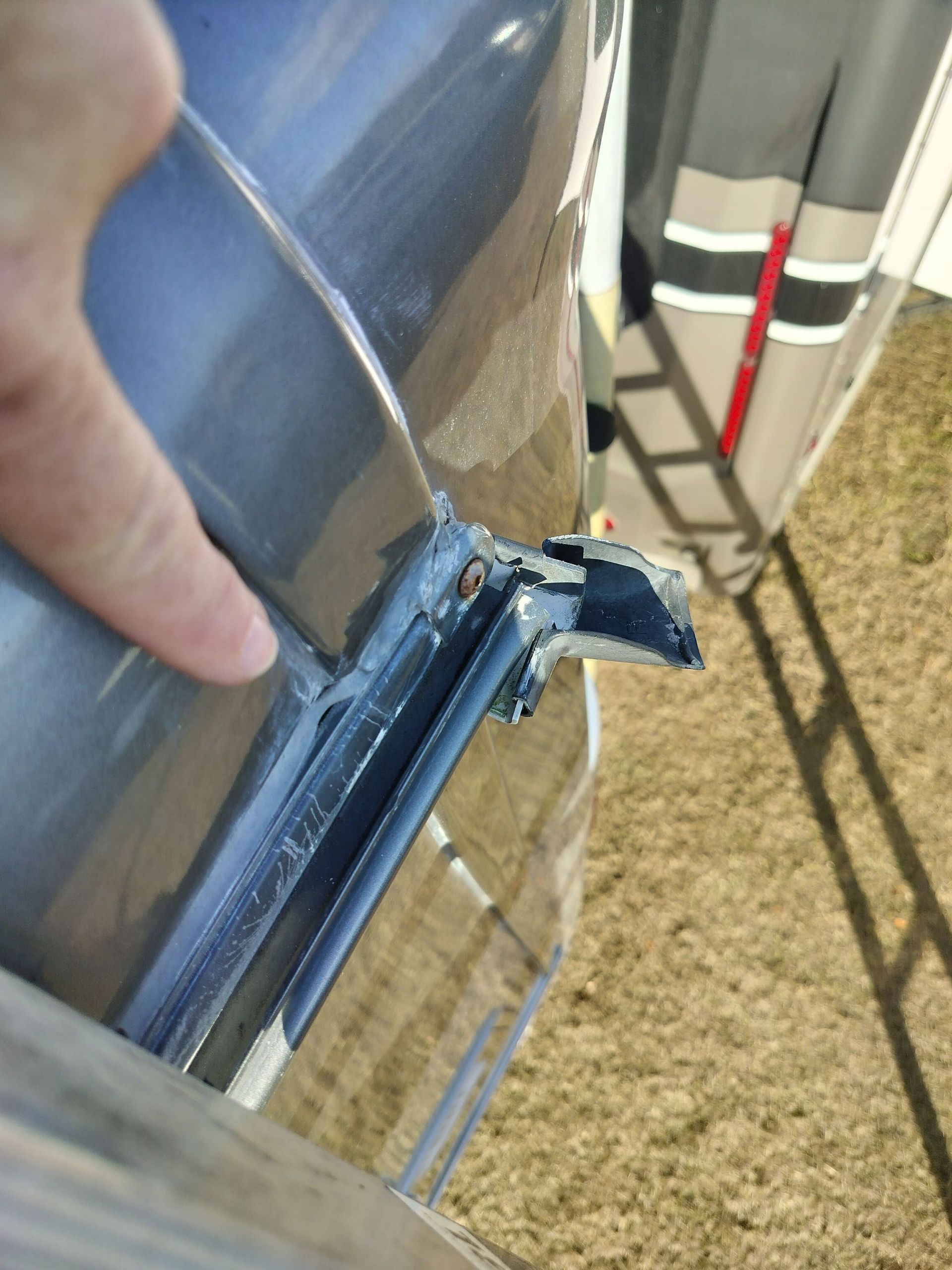
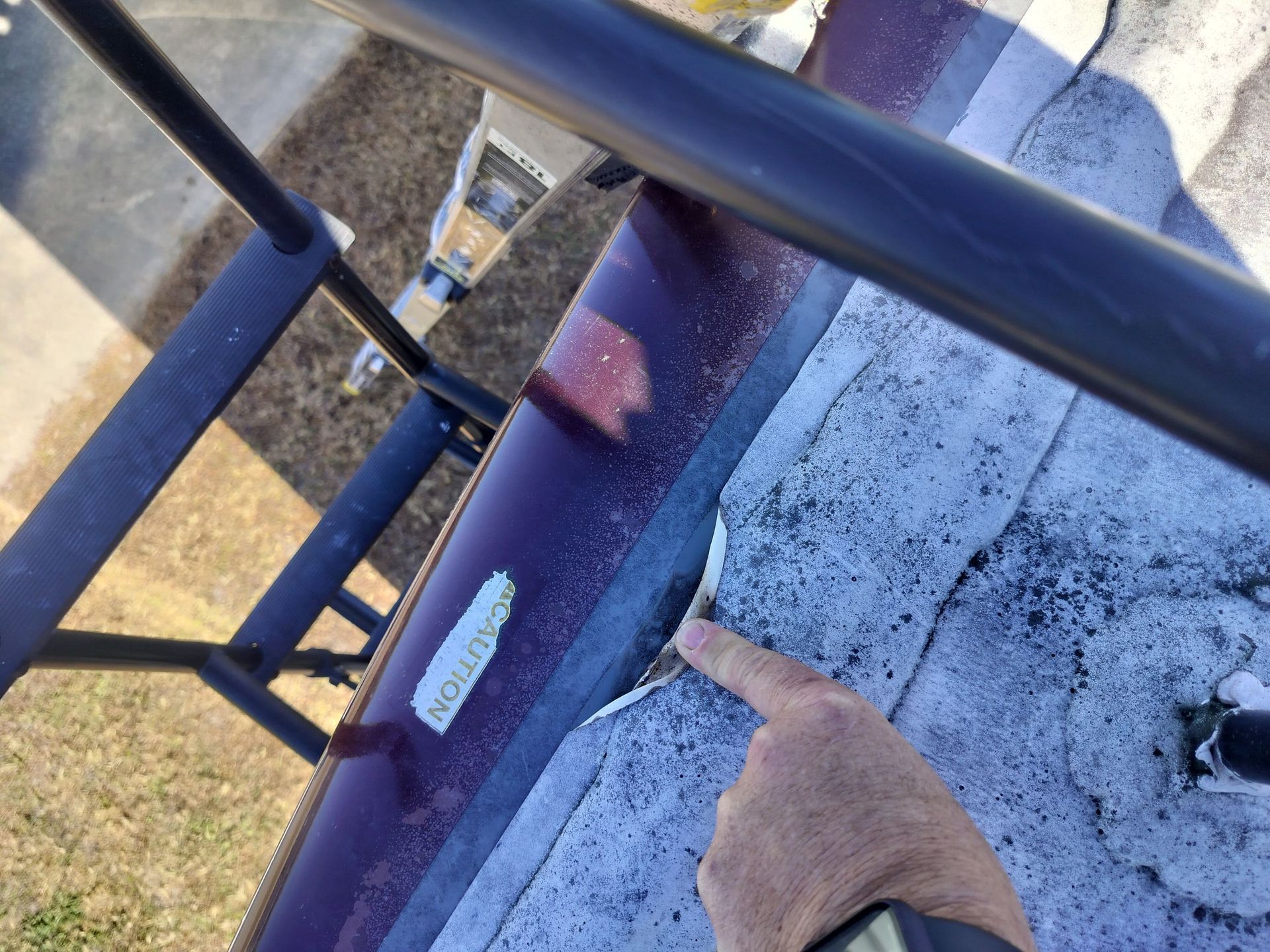
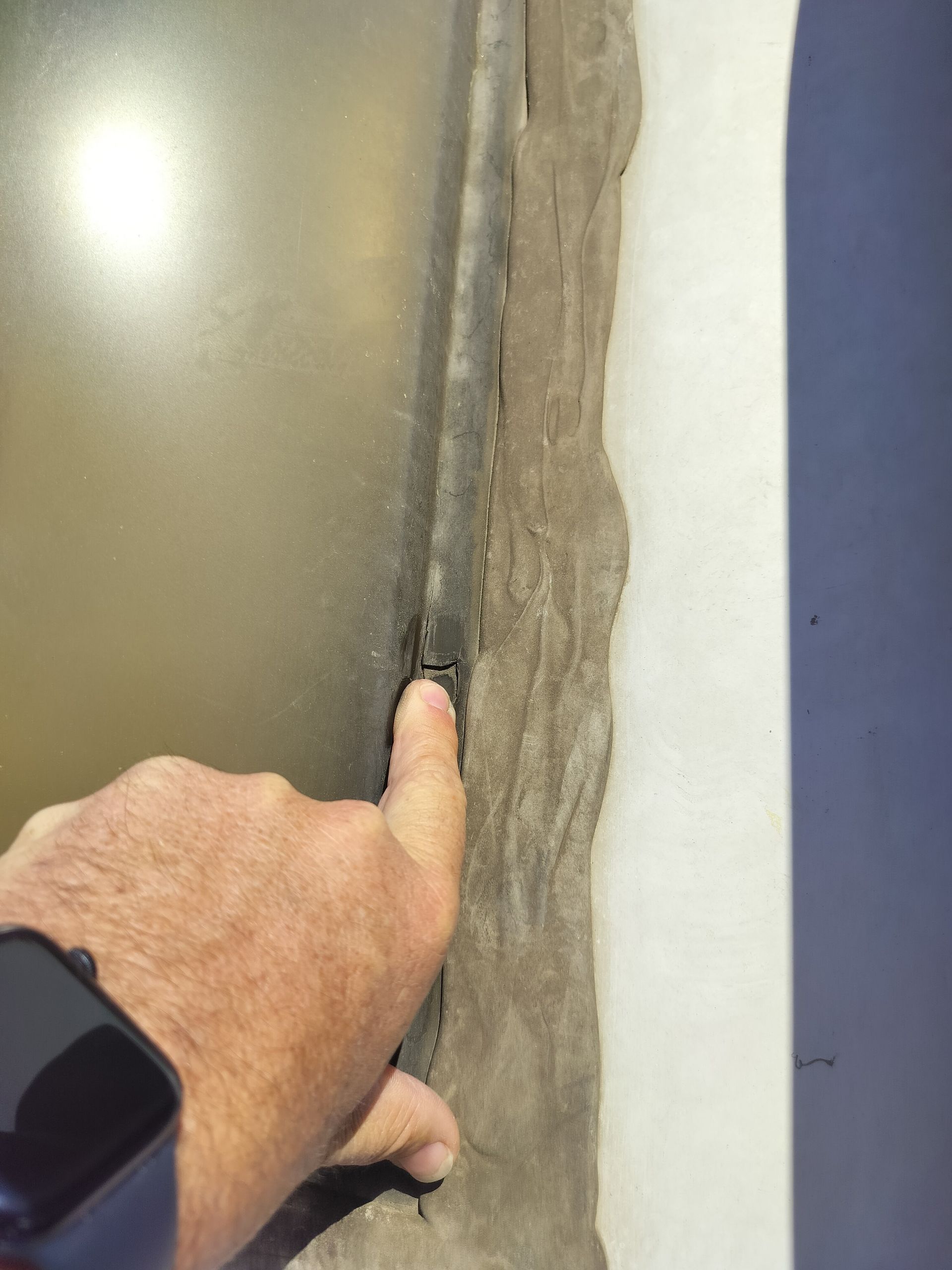
The photos in this article come from real roof inspections we’ve done at rallies and events across the country. And the RV owners pictured? They’re people who ultimately told us their roofs were in good enough condition and didn’t need any work from us.
We share these images because they’re real, unfiltered examples of what we see on the road — not scare tactics, not marketing gimmicks. Just honest education so you can make informed decisions about your own RV.
But that’s not the only reason we’re writing this.
Between RV Roofing Solutions and Learn to RV, we’ve spent years in this industry — climbing onto rooftops in every corner of the country, teaching seminars, answering questions at shows and rallies, and seeing firsthand what happens when roof maintenance gets skipped for one season too many. That knowledge doesn’t belong only to our customers. It belongs to the entire RV community.
So whether you choose RV Roofing Solutions for your roof work or go with someone else, this guide is for you. It’s education rooted in experience, shared with genuine concern for your safety, your investment, and your peace of mind. Because after seeing more water damage than we can count, we can tell you this with confidence: a little spring maintenance goes a very long way.
A Quick but Important Note: The maintenance guidance in this article is written specifically for standard OEM roofs, otherwise known as, the roof your RV came with from the factory. If you have an aftermarket roofing system, like ours, already installed on your rig, the products, processes, and recommendations that apply to your roof may be very different.
Before performing any maintenance or applying any products to an aftermarket system, check with the company that installed it for care and maintenance guidelines specific to that system. Applying the wrong products to an aftermarket roof can void warranties and cause compatibility issues that are expensive to fix.
If you're not sure what type of roof you have or whether an aftermarket system has been applied at any point, that's worth finding out before you put anything on it. We're always happy to help you figure that out — just reach out.

Why Spring Is the Most Important Time to Check Your Roof
Winter is hard on an RV roof — and it is not just because of the obvious stuff like ice and snow.
Here is what is actually happening up there while your rig sits through the cold months. When temperatures drop, the rubber membrane on your roof contracts. When it warms back up, it expands. Every single freeze-thaw cycle puts stress on the material and on every seam, seal, and termination bar it is attached to. Do that dozens of times over a winter and you have created movement in places that are supposed to stay still.
Snow pack adds its own layer of trouble. The weight alone is one thing, but it is the moisture that causes the real damage. Snow sitting on a roof for days or weeks works its way into every micro-crack and imperfection in your sealant. When it freezes again, that moisture expands and pushes those cracks a little wider. A seal that was just barely holding in November may not be holding at all by March or April.
And then there is the caulk. UV exposure over years of travel already does a number on caulk, it dries it out, makes it brittle, causes it to shrink away from the edges it is supposed to protect. Add freezing temperatures on top of already-aging sealant and you have a recipe for cracks, gaps, and separations that are nearly invisible until water finds them.
The real problem with all of this is that none of it announces itself. There is no alarm. There is no leak dripping into your living area while the rig is parked and covered. The damage just sits there quietly, doing its thing, waiting for the first good rain of spring to show you exactly where your weak spots are — and you usually find out at the worst possible moment, two hours into a trip you have been planning for months.
Spring is your window. Before the season kicks in, before the rig gets loaded up and pointed down the highway, get up on that roof and take a good honest look at what winter left behind. Fifteen to twenty minutes of attention now can save you thousands of dollars and a ruined trip later. Don't forget to wash the roof too.... here is
our guide.

Step One: The Spring Roof Inspection
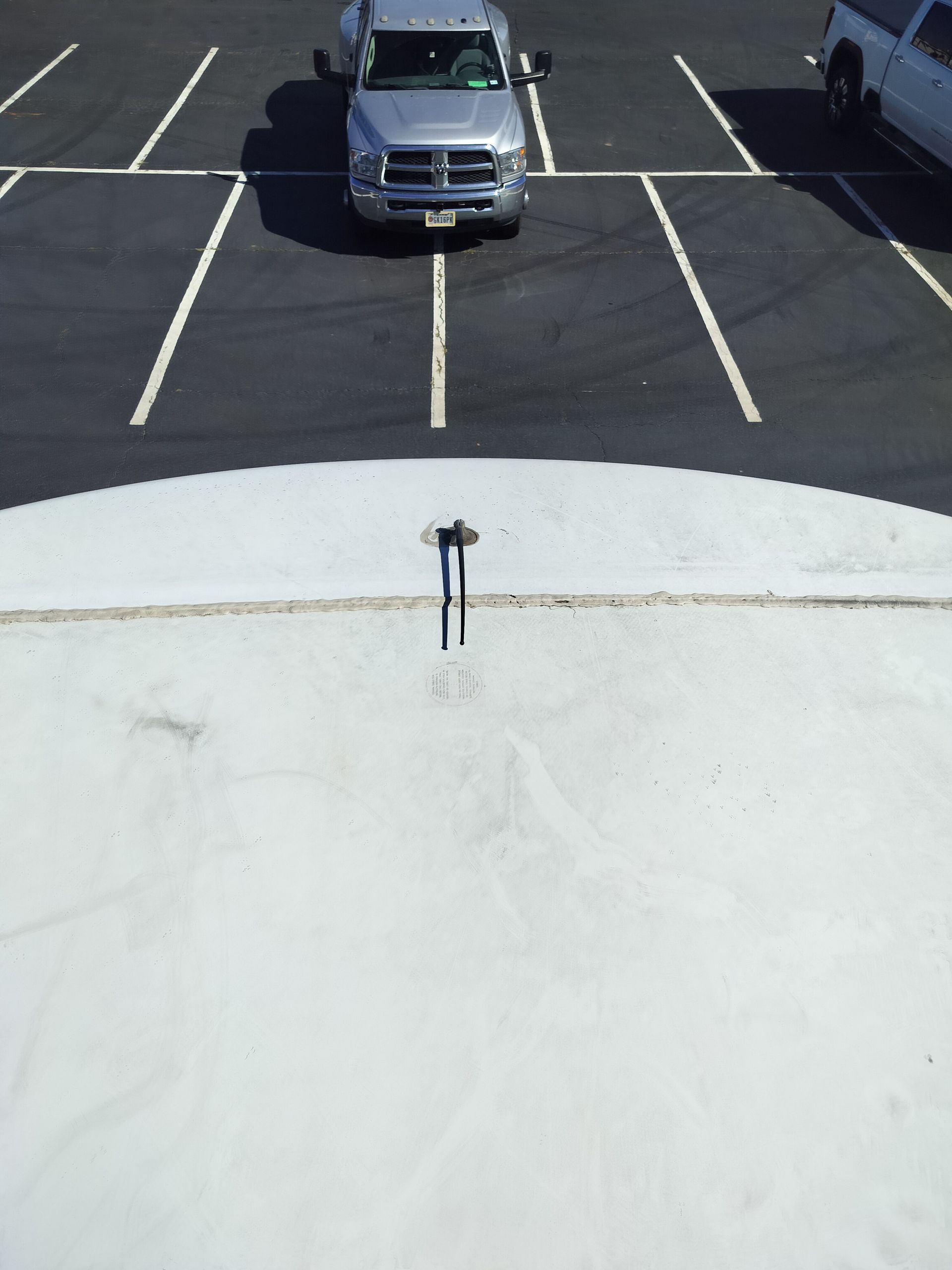
Before you touch anything, walk the entire roof and take stock of what you're working with. You're looking for a few specific things.
The overall surface condition.
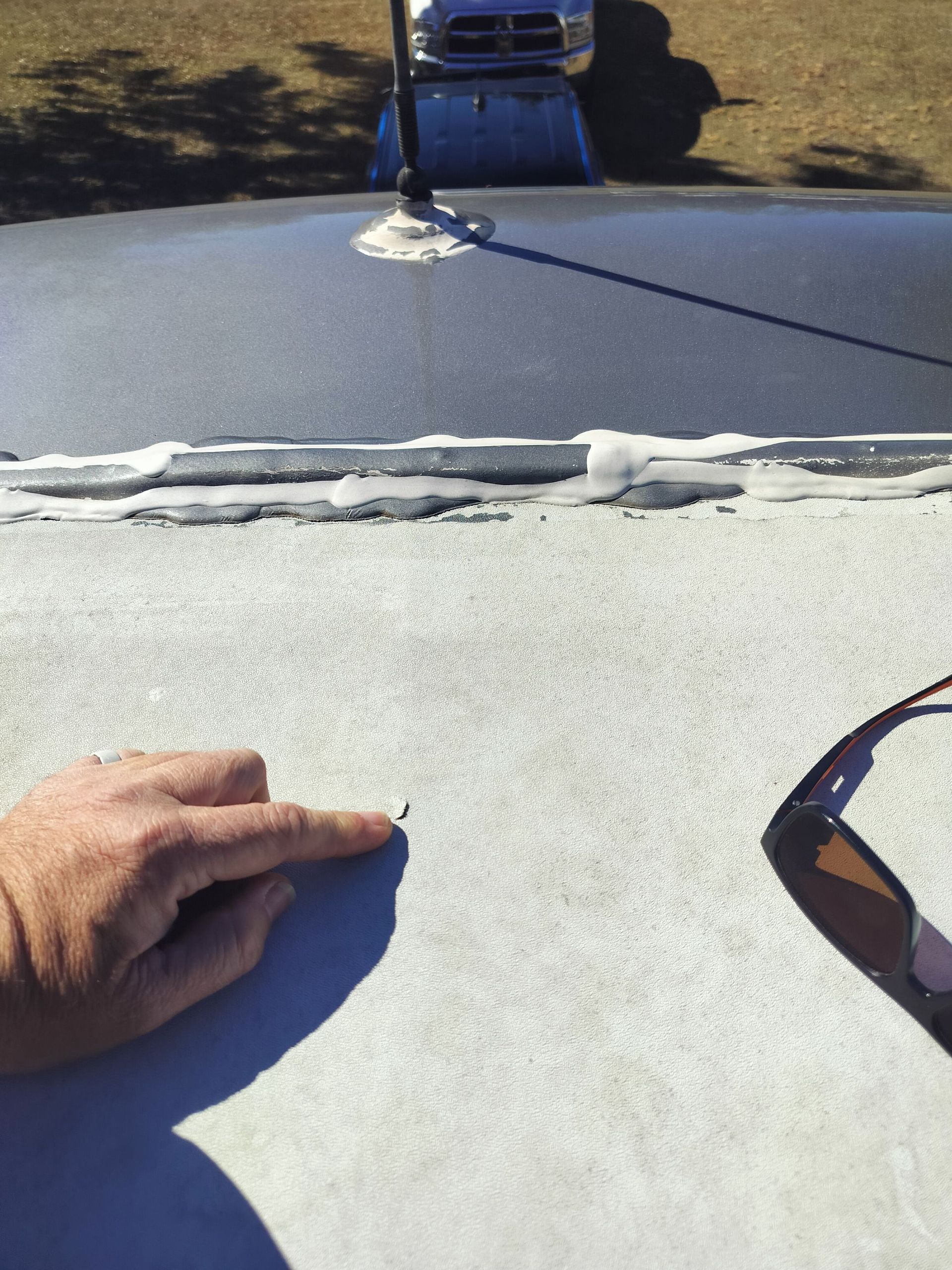
Walk slowly and look at the full membrane. On rubber roofs look for cracks, tears, bubbling, or areas where the membrane has lifted away from the surface.
On fiberglass look for that fine spider-web cracking that develops over time from UV exposure. Is your roof chalking? We have an entire blog dedicated to why this might be happening.
On aluminum look for seam separation or corrosion. Any break in the surface is a potential water entry point and needs to be addressed before you hit the road.
Soft or spongy spots. This is the one that tells you water has already gotten in. As you walk the roof, press gently with your foot in different areas. A healthy roof feels solid and firm. Any area that feels soft, spongy, or that flexes under your weight means moisture has reached the decking underneath. We'll talk more about what to do in that situation a little further down.
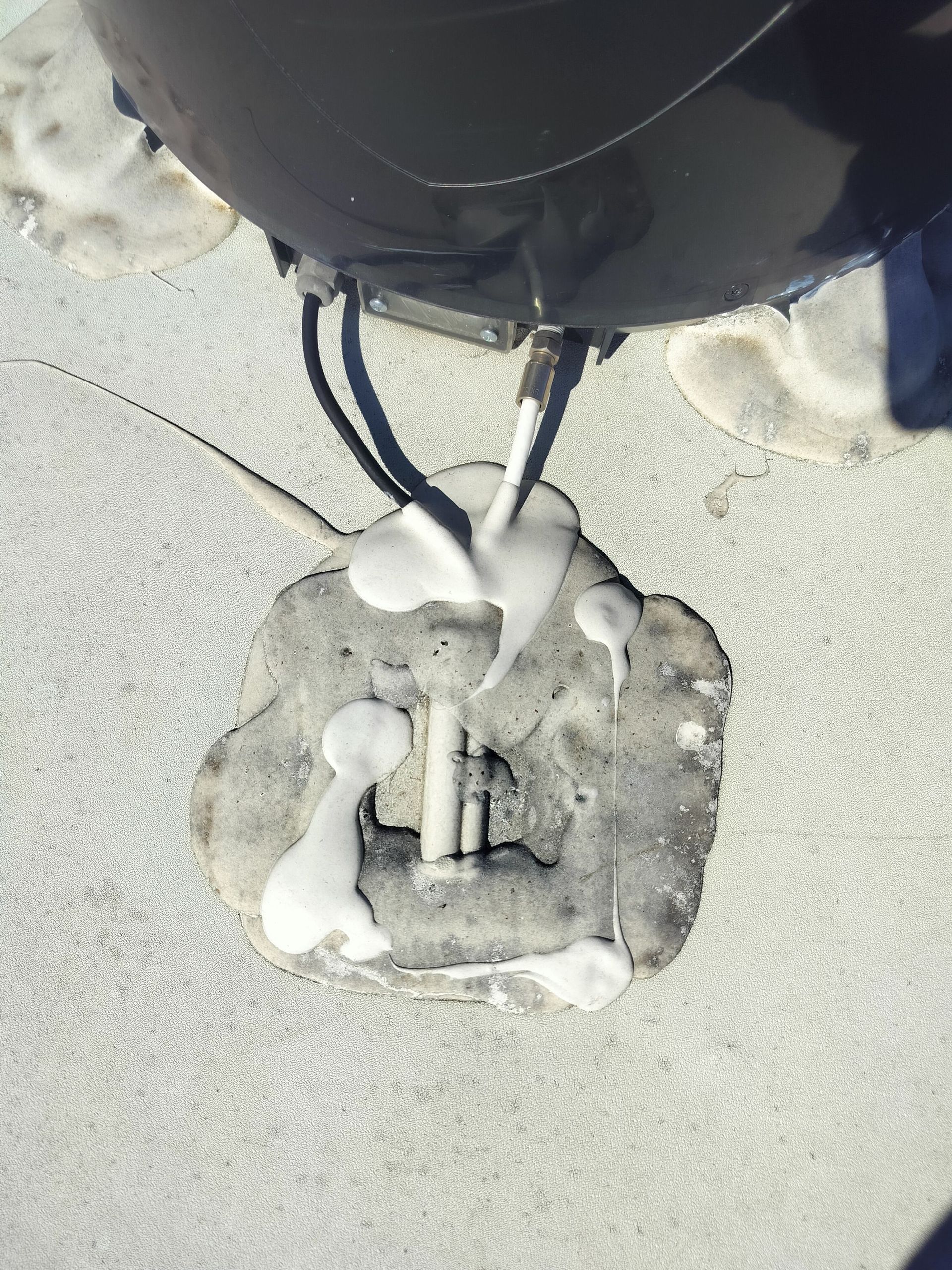
Every penetration point. Vents, skylights, AC units, antennas, solar panels, exhaust covers, the front and rear termination bars, and along both sides of the radius — every single place where something comes through your roof is a potential failure point. Get close and look at the sealant around each one. You're looking for cracking, shrinking, gaps, discoloration, or sealant that has pulled away from the surface it's meant to be sealing.
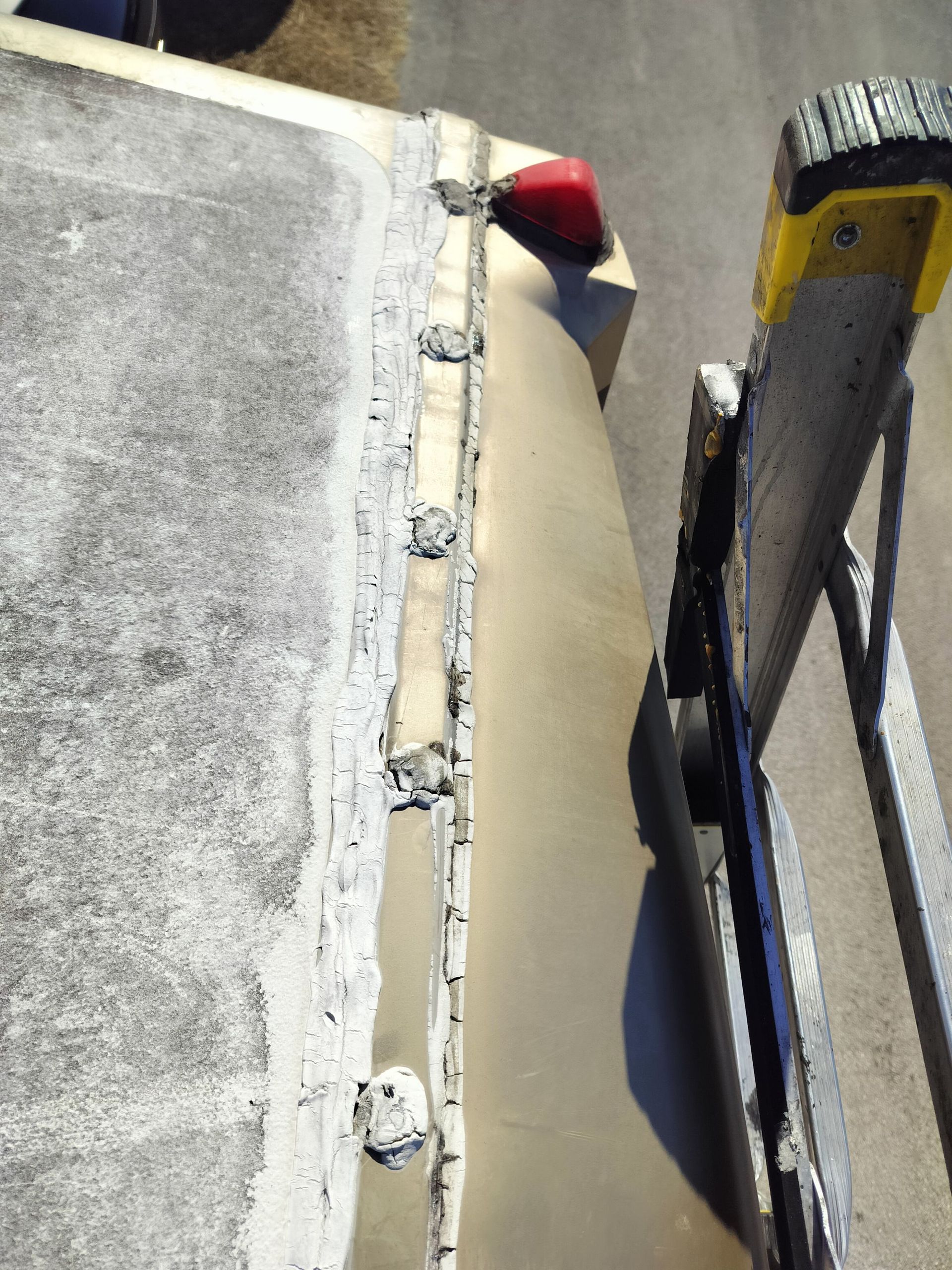
The seams. The front and rear caps where your roof meets the sidewalls, and any seams running across the roof, deserve close attention. These areas move with the rig as you travel and the sealant here takes a beating over time.
Take photos as you go. A before and after record of your roof's condition is genuinely useful — both for tracking changes over time and for insurance purposes if something comes up down the road.

Step Two: Understanding What You're Looking At With Sealant
Not all sealant failure looks the same and it's worth knowing the difference between what needs attention now and what needs attention immediately.
Dry and chalky sealant that hasn't yet cracked or pulled away is early stage deterioration. It has lost its flexibility but is still providing some protection. This is your yellow flag — address it this season before it becomes a red one.
Cracked sealant has failed. Cracks are open pathways for water, and even hairline cracks that look minor can allow significant moisture intrusion over time. This needs to be addressed now, before you travel.
Sealant that has pulled away from the surface — either lifting at the edges or separating from the vent, skylight, or seam it was protecting — is an active leak risk. In wet conditions water will find this gap every single time. This is a red flag and it moves to the top of your to-do list.
Missing sealant means it has already failed completely. If you find bare areas where sealant used to be, assume water has already found that spot and inspect the interior of your rig near that area for any signs of staining or moisture.

Step Three: How to Properly Remove and Reseal — The Right Way
This is where most DIY roof maintenance goes wrong. People add new sealant on top of old sealant, or they do a quick patch without proper prep, and then wonder why it fails again within a season. Proper resealing takes time and it takes the right approach. Here's how to do it correctly.
Remove the old sealant completely. This is the step that gets skipped most often and it's the most important one. New sealant applied over old, failed sealant is only as good as what's underneath it — which is nothing. Use a plastic scraper or a dedicated sealant removal tool to lift and remove as much of the existing sealant as possible. Take your time. This is not a step to rush.
Clean the surface thoroughly. Once the old sealant is removed, clean the area with an appropriate cleaner for your roof type. The surface needs to be completely clean, dry, and free of residue before anything new goes on. Dust, grime, old sealant residue, and moisture will all compromise adhesion. If you're not sure what cleaner is right for your roof material, this is worth a quick call to a professional rather than a guess. An industry trusted product can make all the difference.
Use the right sealant for your roof type. This matters more than most people realize. Self-leveling sealant is designed for flat or low-pitch horizontal surfaces like the field of your roof. Non-sag or non-leveling sealant is for vertical surfaces and areas where you need the product to stay in place rather than flow. Using the wrong type in the wrong place is a recipe for failure. Additionally, make sure the sealant you choose is compatible with your specific roof material — not all sealants work well on all surfaces.
Apply generously and tool the edges. Apply enough sealant to fully cover the area and create a complete seal, then smooth and tool the edges so there are no gaps, bubbles, or lifted edges where water could sneak underneath. A finished seal should look clean and continuous with no interruptions.
Let it cure fully before exposing it to the weather. Check the manufacturer's recommended cure time and respect it. A sealant that hasn't cured properly hasn't bonded properly — and an uncured seal in a rainstorm is no seal at all.

The Inspection Mistakes That Cost People the Most
We are going to be straight with you here, because we see these same mistakes play out over and over & every single one of them is avoidable.
Don’t Rush through it. This is the big one. You climb up, do a quick lap, think everything looks fine, and climb back down in under five minutes. That is not an inspection. That is a glance. A real roof inspection is slow and deliberate — you are moving across the entire surface on your hands and knees, pressing and feeling as you go, not scanning from a standing position and calling it done. The things that matter are rarely obvious from three feet away.
Only checking the areas you can see easily. The front of the roof is often not where the problems hide. The problems hide behind the A/C units, in the corners of the radius edges, underneath the termination bars, and along the seams near the slides. If you are not checking those spots specifically, you are not really checking the roof.
Don’t Write off the small cracks. Small cracks are not small problems. A hairline crack in a sealant joint is a water entry point that will grow — guaranteed. Cold temperatures, UV exposure, and the natural flexing of the rig as you drive will make that crack bigger every single season until water finds it. The time to fix a small crack is while it is still a small crack.
Skipping the interior. Get inside and look at your ceiling panels, around your vents, above your slide openings, and along any exterior wall where the roof meets the sides. Water stains, soft spots, bubbling, or discoloration in the interior are often the first real sign that water has already been moving through a place it should not be. By the time you can see it inside, it has usually been happening for a while.
Don’t Assume there is no active leak means no damage. This one might be the most dangerous assumption in RV ownership. A roof can have compromised seals, cracked caulk, and membrane separation that is letting moisture in without producing a visible drip inside the rig — yet. The water may be sitting in the decking, slowly softening it. It may be pooling inside a wall cavity. It may be doing damage you will not see for another season. The absence of a leak is not a clean bill of health. It is just a head start on finding the problem before it finds you.
The inspection that actually protects your investment is slow, methodical, and covers every inch — not just the parts that are easy to reach.

What to Do If You Find Soft Spots
Soft or spongy decking means moisture has already penetrated and is actively breaking down the structural material beneath your roof membrane. This is not a sealant job. This is a conversation with a professional.
Here's why it matters: if you reseal over a soft spot without addressing the damaged decking underneath, you are sealing moisture inside your roof structure. That moisture continues to do damage — to the wood, to the insulation, to the walls — even after the surface above it looks perfectly fine. We have seen this play out more times than we can count and it never ends well.
If you find soft spots during your spring inspection, the right move is to get a professional assessment before you do anything else. The extent of the damage needs to be evaluated before a repair plan can be made — and in some cases what looks like a small soft spot is connected to a larger moisture intrusion that isn't visible from the surface.
Knowing When to Call a Professional
There's a lot a motivated RV owner can handle on their own when it comes to roof maintenance. A thorough inspection, routine resealing, keeping penetration points clean and protected, these are all within reach with the right products, the right prep, and the right information.
But there are situations where a professional is the right call & far to often, trying to DIY your way through them can make things significantly worse.
Call a professional if you find soft or spongy spots anywhere on the roof. Call a professional if you're seeing interior water stains and can't locate the source. Call a professional if your roof membrane has significant cracking, tearing, or separation from the decking. Call a professional if you find delamination on your exterior sidewalls — bubbling or waviness in the fiberglass skin — which almost always points to water intrusion from above. And call a professional if you're not sure what products are already on your roof, because applying the wrong coating or sealant over an incompatible existing product can create a failure that's far more expensive than the original problem.
There's no shame in knowing the line between maintenance and repair. The RV owners who keep their rigs in the best condition over the long haul are the ones who handle the routine stuff consistently and call for help when the situation calls for it.

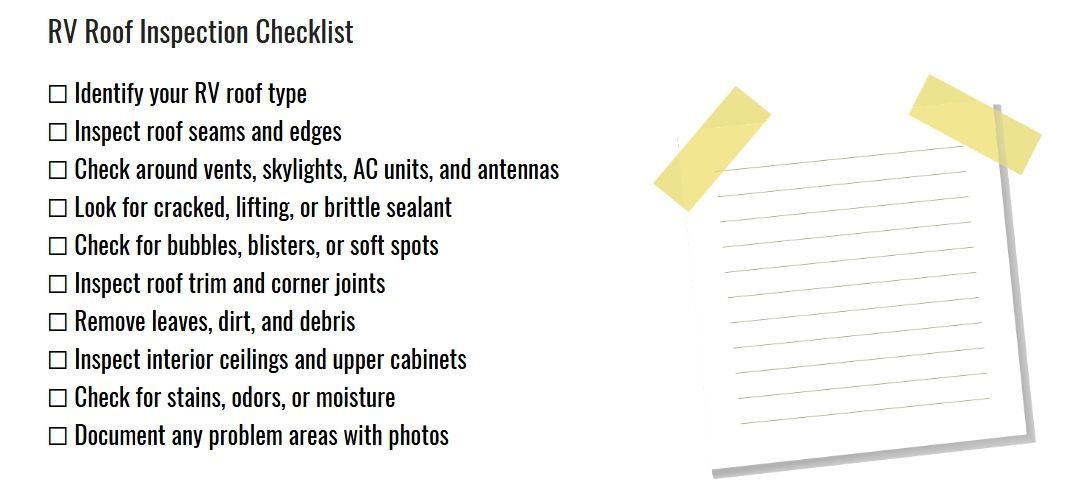
A Quick Spring Roof Checklist
- Walk the full roof surface & check for cracks, tears, bubbling, or membrane separation.
- Press gently across the surface in multiple spots checking for soft or spongy decking.
- Inspect all sealant around every vent, skylight, AC unit, antenna, and seam.
- Remove and replace any sealant that is cracked, dry, pulled away, or missing.
- Check the front and rear cap seams and any roof seams carefully.
- Inspect interior ceilings and upper walls for water staining.
- Check inside overhead cabinets near the roofline for any signs of moisture.
- Document your inspection with photos for your records.
One More Thing
We said it at the top and we will say it again here at the bottom — this guide exists because we genuinely care about this community. Not because we are trying to sell you something. Because we have been in this lifestyle long enough to know how fast a preventable problem becomes an expensive, trip-ruining one, and we would rather you never find out the hard way.
Here is something our technicians will tell you straight: it is rare, genuinely rare, to get up on an RV roof and find it in pristine condition. Even rigs that have been well cared for, stored properly, and inspected regularly almost always have something that needs attention. That is not a reflection of how you have maintained your rig. It is just the reality of what roofs go through — the sun, the temperature swings, the miles, the seasons.
And here is something worth knowing: many of our clients choose an RV Roofing Solutions system before their roof ever springs a leak. Not because something is wrong, but because they understand what is coming if they wait, and they would rather get ahead of it than react to it. A proactive maintenance-free RV roofing system eliminates caulking & is a fraction of the headache of dealing with water damage after the fact.
If you have questions about what you found during your inspection, whether it is something you can handle yourself or something that needs a professional set of eyes, we are always happy to talk it through. That is true whether you are an RV Roofing Solutions client or not. Call us, email us, find us in the community. We are here.
Here is to a great spring season, a healthy roof over your head, & a lot of good miles ahead.

Is a Maintenace Free RV Roofing System Right for you?
A maintenance‑free RV roofing system isn’t just about skipping caulking... it’s about removing one of the biggest stress points in RV ownership.
If you’ve ever climbed onto your roof with a tube of sealant and a prayer, you already know why this matters.
A maintenance‑free RV roofing system is ideal for RVers who want less work, more safety, and long‑term protection
You're Tired of caulking
You don't like being on your RV roof or have mobility issues
You want to protect your RV