
How Do RVers Protect Themselves from Identity Theft?
Jennifer Sansford - Shield Your Journey • May 23, 2026
My husband is the techie in our relationship. In my world, that means he's the one who thinks about things I don't and occasionally explains them to me in ways that stick.
We were talking once about the risks of public WiFi. I wasn't thinking much of it—honestly, we have our own internet, we don't rely on campground networks, I figured we were pretty well covered.
And then he showed me something.

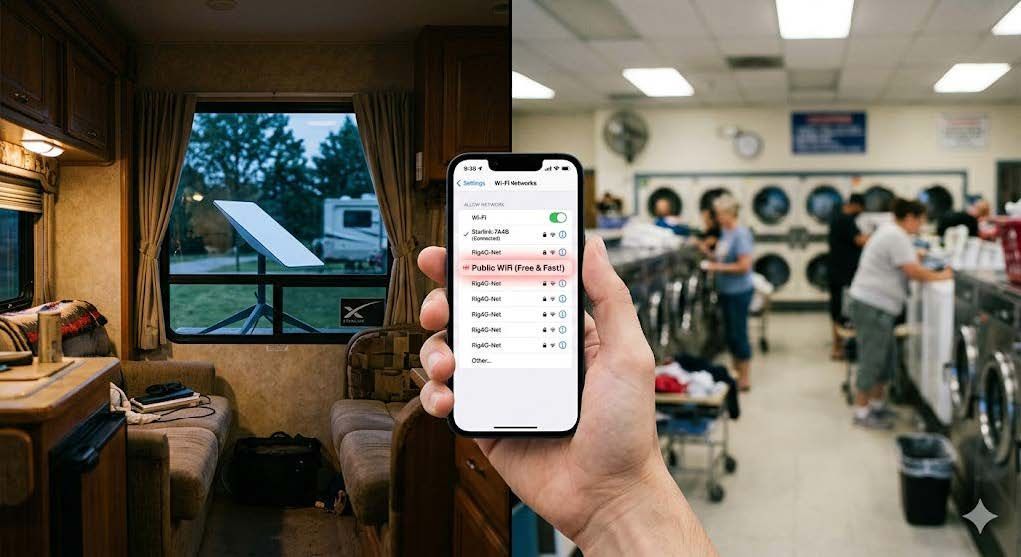
He picked up his phone, went into his settings, and renamed his personal hotspot. Just like that, it said "Starbucks WiFi." He looked at me and said if I were a bad actor, I could sit in the corner of any coffee shop in America, broadcast that name, and people would connect to me thinking it was the real thing. And once they're on my network, I can see a lot of what they're doing.
He's not a bad actor. But someone else is.
That conversation changed the way I think about being out in the world. Not in a paranoid way but in a quiet, eyes-open way that I think every full-timing family deserves to have.

The Part We've Already Solved - And the Part We Haven't
Most full-timers have figured out the campground WiFi problem.
We've got Starlink or a solid cellular setup, and we're not relying on whatever the park is broadcasting. That's a real solution and it covers a lot.
But Starlink stays at the rig. The question is what happens when we leave—and for a full-timing family, we leave a lot. Restaurants, laundromats, coffee shops, mall food courts, while we're waiting on parts or an oil change, rest stops on a long travel day.
These are the moments when many people reach for whatever WiFi is available, because our own setup isn't in our pocket. And these are exactly the moments the demonstration my husband does is designed to exploit.
It's called an "evil twin" attack in the security world. Someone creates a network that looks legitimate—same name, same feel—and people connect out of habit. Their information passes through that person's device on the way to the internet. No warning. No indication that anything is wrong.
For families who are in a new location almost constantly, this risk is real. We don't always know what the coffee shop WiFi is supposed to be called. We're connecting quickly because we have kids to feed and lessons to finish and a route to plan. We are exactly the kind of people this is designed to catch.

Our Kids Are Connecting Too
This is the part that, honestly, concerns me the most.
When we sit down at a restaurant or walk into a store, our kids pull out their devices. They connect to whatever is available. They're not thinking about whether the network is legitimate—they're thinking about their show, their game, their message to a friend.
They're kids.
But their devices carry real information. Saved passwords. App logins. Accounts connected to our family's financial information. And when they connect to a network we didn't set up, all of that travels across it.
It's not something I think about every single time we're out. But it's something I thought about once, seriously, and it changed what protections we have in place. Because protecting our family on the road isn't just about the adults.

And Then There Are the Gas Stations
Identity theft is the number one reported consumer fraud crime in the United States—the Federal Trade Commission receives over a million reports a year.
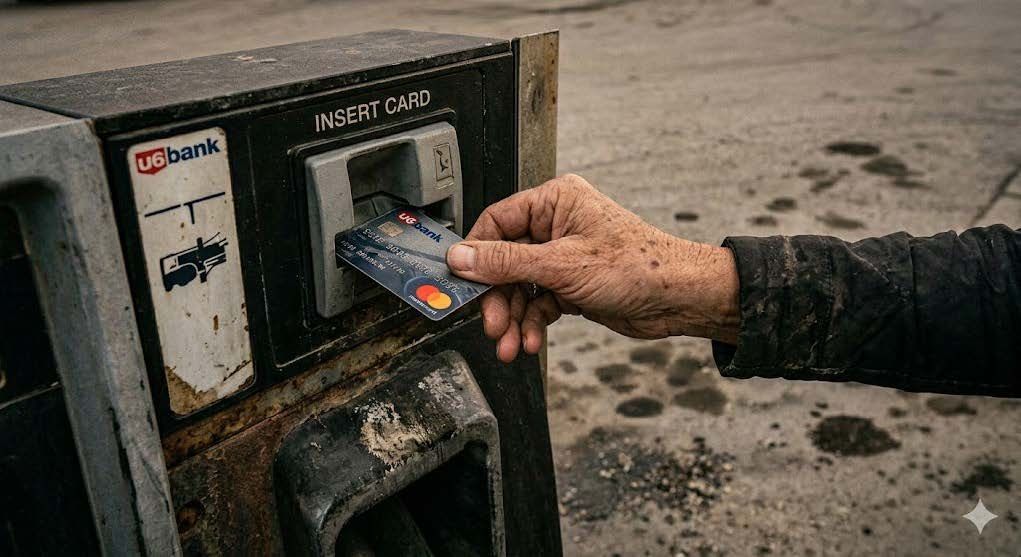
One of the oldest and most widespread methods is still the gas pump skimmer. These are small devices placed on card readers that silently collect payment information, often for weeks before anyone finds them. You swipe, the pump works fine, you drive away. The breach already happened.
RV families fill up at gas stations all over the country—big truck stops, small independents, everywhere in between. More stations than most families will ever see. That's just the reality of the lifestyle.
More transactions, more exposure, more potential points of compromise. The dangerous part isn't the moment it happens. It's that you don't know.
It Happened to Us - Before We Even Hit the Road
This next part is personal.
Before we were full-time, my husband discovered that someone had opened a cell phone account in his name. He hadn't applied for anything. Someone had used his information—and a fake ID—to open an account under his identity.
He called the cell phone company over and over. Each time he ran into a wall. What changed everything was speaking to a specialist—someone who knew exactly how these situations work and, more importantly, knew exactly what language to use. They coached him on what to say and how to frame the dispute.
When he went back armed with that guidance, the conversation shifted completely They confirmed that the ID used to open it wasn't his, flagged it as fraud, and had it removed from his
credit report.
The difference between those calls wasn't new information; it was knowing how to navigate the system.
If that situation happened today, on the road, managing it from our phones while traveling and teaching our kids—it would be a different challenge entirely. The need to have someone in your corner who knows how to handle this doesn't go away when you become a full-timer.

One Full-Timer to Another
What I want you to know is that we didn't get an IDShield membership because we went full-time. We had it for years before we ever hit the road.
We understood early on that this kind of thing can happen to anyone and that navigating it alone is harder than it needs to be.
And I can tell you honestly—it changes how you feel out here. Not in a dramatic way. We're not walking around thinking about identity theft every day. But there's a quietness that comes from knowing you're covered.
When we pull into a gas station, when the kids connect their tablets, when we're managing finances from a rest stop parking lot—it's just not something that takes up space in my head anymore. We handled it. It's done.
If You Want to Have That Conversation
If any of this resonated and you want to talk through what protection looks like for you —not a sales pitch, just an honest conversation between two RV families—I offer a free 30-minute call for exactly that purpose.

Other blogs you might like...