Exploring the Skies from the Road: Using a Mini Smart Telescope While Living in an RV
Michael Gardner • December 17, 2025
Living in an RV offers unparalleled freedom, whisking you away to stunning landscapes and star-filled nights unspoiled by the glow of city lights.
For those passionate about astronomy or simply enchanted by the mysteries above, a mini smart telescope can make your travels truly unforgettable: a lot more fun. In this guide, we’ll discuss how a mini smart telescope complements the RV lifestyle, highlight some outstanding models—including Seestar and Dwarf telescopes—and share tips for making the most of your cosmic adventures.

Why a Mini Smart Telescope Is Ideal for RV Living
I first tried a large 8” Celestron Nexstar, plus camera, better view scope, focus motor, laptop, huge tripod, large, padded bag to store it all, etc., etc., etc. I took up about 10 cubic feet of space, weighed 50 pounds and took at least 30 minutes to set up, all before doing a star alignment. I rarely managed to get good pictures – there were just too many ways for it not to work after coming out of an RV. Eventually I sold the rig to someone with a home and lots of friends into astrophotography to help him make it work.
Space inside your RV is precious, and mini smart telescopes are designed with this reality in mind. Their compact, lightweight formats and intelligent features make them the perfect companion for mobile stargazers. Here’s why they shine for travelers:
- Portability: Mini smart telescopes, including Seestar and Dwarf, typically weigh just a few pounds and can be packed or stowed away with ease.
- Smart Technology: Automated tracking, wireless app control, and intuitive interfaces mean you spend less time setting up and more time observing.
- Quick Setup: These telescopes often feature simple alignment and rapid calibration, so you’re ready to explore the stars in minutes.
- Social Sharing: Connect your telescope to your smartphone or tablet to snap photos and share live views with friends, family, or fellow campers.
- Both the Seestar S50 and the Dwarf 3 can shoot daytime landscape images as well as general object tracking (like wildlife). Additionally, the Dwarf 3 can shoot modest sized panoramas. Both can also shoot the sun with the included solar filter.
Best Practices for Stargazing from an RV
To enjoy dazzling views wherever you roam, remember these practical tips:.


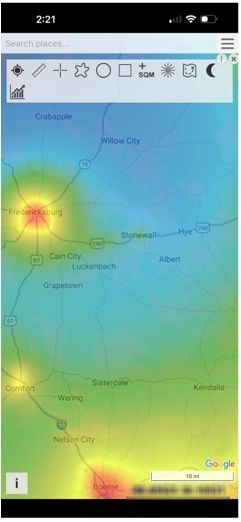
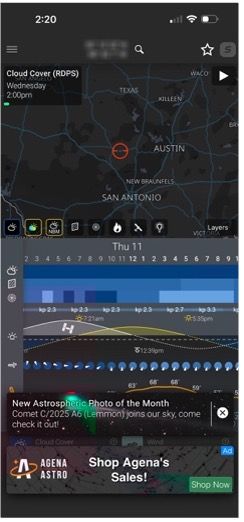
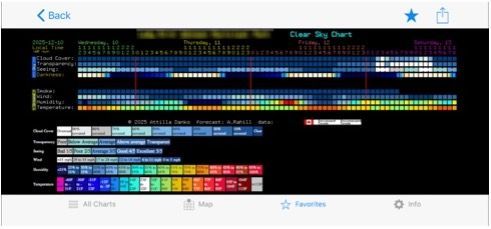
1. IF, getting the best Astro pictures is your priority, then choose camp sites with minimal light pollution—remote parks and wildland campgrounds are ideal. There are phone apps like LightPollutionMap (IOS, Android) to check your or nearby locations or places you plan to camp. I also use iCSC (IOS) to look at current and near future conditions at nearby locations that have weather stations or observatories. I also use Astrospheric (IOS and Android). With these apps I can plan a few days in advance for the best conditions. You don’t want to spend all night trying to capture a faint nebula and realize in the morning you had 6 hours of cloudy skies.
2. Stabilize your telescope outside the RV to avoid vibrations and carefully level it. Smart scopes depend on careful leveling and calibration to make the most of an observing session. Most models come with a sturdy tripod or can be placed on a portable table but be careful. If you set up on a picnic table you cannot sit on or even touch the table while calibrating or shooting.
3. Pair with astronomy apps for guided tours of the night sky, scheduled events, and celestial alerts. There are many apps that can help you plan a nights observation, including the apps that come with your particular scope. They can tell you what objects will best show up for a particular location and night. They apps allow you to program in a plan for the night – you can shoot one object for as long as it is visible or set up multiple shorter sequences of different objects.
4. Bring extra power banks or extension cords to keep your scope powered for the full session. While the scope battery can keep it running for several hours, you can run out of battery, especially if using the dew heater function. Most of the time, I’m shooting withing 50 feet of my RV, and thus an extension cord and a USB charger keeps my scope running all night. You can also use a USB battery pack or even more than one pack; daisy chained (plug second pack into charge port of first, etc).
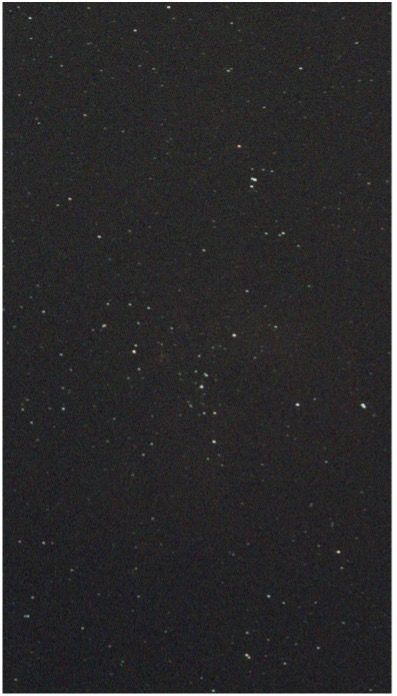
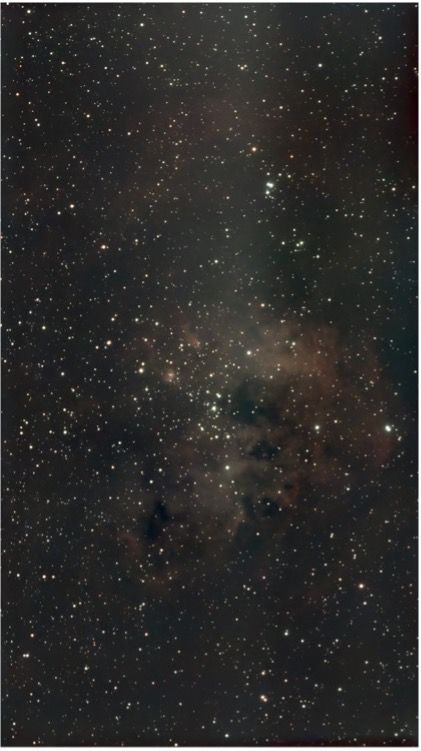
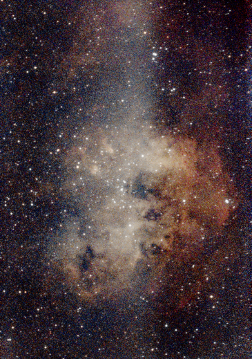
5. Understand stacking. While these scopes have fairly high-quality lenses and cameras, they can’t capture faint deep sky objects in a single shot. They work by taking as many pictures as they can in whatever one or more sessions. Then they algorithmically add those pictures together to get a much better picture (examples). The included apps can stack these images real time so you can watch the picture get better throughout a session but can also stack images after the fact and allow you to tweak the image for the best possible picture. There are also computer software programs than can stack your captured images and produce an even better final image. Such a program is Siril (Mac, PC), but its description is beyond the scope of this article.

Popular Mini Smart Telescopes for RVers
Several models stand out for their portability and innovation, including the Seestar and Dwarf telescopes:
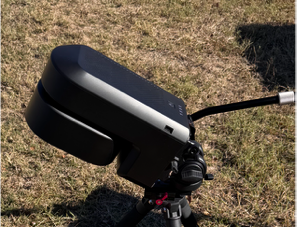
- Seestar: The Seestar S50 smart telescope features a compact, all-in-one design with automated object detection and tracking, Wi-Fi connectivity, and app control. Its lightweight build and quick setup make it perfect for RV travel. The integrated camera enables easy astrophotography, so you can document your discoveries and share them instantly. This was my choice for a scope. It features Alt/Az tracking – that is you mount it vertically on your tripod and it rotates horizontally and vertically axis’ to track your target. For maximum exposure though, you can mount the scope equatorially (align it with the earth’s axis) and the scope can more accurately track a deep space object allowing you to use even longer exposures.
- Dwarflab: The Dwarf 3 telescope is another excellent option, prized for its portability and dual functionality as a night-sky and daytime observation tool. It boasts automated tracking, wireless control, and a high-resolution camera, allowing users to capture both astronomical and terrestrial images. Its small size fits effortlessly into your RV lifestyle, and its robust battery life supports extended adventures off the grid. The Dwarf3 can shoot and stitch landscape panoramas.
- Other Options: There are a number of other smart telescopes, but most are either way larger, or way more expensive, or both. I’ll mention one future option, the Dwarf Mini which is claimed to come out in January 2026. Its specifications are very similar to the Dwarf 3, but even smaller. Be forewarned, Dwarflabs does not have a recent record of getting products out on time. While the Dwarf 3 is finally shipping, it has a long delivery time.
Making Memories Under the Stars
If you are interested in one of these scopes, there are many informative videos on Youtube. I suggest you spend some time making a comparison as while they are very similar, there are some differences. RV living lets you chase clear skies and marvel at the cosmos from spectacular locations. Whether you’re lakeside, in the desert, or deep in the forest, smart telescopes like Seestar, Dwarf, and others let you effortlessly discover and capture planets, star clusters, and nebulae. Share your images, swap stories with fellow travelers, and create cherished memories beneath the universe’s grand tapestry.
Conclusion
A mini smart telescope is an essential companion for RV enthusiasts eager to explore the night sky. With innovative models like Seestar and Dwarf, you’ll enjoy easy setup, powerful features, and the flexibility to stargaze wherever your adventures lead. So, bring your telescope along, embrace each new horizon, and let every clear evening become an invitation to discover the celestial wonders overhead.
Other blogs you might like...