How to Set Up Your RV Kitchen: Essential Tools, Space‑Saving Tips, and Smart Storage Ideas

Jennifer Skinnell • January 30, 2026

What to pack and how to maximize space, weight, and efficiency in a small RV kitchen.

Setting up your RV kitchen is like setting up your garage toolbox.


If you do not have the right tools, the job is not as pleasant and easy to do as when you have everything you need. And since RV kitchens are smaller than your home kitchen, everything is about at arms reach. While it may seem hard to decide exactly what you will need, keep in mind that space and weight are always a factor when setting up any room in your RV.


The kitchen is especially prone to overpacking and being overweight. That is why it is important to think about what you are bringing with you and how you will use it.


I have broken down my kitchen into two categories:

1. Use every day

2. Use weekly


Keep in mind that these categories are more for long-term camping or full-timing than they are for a weekend camping trip. However, if you are keeping duplicates (one in your home and one in your camper) than these categories would apply.


Everyday use Dishes, silverware, water bottles, favorite coffee mugs, and wine glasses If you can find plastic wine glasses, that would be best. Think of all the shaking that goes on in your RV. If you prefer glass,  be sure to wrap them in dish towels for travel. This also applies to dishes that are not plastic. I have my favorite Corelle, and I line each stack of dishes with something in between so they do not rattle or move around during travel.


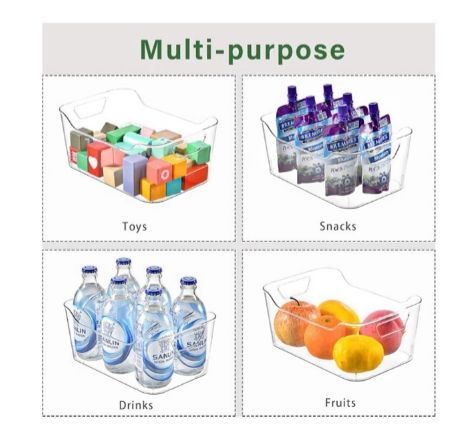
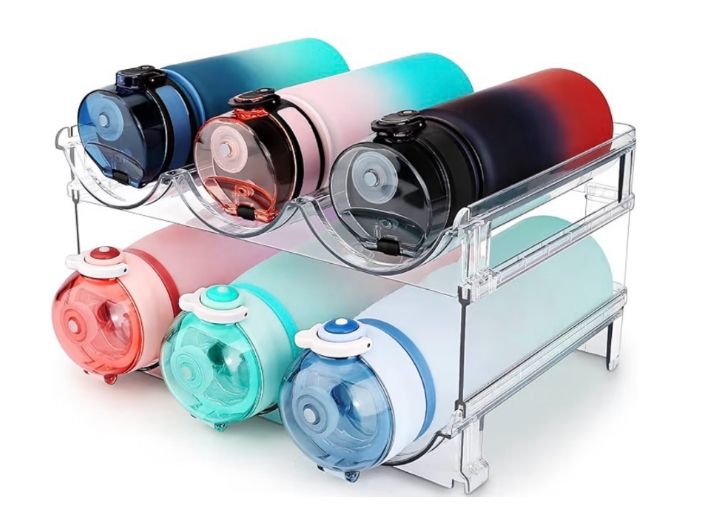
As for coffee mugs, find a plastic bin that fits your cabinet and put them in there. They will not move around so no need to do anything on travel day. As for those water bottles, Amazon has several different racks for storing them. Measure your cabinet width and depth before buying to make sure they’ll fit where you want them to.

ractical. 


Small Appliances, cookware & cooking utensils

Think about where you will be storing these items in your RV. If you are going to keep that coffeemaker on your counter all the time, make sure you have the space for it without taking up valuable counter space. My Keurig is on the counter all the time when we are stationary, but I store it under the kitchen table for travel. I know that some use earthquake putty (on Amazon) to secure their coffeemaker on the counter and leave it there for travel, but I have not tried that.


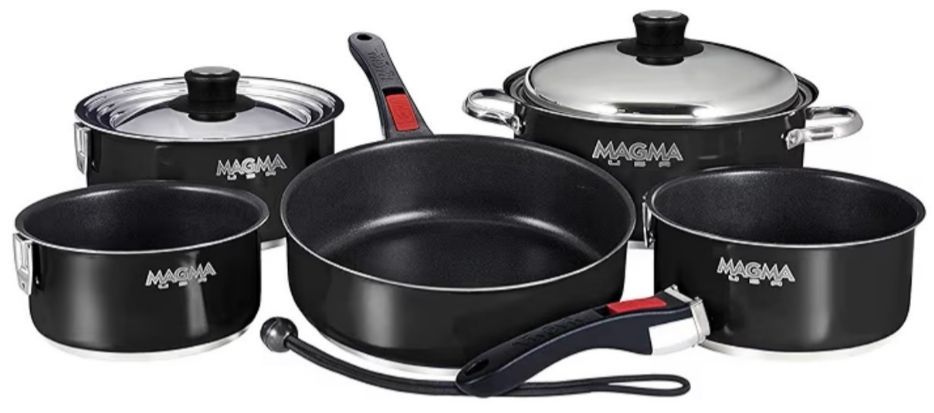
I have a set of stackable pots and pans with removable handles, so they nest easily and take up less space. They are a little pricy, but we have been full-time for seven years and the finish is still like new. I got mine from Camping World, but they are also available on Amazon.


If you are like me, you love cooking utensils.


Since we are full-time, I have a drawer and a container on my counter with every kitchen utensil I might need. (Now I sound like my husband and his toolbox!)


If you are not full-time, chances are you are not going to need a lemon grater or three assorted sizes of whisks, so your drawer might not be as full as mine.


Try this: As you are cooking and baking at your house, make a list of each item you use often. This will help you when you start setting up your RV kitchen to see what you would miss if you did not have it with you.


Use weekly (or 2-3 times a week) Bakeware, toaster, electric skillet, hand mixer, blender, crockpot, instant pot I love to bake and have found a way to bake just about anything in my convection/microwave combo. However, glass bakeware was just too heavy.


I opted for metal lasagna pans in two sizes that I can use to bake a cake, as well as a couple of round cake pans, and a pie pan. I do line all these with shelf liner for storage, so they do not rub together during travel. This protects the finish. Full disclosure: I do have my glass 9x9 baking dish because I just could not part with it. I also line this, so it is safe for travel. I use my toaster several times a week, so I keep it in a cabinet and pull it out when I need it.


The same goes for my electric skillet, which is another handy small appliance because it can do so many things. I say hand mixer, because as much as I would have liked to bring my large stand mixer, it was just to big and heavy. I have found that I can mix up a batch of chocolate chip cookies just as easy with a good hand mixer.


As for the blender, I do not use one, but I do have a portable smoothie maker. If you use your blender at home and think you would miss it, bring it on a trip or two. If you do not use it like you thought you would, leave it at home and free up that space for something else.


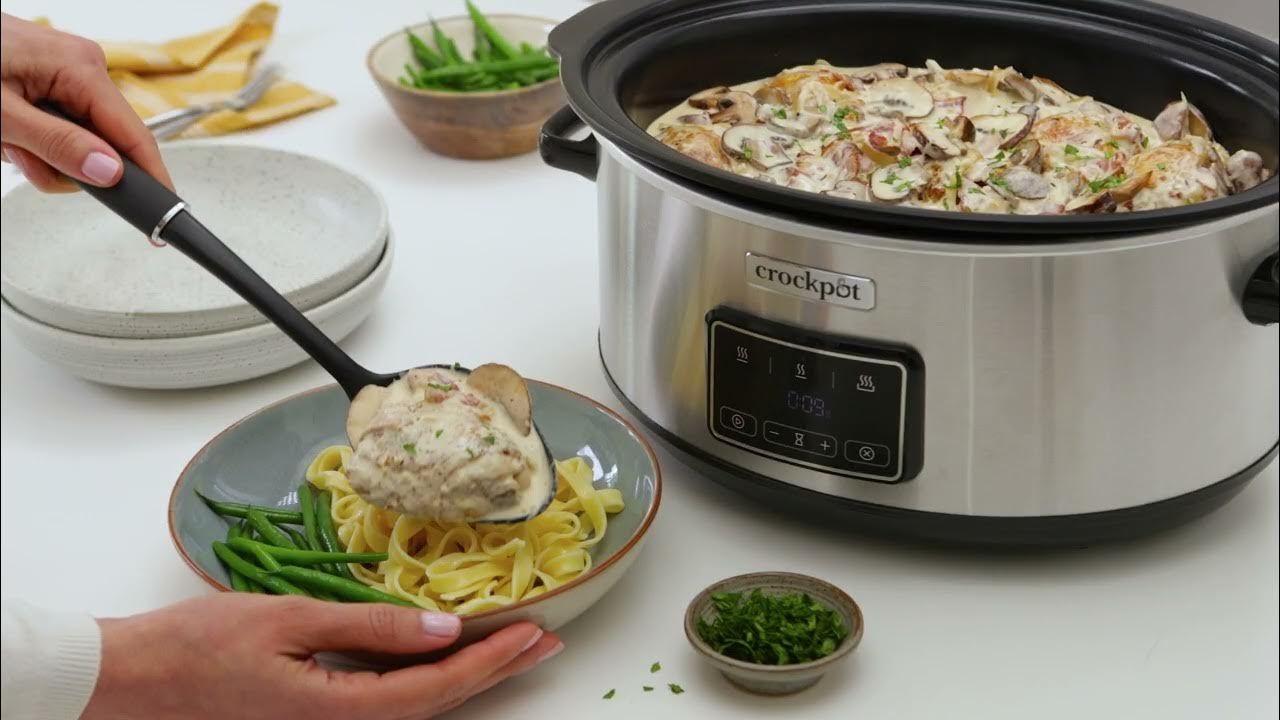
I use my crockpot several times a week. It is great for putting together something for dinner in the morning and then going out on an adventure. When we come home, dinner is almost ready. I have a 3- quart pot since it is just the two of us. I also like putting together dump-and-go meals and freezing them. They are so easy! Just drop them in the crockpot and go. Pinterest is my resource for these recipes.


I have done so many things in my Instant Pot. My favorite is making hardboiled eggs. Using the 5-5-5 method, they come out perfect every time.

1. Put eggs in the basket and add a cup of water. Set the timer for 5 minutes on high.

2. At the end of 5 minutes, let it slow release for 5 minutes.

3. Release leftover steam, take eggs out and place them in an ice bath for 5 minutes. Then peel. That's it. So easy & perfect eggs every time!


Along with cupboard/pantry storage, keep in mind there is limited refrigerator/freezer space. Plastic bins are great for keeping items from sliding around in the refrigerator and can also make moving from your home refrigerator to your rv refrigerator easier. As for the freezer, anytime you can freeze items in bags that are flat is best. I do this a lot with sauces, fresh meats, and crockpot meals.


Of course, your version of a great kitchen set up may be different from mine. Have fun setting up your kitchen, but remember space and weight are at a premium. Items that can have multiple uses are best, but that is not always practical.


Jennifer Skinnell is an author who chose life on the road after her cancer journey, embracing travel, freedom, and the beauty of living fully.


We’re grateful to have her as part of the Learn to RV writers team. Her voice adds depth, heart, and a unique perspective to our community.


Jennifer and her husband are retired and happily wandering the country, discovering new places, meeting new people, and reminding us all that RV life is experienced differently by everyone who chooses it.


Check out her website here & grab a copy of her newest book Death on the Pickleball Court today!


Other blogs you might like...

Niagara Falls collage with waterfall views, family photos, and a Niagara Falls State Park sign
By Jeff and Monica Grant from Dean and Gertie Explore the World July 25, 2026
See how America’s 250th became our classroom as our full-time RV family explored Williamsburg, Wells, Lake George, Fort Ticonderoga, and Niagara.

Adult carrying a child on shoulders under leafy trees, looking up and smiling
By Missy Jack of Jack Adventures Await July 24, 2026
Life with Littles Real talk on full-time RVing with babies, toddlers : the constant mess, the mental load, and the radical presence that makes it all worth it
Two children sit at an outdoor folding table with snacks and crafts beside a road.
By Jennifer Sansford July 14, 2026
Our kids still ask for things. The difference now is what happens next. Over the past year, we've been showing our children, ages 9 and 11, different ways to start and run a business while we travel. It started as a way to keep them engaged and give them a sense of ownership on the road, and it's turned into something we're genuinely committed to. When they ask for extras now, the answer is almost always the same: that's what your money is for. Not as a punishment, but as a real lesson in what things actually cost and what earning something means. The result is kids who think before they spend — because they know what it felt like to earn it. I am not saying they spend it wisely every time, but they are learning. Here's how we've been doing it.
Friends gathered around a campfire beside a silver camper at dusk in a wooded campsite
By Jennifer Schillaci July 13, 2026
Is your RV summer feeling slower this year? Jennifer & Tasha talk fuel prices, burnout, comparison traps, and what's ahead for season 3 of Learn to RV the Podcast
By Meghan & Pete Williams - Our Captain's Logs July 9, 2026
The 'Grab-and-Go' System That Lets Busy Families Trade Friday Traffic for Friday Campfires
View from RV roof with solar panel, vents, and roof fan at an outdoor RV show
By Jennifer Schillaci June 13, 2026
Whether your RV roof is showing its age or you just want to stay ahead of summer damage, know when to DIY and when to call a pro. Learn the warning signs

Person in a white T-shirt pinching their nose while standing indoors by a beige wall.
By Jennifer Schillaci June 8, 2026
Do you really need a sewer hose to dump your RV tanks? RV black tanks, Grey tanks and Freshwater tanks tips. Get the complete RV tank guide from Learn to RV.

By Jennifer Schillaci June 5, 2026
The best classroom doesn't have four walls — it has four wheels.  This summer, the whole country is your curriculum.

By Dealora Snyder June 4, 2026
If you’re a full-time RVer, you already understand something most people don’t....that life doesn’t always go according to plan. You’ve chosen freedom. Flexibility. The ability to wake up in a new place whenever you want. But with that freedom comes a unique responsibility—especially when it comes to your health insurance. Because when you’re constantly on the move, having the right coverage isn’t just important… it’s critical. And recently, I was reminded exactly why.
Hand holding a scrambled Rubik’s cube against a plain brown background
By Amanda Pelser June 3, 2026
Full-time RVing families can road-school around a passion — how to find WCA speedcubing competitions and make your child's Rubik's Cube hobby a reason to travel.
Show More