How to Protect Your RV When You Can't Outrun the Freeze
Jennifer Schillaci • November 24, 2026
If a hard freeze is headed your way and you haven't winterized, you can still protect your RV, and you do not need to panic.
Plenty of us live in our rigs full-time, many of us sit in one spot all winter, and sometimes the cold simply catches up before we can outrun it.
Maybe you meant to prep in October and life happened. No judgment here.
The goal for a cold blast is actually pretty simple: keep your water from freezing, keep your heat sources safe and reliable, and keep your power and propane from running out when you need them most. This post walks through all three, in the order I would tackle them, with the safety details that matter most.
If you only have one day: do these first
Four jobs protect your RV from most cold-snap damage, so start here and work down the list.
- Protect the water. Fill your fresh tank before the freeze, then disconnect your hose from the spigot. If you own a heated hose and can stay hooked up, use it.
- Fill your propane. Top off every tank and know where you can get a refill. Propane is your main heat source when the temperature drops.
- Seal the heat in. Cut Reflectix for the windows, hang a blanket or thermal curtain over the door, and skirt the bottom of the RV if you can.
- Check your safety gear. Test your carbon monoxide alarm, smoke alarm and propane leak detector before you run any heater.
If you still have time and daylight after that, keep reading. The rest of this post covers everything else that tends to get missed.
No antifreeze? Blow out the water lines
If your RV is not set up to stay warm, or you will be away from hookups and heat, drain it instead of trying to keep it running. Blowing out the lines with an air compressor works even when you have no antifreeze on hand. The tradeoff is that you will have no running water until the cold passes, so fill a few jugs for drinking and washing and plan to use a campground bath house if one is open.
- Turn off the water pump and the water heater, and let the heater cool.
- Drain the water heater so it does not hold water that can freeze. On a tank heater, bypass it first if you have a bypass. On a tankless unit, follow your manufacturer's drain steps (see the tankless section below).
- Drain the fresh tank, then open every low-point drain, hot and cold.
- Open every faucet, the outdoor shower and the toilet valve, and remove any inline water filter cartridges.
- Set your regulator to 30 PSI, which is the most many manufacturers allow, and do not go above 40. Connect the compressor to the city water inlet with a blow-out plug adapter.
- Blow out one fixture at a time, hot and cold, until only air and mist come out. Repeat the round once or twice.
- Deal with the pump. Compressed air rarely clears the water pump completely, so disconnect its inlet line and run it briefly to clear it, or protect it with antifreeze.
Blowing out the lines gets most of the water, but not all of it. The drain traps, toilet seal and pump are where leftover water hides, and a freeze can crack them. A gallon of non-toxic RV antifreeze is cheap insurance for those spots if you can get one.
Never use automotive antifreeze in your plumbing.
Tankless water heaters work differently
A tankless water heater is not freeze-proof, and it needs its own winter plan. Despite the name, it still holds about a liter of water, and that is enough to freeze and crack the unit. The pipes can also sit closer to the outside air than the rest of your plumbing.
- Check the freeze protection. Many units turn on automatically when the temperature drops, for example near 38 degrees on some models, and then shut off once the water warms up. It only works if the unit's switch is on and it has propane and power, so do not count on it during an outage.
- Stay put and heated? Leave the unit switched on, keep the propane open and check that the cabinet it lives in is getting heat.
- Draining the rig? Look up your model's drain steps. Some, like the Truma AquaGo, have a drain lever that clears the unit with no chemicals. Others, like the Truma Combi, have a drain valve you leave open for the season.
- No drain or bypass? Some tankless units can only be protected with RV antifreeze. Check your manual or call the manufacturer before you try it.
If you are not sure which unit you have, check the label on the heater or your owner's manual, and look up its winterization steps before the freeze arrives.
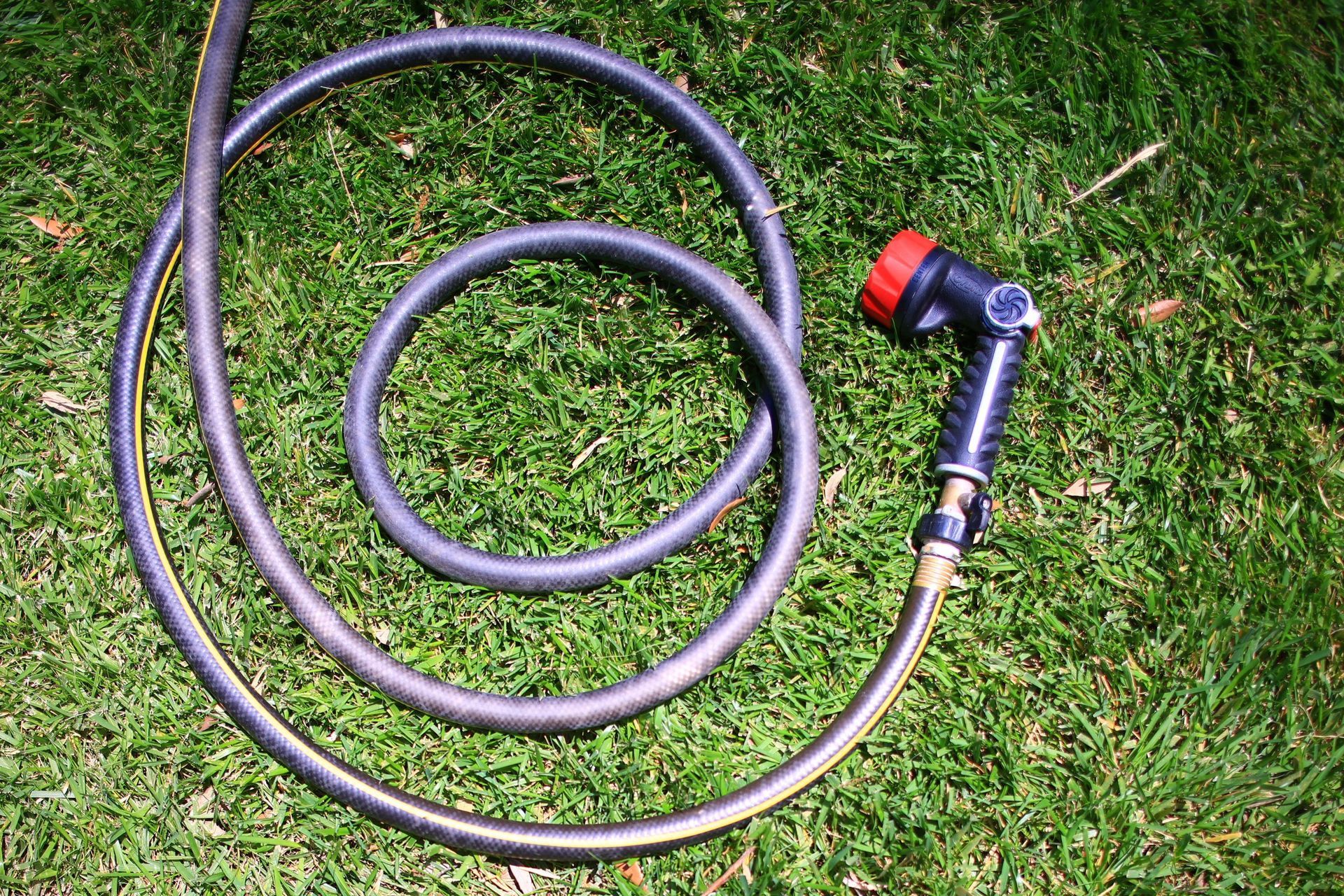
Water: fill the tank, disconnect the hose
Your water hose and the spigot it hooks to are the first things to freeze, so take them out of the equation. Fill your fresh water tank while temperatures are still above freezing, disconnect the hose, drain it and store it. Your water pump pulls from the tank, and the lines inside your warm RV stay warm.
This is the best method if you do not own a heated hose. A hose full of water sitting in a deep freeze is simply a matter of time. Heated hoses do work well if you are plugged in and staying put, but they only help while they have power, so have the fill-the-tank plan as a backup.
What about leaving the water dripping? It is a common house trick, but in an RV it does not protect the weakest link, which is the hose and the connection outside. It also sends water into your gray tank, which then has to be dumped in the cold. Filling the fresh tank and disconnecting is the cleaner plan.
A few more water details worth handling:
- Fresh tank location. If your tank sits in an unheated underbelly, it can still freeze. Four-season rigs usually route heat into that space. If yours does not, keep skirting tight and consider heat tape or a tank heater made for it.
- Gray and black tanks. Keep the valves closed until the tanks are full and you are ready to dump. Partially full tanks with an open valve are more likely to freeze at the outlet.
- Sewer hose. Cracks are common on older hoses in the cold. Store it if you do not need it, or use a sturdier hose. Do not leave low spots where liquid can sit and freeze. There is nothing worse than a poop slushie.
- RV antifreeze as insurance. Pour a little non-toxic RV antifreeze into each drain so the traps do not freeze.
- Exposed pipes. Use heat tape made for RV pipes and follow its directions. Skip wrapping a water hose in standard heat tape, since a purpose-built heated hose is the safer choice.
- Water filter housing. Take the cartridge out or protect the housing, because trapped water can crack it.
- Water heater. Keep it on and full if you are living in the RV, and make sure the propane or electric side is working before the temperature drops.
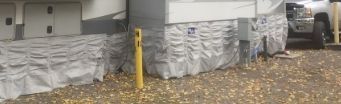
Keep the heat in: Reflectix, doorway and skirting
Windows, vents and the floor lose the most heat, and each one has a cheap fix you can finish in an afternoon.
- Reflectix in the windows. Cut it to fit snugly, shiny side facing the room. It is inexpensive and one of the best returns on your time. Leave at least one escape window uncovered or easy to pop out in an emergency.
- A blanket on the doorway. Hang a heavy blanket or thermal curtain over the door, and add a draft stopper at the bottom. Check the door seal while you are at it.
- Roof vents and skylights. Foam vent pillows or insulated covers stop a lot of heat from escaping overhead.
- Skirting. Skirting around the base reduces heat loss and keeps the space under your RV warmer, which protects your floor and your plumbing. Commercial skirting, plywood or rigid foam board all work. Piled snow against skirting adds even more insulation. Do not use hay or straw bales to skirt your RV: they are a fire hazard, especially near heaters, and they attract rodents that can nest in your underbelly and chew wiring.
- Slides and seals. Check slide seals and weatherstripping for gaps, and plug small openings where lines enter the RV.
- Rugs on the floor. Thick rugs make a noticeable difference, because floors are where cold air settles.
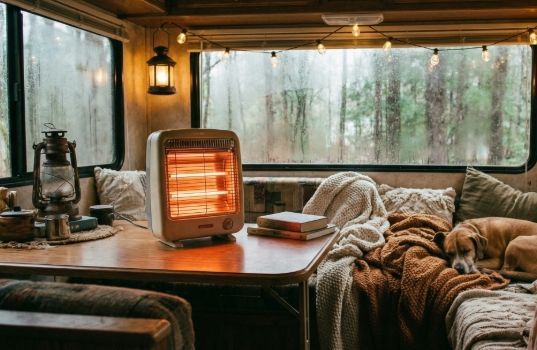
Space heaters and electric blankets: safe, with limits
Electric heat is safe in an RV when you respect the wiring, and the limit is almost always power draw. A 1,500-watt space heater pulls 12.5 amps at 120 volts, and a typical RV on 30-amp service has about 3,600 watts to share between everything you run.
- Use the low setting. Many RV outlets are built with light-duty parts that can get hot under a constant full load. A 700 to 900 watt setting is much kinder to your wiring. If the plug feels hot, turn it down.
- Plug straight into the wall. Skip extension cords and power strips for heaters.
- Watch what else is running. The microwave, coffee maker or hair dryer plus a heater can trip a 30-amp breaker fast. On 50-amp service you have more room, and you can put two heaters on separate circuits.
- Pick the right heater. Ceramic or oil-filled models with tip-over and overheat shutoffs are the usual choices. Never leave one running unattended, and keep it clear of bedding and curtains.
- Electric blankets are your best friend. They warm you instead of the whole room, so they use a fraction of the power. Use one with an auto-shutoff, and retire any that are frayed or old.
- Do not count on batteries. A heater can drain a battery bank in hours, even a big lithium one. Heaters are for shore power, and a blanket is the one electric warmer worth running from an inverter in an outage.
Not every space heater is built the same, so research a model before you bring it into your RV. Check the wattage on its label and confirm the power draw yourself before you plug it in.
Propane: your backup heat and your biggest variable
Fill every propane tank before the cold arrives, because a furnace in a deep freeze goes through propane faster than most people expect. Then plan for the day the tank runs low, since that is when stores are busiest and roads are worst.
- Know your refill plan. Find the closest refill location now and check its hours. If you have two tanks, an auto-switching regulator means you will not wake up cold at 3 a.m. when one runs out.
- Test your furnace now. Run it before you need it. The blower also draws from your 12-volt battery, so keep batteries charged if you lose shore power.
- Keep the vents clear. Snow can block the furnace exhaust, water heater vent and refrigerator vent. Check them after every storm, along with the regulator and tank area.
- Use electric and propane together. Run a small electric heater or blanket when you are on shore power, and let the furnace handle the rest. That stretches your propane and gives you a backup if the power drops.
A portable propane heater needs extra care. Models labeled safe for indoor use usually include a tip-over shutoff and a low-oxygen shutoff, but any flame consumes oxygen and produces carbon monoxide. Crack a window or vent for fresh air, run it only while you are awake, and keep a working CO alarm nearby. Never use your stove or oven to heat the RV.
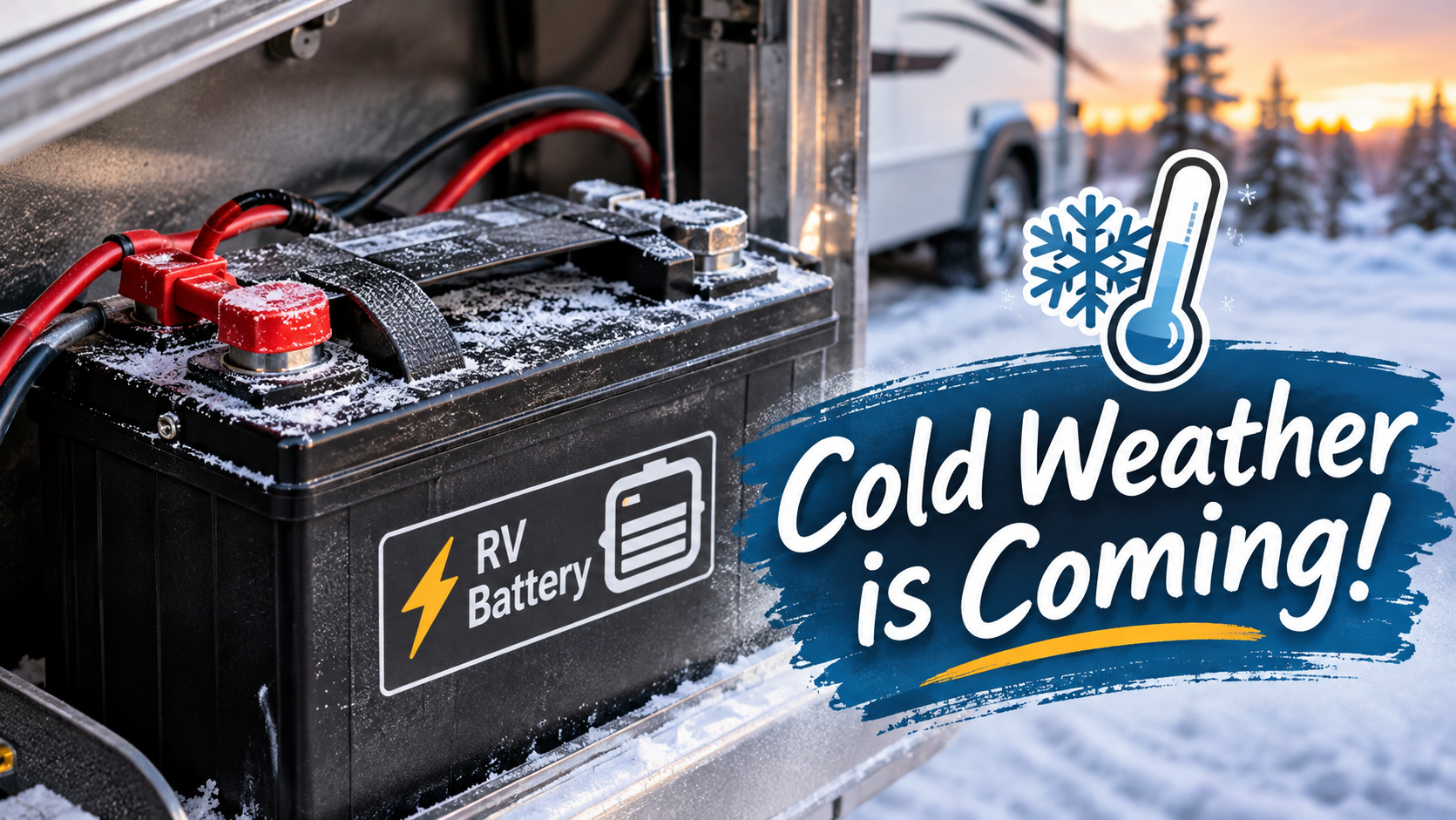
Underbelly heat, tank heaters and your 12-volt side
In many RVs, the propane furnace is the only thing keeping the underbelly warm. Its ducts push heat into the space where your tanks and plumbing sit, so a space heater in the living room does not protect them the way the furnace does. Check your owner's manual to see how your rig heats the underbelly.
- Turn on your tank heaters. Some underbellies have heat strips or pads on the tanks, and they only help if they are switched on. Find the switch on your control panel before the freeze.
- Expect a 12-volt draw. Tank heaters and the furnace blower pull from your 12-volt system. On shore power the converter keeps up, but if the power drops, your batteries will drain faster than usual.
- Know where your batteries live. A battery in a basement bay or outside compartment can be far colder than the cabin. Lithium batteries do not like the cold and many will not charge below freezing, so find out whether yours have low-temperature protection or a heater, and keep the compartment as warm as you safely can.
Is a four-season RV the same as living in a house?
No. A four-season RV is a better starting point for winter, but it is not a house, and it does not mean the rig can ignore a hard freeze.
Four-season rigs typically have features like an enclosed and heated underbelly, double-pane windows and extra insulation. Those help a lot, and they keep your tanks and lines in a warmer space. But "four-season" is a marketing label rather than a universal standard, so ask what temperature your manufacturer actually rates the RV for.
A house still wins in a few ways that matter during a cold blast:
- Thinner walls and more glass mean heat leaves faster and cold spots are common.
- Plumbing sits closer to the outside, so pipes and tanks have less buffer.
- A small space with a small heat supply means you can run out of propane or power faster than you would with a home furnace.
- Moisture builds up quickly in a small, sealed space, so condensation is a real issue.
Staying in an RV in winter is typically not as warm as staying in a house, even when everything is set up well. Pack an extra sweater or two, warm socks and a good blanket, and expect to dress for it indoors.
The good news is that a stationary RV with skirting, insulation and a plan can handle winter well. Treat the rig as a very small, very efficient house that needs a little extra attention.
Open the cupboards, and manage the moisture
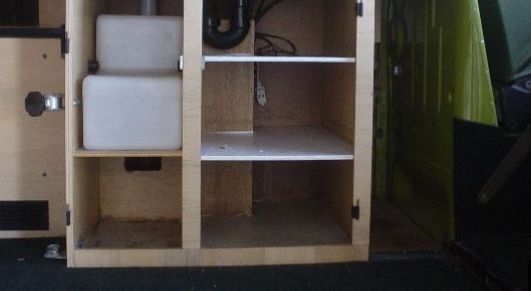
Yes, open the cabinet doors. Pipes under sinks and in bathroom vanities often run along exterior walls, and opening the doors lets warm room air reach them. Pull stored items back from the walls so air can move.
Winter living also makes a lot of moisture, from cooking, showers, breathing and propane heat. In a small space that turns into condensation on windows, walls and the cold side of your mattress, and eventually into mold. A few habits keep it under control:
- Run the bathroom and range hood fans when you shower or cook.
- Crack a roof vent or window slightly for airflow, even when it is cold.
- Wipe down windows in the morning, especially behind Reflectix.
- Lift your mattress now and then to check the side against the wall.
- Use a small dehumidifier or a moisture absorber if you notice damp spots.
These are the things most people forget until the night they need them.
- Carbon monoxide, smoke and propane alarms. Test each one and replace weak batteries. You will be running heaters more than usual.
- Battery health. Cold shrinks battery capacity. Many lithium batteries will not charge below freezing unless they have low-temperature protection or a built-in heater, so check yours.
- A power-outage plan. Keep extra blankets, a sleeping bag rated for cold, flashlights, and a few gallons of drinking water stored inside. If you use a generator, run it outdoors and well away from windows and vents.
- Snow load. Brush snow off the roof and slides before you retract them, and think about pulling the awning in.
- Your shore power connection. Keep the pedestal connection dry and clear of snow, and know where your breaker panel is.
- Your shutoffs. Know where the water pump switch, the main water shutoff and the low-point drains are, so you can act fast.
- Food, fuel and prescriptions. Stock a few extra days, and keep your vehicle's gas tank at least half full.
- Your pets. Bring them inside, and give them a warm bed off the floor.
- An exit strategy. If the forecast is extreme and your rig is not ready, moving south, getting a hotel or fully winterizing with a drain and antifreeze is a smart choice rather than a failure.
If something freezes anyway
If a line or hose freezes, thaw it slowly and never use an open flame.
- Turn the water pump off and close any faucets you are not using.
- Raise the interior temperature and open cabinet doors near the frozen section.
- Aim a hair dryer or a small heater at the pipe or hose, keeping it a safe distance from anything that can melt.
- Open the nearest faucet so water can flow as the ice melts.
- Once it is flowing, check for leaks under sinks, in the bays and around fittings before you turn the pump back on.
A split line often does not show itself until it thaws, so look closely before you walk away.
You cannot always outrun the cold, but a full water tank, a disconnected hose, sealed windows, a filled propane tank and a safe heat plan will carry most rigs through a hard freeze. Learn it before you need it, and then you will be ready for the next one before it is even in the forecast.
Further reading
- Preparing RVs for winter living, NDSU Extension
- Winter RV camping: how to RV in the cold, Camping World
- Space heater safety in an RV, Mike Sokol, RVtravel
Disclaimer: This post is general information based on common RV winter-preparation practices and my own experience. It is not professional, technical or safety advice. Every RV is built differently, so always follow your manufacturer's owner's manual and the instructions that come with your heaters, hoses, batteries and other equipment. Heating with propane or electricity carries real risks, including fire, carbon monoxide poisoning and electrical overload. If you are unsure about your RV's wiring, propane system or plumbing, talk to a qualified RV technician. Use this information at your own risk.
Other blogs you might like...