
Workamping: Real Stories from Sugar Beet Harvests, State Parks & Private Resorts
Ashley Wright • December 26, 2025
Workamping is loosely defined as camping while you work. Over the years, my family has had a few different workamping gigs. What we have learned is that each workamping gig is different, so it’s important that you carefully evaluate your offers to make sure they work for you. Some are volunteer positions and offer only a site, while others are paid. Some you have to pay for your site, while others the site is free. Some sites come with FHU that you don’t have to pay for, others have you pay for electricity, and still others may have only partial or even no hookups.
Workcamping with Kids

Workamping with kids adds another layer of complication to the mix. First of all, does the campground even allow kids? Not all do. Even if they allow kids, are they really welcome? Does the campground charge extra for kids to stay there? If they do, that’s a sign that the campground might not be very welcoming. What are the rules like? Some campgrounds have curfews for kids or require supervision at all times. Are you comfortable with their rules?
If you’re both working, will the campground allow you to take opposite shifts? If not, or if you’re a single parent, will the campground allow you to bring your kids with you, or are they old enough to stay home (or explore the campground) alone? I have found it best to disclose our pets, kids, rig, and how many adults can work in my first email to a campground. We don’t always hear back, but I’d rather not waste my time with a situation that wouldn’t be welcoming to us.
Sugar Beet Harvest

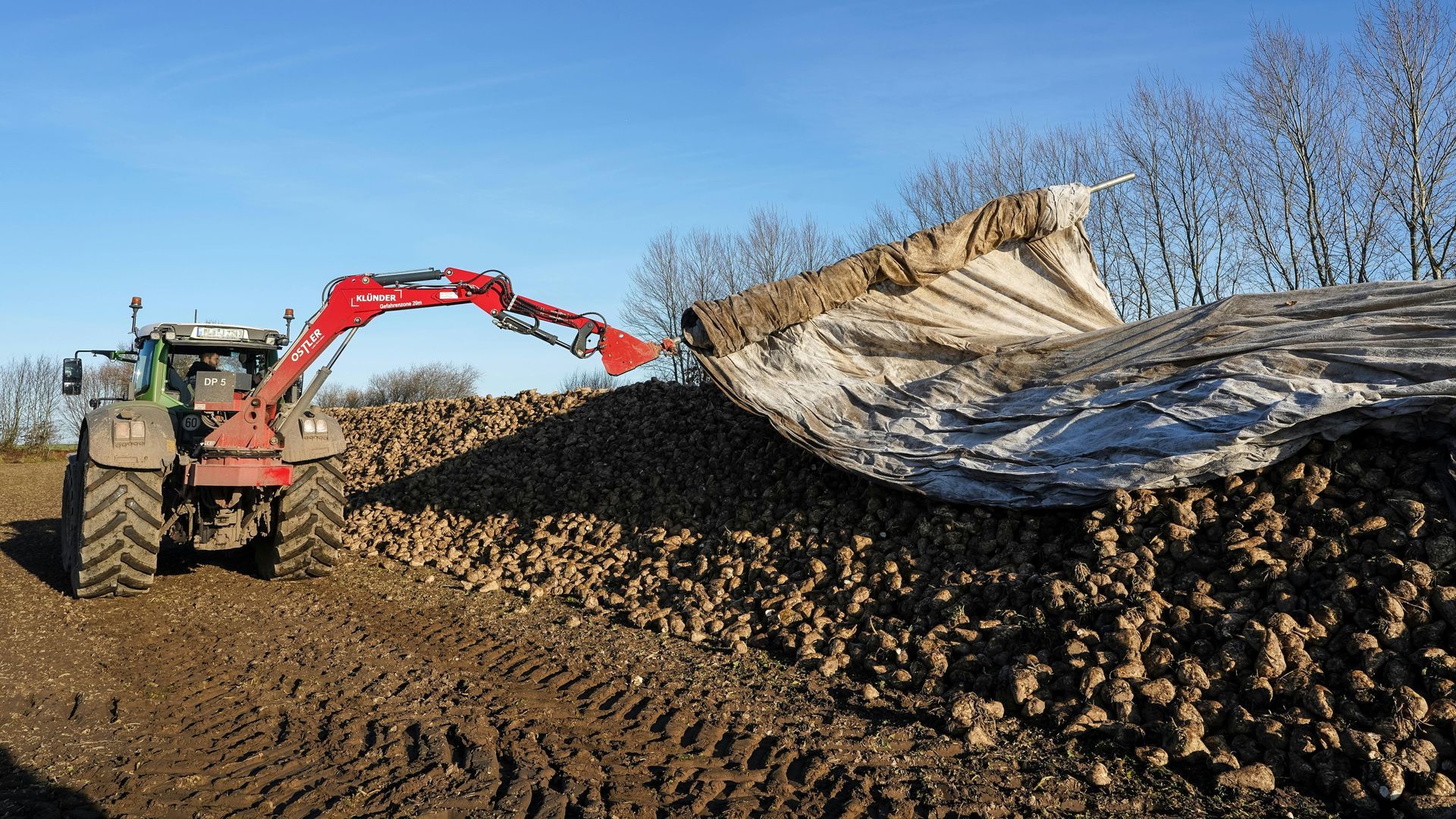
Our first gig was the sugar beet harvest with Express Employment. It’s supposed to be a great way to make a bunch of money, but I would urge caution. If you’re already going to be in the area, and if you have multiple adults working? Yes, absolutely. However, we were not in the area (and definitely weren’t staying in the area for winter!), and I was the only one working, so I’m pretty sure it cost us more to get to and from the harvest than I made while there. However, it’s a short-term gig that many people love and return to every year.
Another thing to consider is the hours. Shifts are 12 hours long, every day with good weather until the harvest is done. Express Employment requires a commitment for the month of October. This means that if the harvest goes late, you don’t have to stay past October 31st (they appreciate it, though!). Our harvest was rather short and we left by the middle of October. Even then, we were uncomfortably cold by the time we left.
One of the best parts of the sugar beet harvest is the pay. Since the shifts are 12 hours each, 4 hours of every day is paid time and a half. Saturdays are all time and a half, and Sundays were double time. In addition, if the weather is not conducive to bringing in the beets, we were paid 4 hours of “stay pay” each day we couldn’t work. Do check your specific harvest’s pay rates, though, as they’re not all the same.
Volunteering at a State Park

Our second gig was volunteering at a state park in Texas. At the time, it was only 24 hours of volunteering for our site and we loved it. In fact, we loved it so much that we planned to return for the winter of ’25-’26, until we found out that the hour requirement had been increased to 32 hours a week. That’s almost a full-time job just for a site. While I loved the work, the location, and the people, I couldn’t work so much without making any money at all. This particular state park is a day-use-only state park, so our kids got lonely that first year. We promised we wouldn’t go back unless another family was going with us.
Our most recent workamping gig was at another state park, this time in Washington. We chose that position because it was near where we launched from, so we had many family and friends in the area that we wanted to spend time with. However, this time, my husband joined me in working for the park. Again, as a state park gig, it was a volunteer position; we had to work 28 hours between the two of us for our site and FHUs.
This position was unique for us in that it was the first we’ve ever worked without specific hours. As long as we worked on our assigned days and at least 28 hours a week, the rangers didn’t seem to care. We didn’t get much in the way of training, so my husband and I ended up picking litter most of the time. This meant a fair amount of walking, which was great at first. However, as the summer wore on, we found we couldn’t get any paid work in. Between our hours for the state, homeschooling our kids, and social obligations, we didn’t have any time for remote work. Also, our aging bodies did not appreciate the daily demands we made of them, and it took us a couple of months to recover physically.
Camphosting at a state park is a popular workamping gig. These almost never pay, but the required hours or duties may be less. Make sure to get specifics on your expectations before you commit, as every park is different.
Workcamping at a Private Resort

From Texas, we went to the historic triangle of Virginia and I worked the front desk at a family-oriented park. This was a very peopley position because not only did I have to interact with people all day at work, but then, as an RV park, everyone was packed in pretty close together. For my introvert self, this was difficult and I needed a lot of time to recover. However, my kids loved the freedom, activities, and friends. This particular position required me to work 15 hours a week for my site, and the rest were paid (somewhere around $11 or $12 per hour; workamping doesn’t tend to pay a lot). We went there for the location and thoroughly enjoyed all the historic sites nearby.
KOAs are popular campgrounds to workcamp at (and they have their own application and reward system). However, most require you to pay for your site. It is usually a discounted rate, though. Personally, I have chosen not to go that route. Why? Because if a workplace requires you to be on-site for a job, the value of your site cannot be taxed. However, if you’re getting paid for all hours worked AND having to pay for your site? Then you’re getting taxed for that amount.
Other Popular Workamping Gigs
Other short-term gigs include the potato harvest, digikeys, gate guarding, and selling various commodities throughout the year. Fireworks in July, pumpkins in October, and Christmas trees in December are all popular. Again, you can theoretically make a fair amount of money, but my family has not worked any of these gigs.
I am in several workamping groups on Facebook and keep an eye on positions available. I have seen tons of variety in what is offered. Farms, animal shelters, construction sites, oil fields, and even circuses offer workamping opportunities! Some places want you to work 40 hours a week, while others only ask for you to be on-site a few days a month. There’s even a campground in Tok, Alaska that has you work every other week and expects you to leave during your weeks off!
At the end of the day, workamping can be a great way to see the country and save a little money. There certainly are ways you can even make a lot of money, but most positions seem to only be supplemental. Make sure you carefully evaluate the campground, their expectations, your finances, and your schedule to ensure you have a satisfactory workamping experience. And remember: Your house has wheels for a reason. If things get too bad, use them.
Be sure to tune into one of our recent Podcasts where Jennifer and Jenn discussed how to land your workcamping position! Join as a FREE Subscriber to listen!
Other blogs you might like...