RVing With Kids

Ashley Wright • September 11, 2025

I think everyone can agree that raising kids is hard work. Everyone has a different idea of how it is best to raise their kids. At the same time, you’re directly responsible for your children’s lives, so it can be daunting and a little scary. For these reasons, most choose to raise their kids similarly to those around them. However, some of us choose to raise our kids on the road, at least partially.


Traveling with kids has pros and cons, good and bad, worries and myths. It can be hard to go against the grain when your closest family members and friends are questioning your every move, so I want to tackle these head-on so you have some talking points.

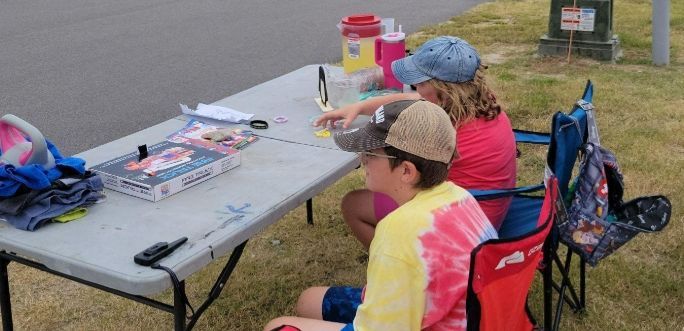
Two people outdoors, working at a box on a patterned rug; picnic table in background.

Worries

  • Stability: Many people will claim that kids need stability; that too much travel will hurt their development and sense of self. It’s true that some kids need the stability of a house, but it’s also true that you can build routines and stability into your travel. We love always having our home and beds with us!


  • Socialization: At some point or another, every homeschooler has been questioned on the socialization of their children. What every homeschooler knows is that there’s a whole world out there to socialize with! Sure, if you keep your kids home all the time, they’ll suffer socially, but most of us do exactly the opposite.


  • Toys: Yes, most RVing kids have a lot fewer toys than most living in houses. However, kids don’t play with as many toys as we think they do. A few strategic toys and lots of outside time will keep your kids plenty occupied!
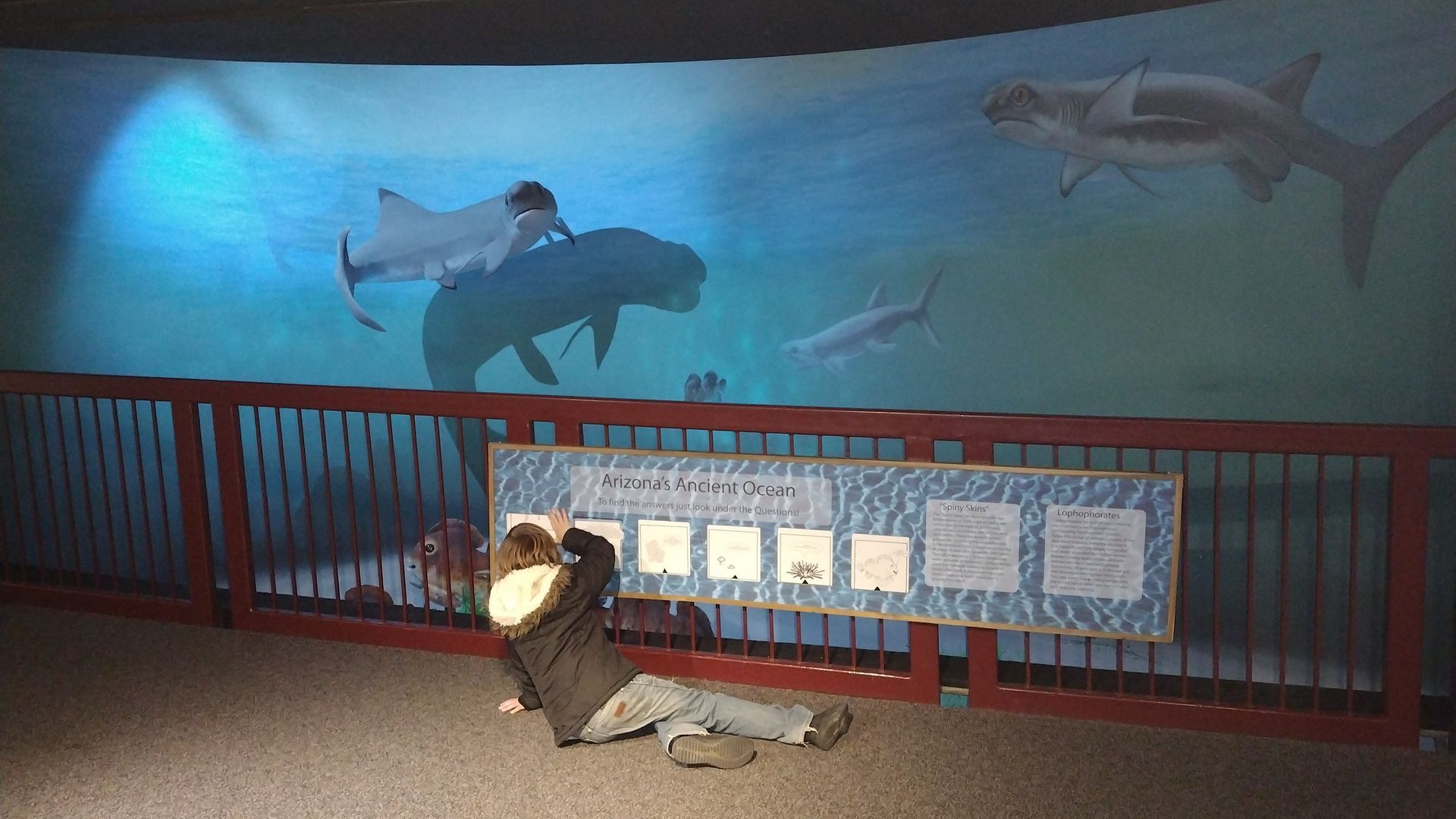
Person on floor, taking photo of underwater scene mural featuring sharks and a manatee.

Cons

Raising kids on the road isn’t all fun and games. There are certainly hard points, just like raising kids in a house.


  • The small space means that it can be difficult to have any personal space. However, creativity and careful consideration can mitigate this (at least to some extent).


  • Travel can make it more difficult to make and maintain friendships. Intentionally meeting up with friends, attending RVing events with other families, and booking stays at family-focused parks can make a big difference.
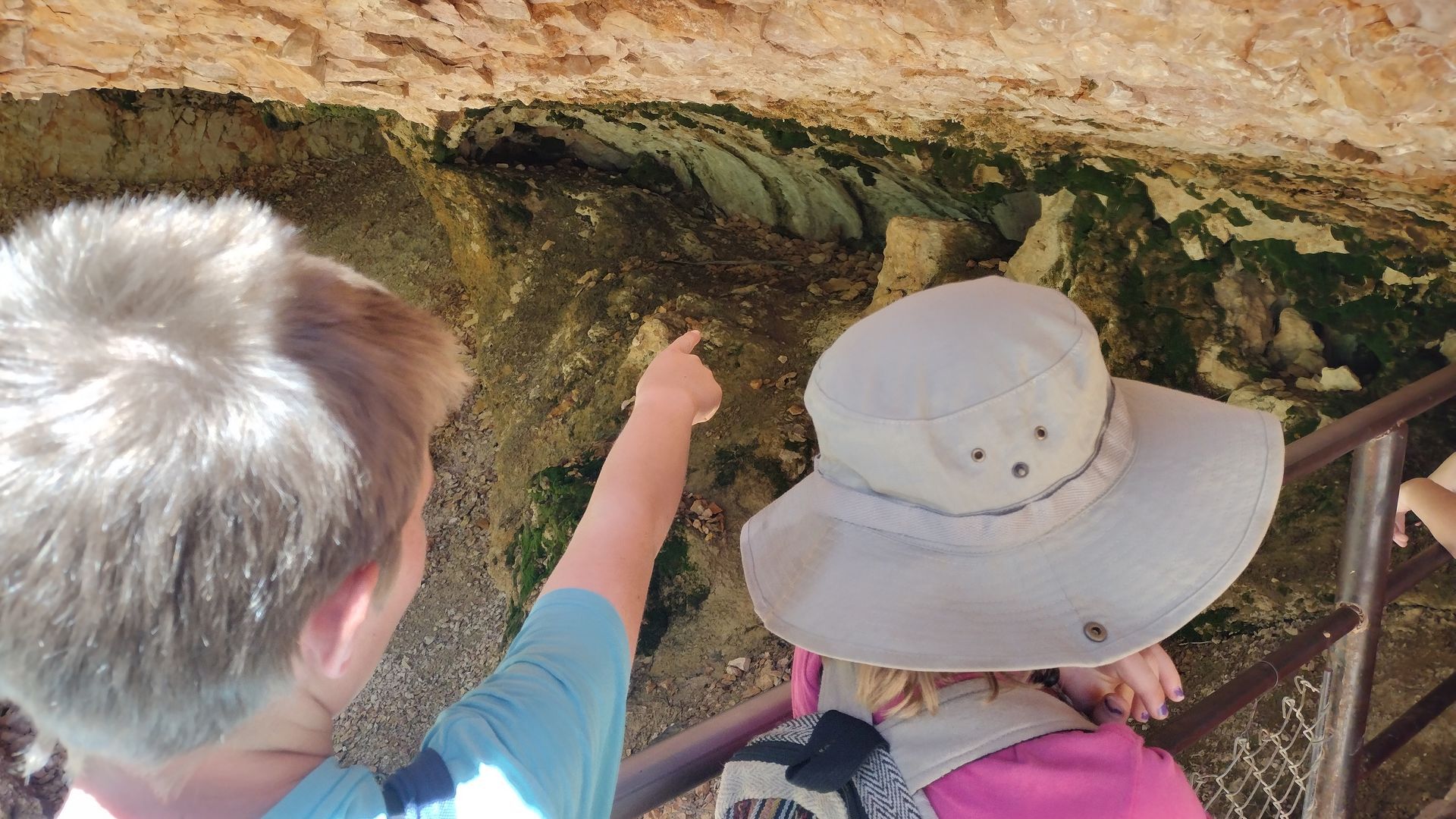
Two children, one pointing up, look at a green-hued cave wall. The other wears a wide-brimmed hat.

Pros

  • Living in a small space and spending so much time together means that we know each other really well and have strong familial bonds.


  • A minimalist lifestyle can quiet anxieties and distractability.


  • Having such a small home means it’s really fast and easy to clean, which is always a plus, especially when you have kids.


  • Regularly seeing somewhere new exposes our kids to different people, cultures, foods, ideas, landscapes, climates, and ecosystems. The possibilities for learning are endless!


  • Interacting with so many different people builds tolerance and social skills.


  • Traveling has helped our kids develop the skills needed to develop and maintain friendships. They put in the effort to stay in touch with their friends and those friendships are stronger for it.


  • Our kids have friends from all over!


  • We always have a different museum, national park, or historic site to explore.


  • Seeing historic sites and national parks in person helps improve and strengthen learning.
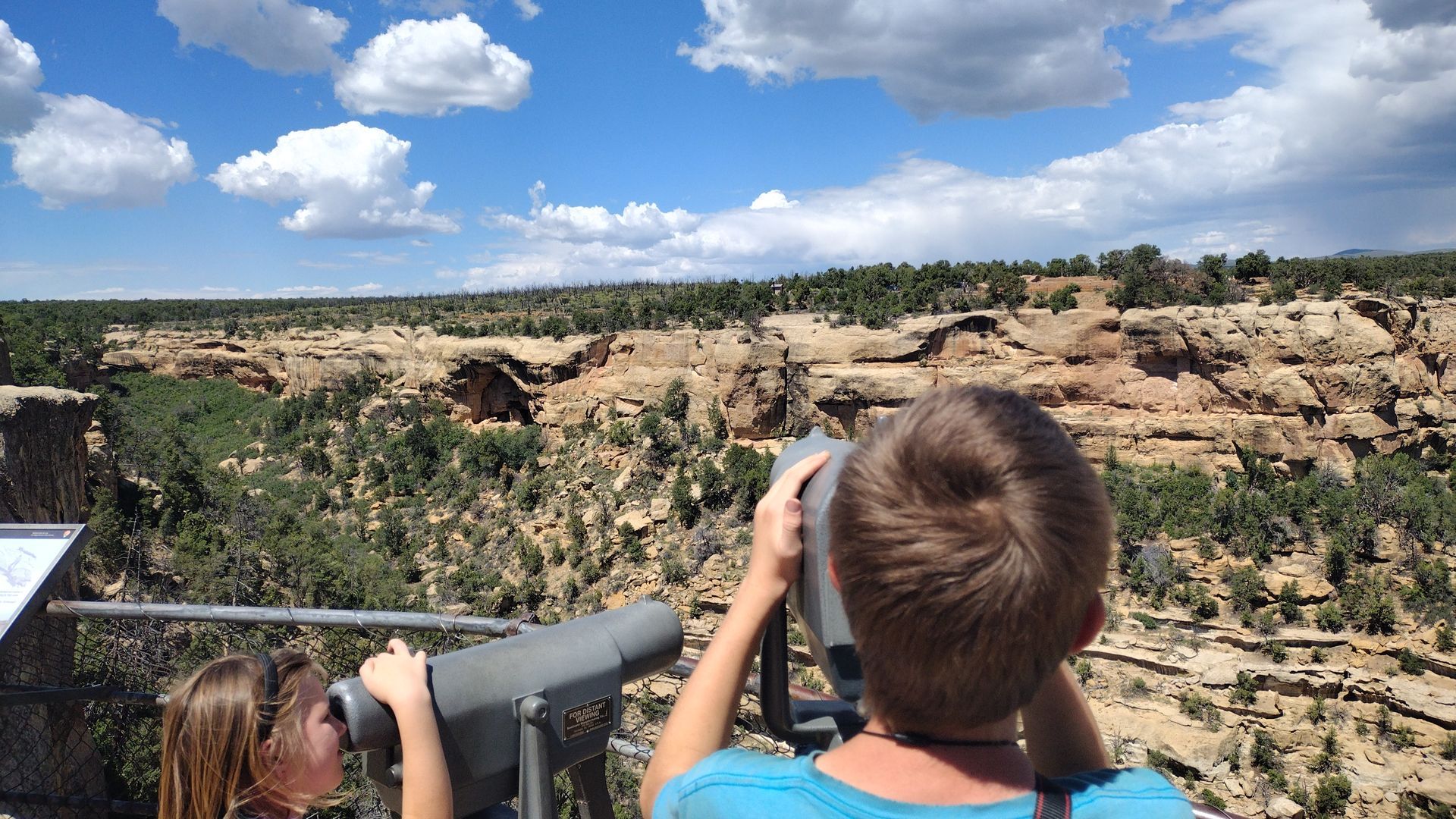
Children look through binoculars at a canyon under a blue sky with puffy clouds.

Tips

  • Get buy-in from your kids (if they’re old enough). Obviously, a baby or a toddler isn’t going to be able to say yay or nay. However, the older your children, the more you need to make sure they’re on-board.


  • Involve your kids in the planning. What do they want to do, who and where do they want to see?


  • Take advantage of the natural learning opportunities all around you. Planning travel, budgeting, distances/time, grocery shopping at different stores, and all the amazing locations you can explore all have things to teach us.


  • Don’t get too bogged down in formal curriculum. Trust me; your kids are learning tons.


  • Take a break and slow down if you or your kids are getting overwhelmed.


  • Keep lines of communication open. Regularly have conversations and ask how your kids are feeling.

At the end of the day, what matters most is that our kids are safe, healthy, and happy. If your kids feel loved, secure, and fulfilled, then you’re doing something right! Keep checking in with them and don’t be afraid to change things up. There are always different ways of doing things.

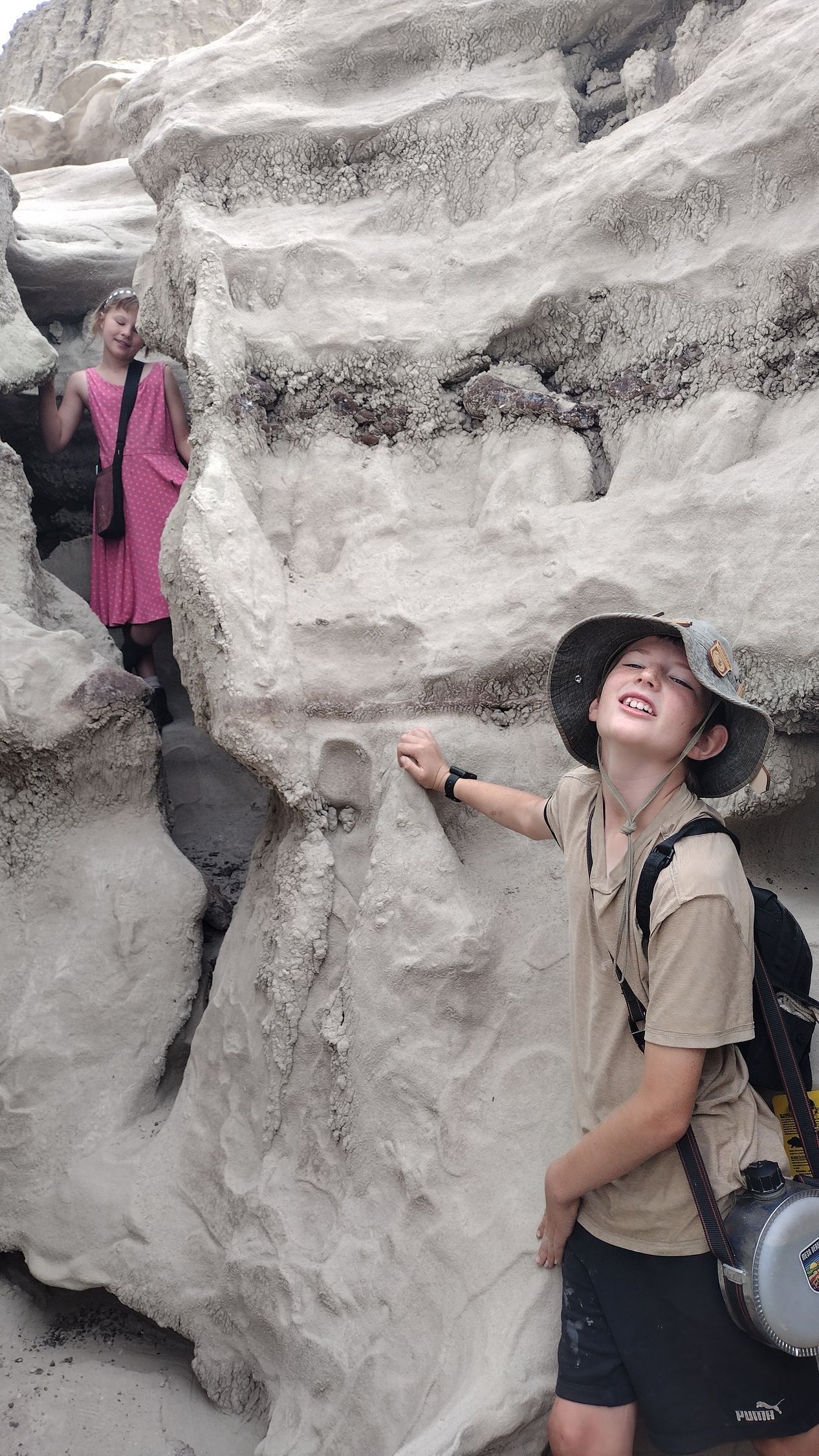
Two kids exploring a narrow, light-colored rock canyon. One is wearing a hat and backpack. The other is in a pink dress.

Other blogs you might like...

By Ashley Wright January 28, 2026
Making Roadschooling Fun Again: How Games Bring Learning to Life
By Jennifer Schillaci January 27, 2026
The Great January Reset: Getting Your RV Adventures Ready for Spring Travel
By Dani Deuter January 23, 2026
Giving Back on the Road: Our Heart for Community and Calling
By Jennifer Schillaci January 21, 2026
The Moment Everything Connected.
By Jennifer Schillaci January 9, 2026
Some people travel to sightsee. Mike travels with purpose.
By Jennifer Schillaci January 7, 2026
Inside the Tampa RV Supershow: Sixteen Years Strong and Showing Up Bigger Than Ever
By Teal Albert January 5, 2026
Meet the Albert Family: Full-Time Nomads, Roadschoolers & Adventure Seekers
By Jennifer Schillaci December 31, 2025
A practical guide to helping teens build confidence, independence, and real‑world skills & explore the country.
By Jennifer Schillaci December 30, 2025
Relax, RV Shows. Rallies. & Resources to plan the journey that's right for you.
By Ashley Wright December 26, 2025
Workcamping with Kids
Show More