Escapees SmartWeight – Getting Individual Wheel Weights

Doug S • September 18, 2025

As I’ve blogged about before, I’m a stickler for knowing where I’m at with my truck and camper weights. I have weighed my rig multiple times at CAT Scales and have even compared the advertised dry weights to my actual dry weights. I’ve even gone so far as creating TowingPlanner.com to allow people to do their own weights and the site “crunches” the numbers for them.

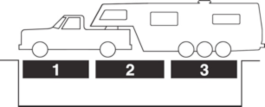
I typically just stop at a truck stop and am weighed at what is called a CAT Scale. This is what big rigs do to verify that they are road legal. There are 3 scales and you get weights for your truck’s steering axle (aka front wheels), it’s drive axle (aka rear wheels), and then the camper’s axles combined. This is good because you can verify overall numbers, but it can be better.

How can it be better you ask? I’m glad that you did. Or you didn’t and you’re still reading. Sucker.

Most RVs aren’t perfectly balanced. If you have 2 or 3 axles, you’ll find that one side carries more than another or the front carries more than the rear. You can’t easily tell this at CAT scales without some fancy footwork which may or may not be possible or even against the scale’s rules. To find this out, you need to have a set of scales that can be placed under each wheel and get individual weights.

There are a few providers of weightings like this. The challenge is that these locations usually aren’t convenient to wherever I happen to be. But, I found that Escapees SmartWeigh has a location that was about an hour away from the Thousand Trails Orlando campground. Even better, my membership to Fulltime Families also got me 1 year free included in Escapees. Winning!

The website reported that they only do weightings on M-F and limited hours. Fortunately, Al (the scalemaster) told me it was no problem to do a weighing on a Sunday outside of the established hours. Woohoo!

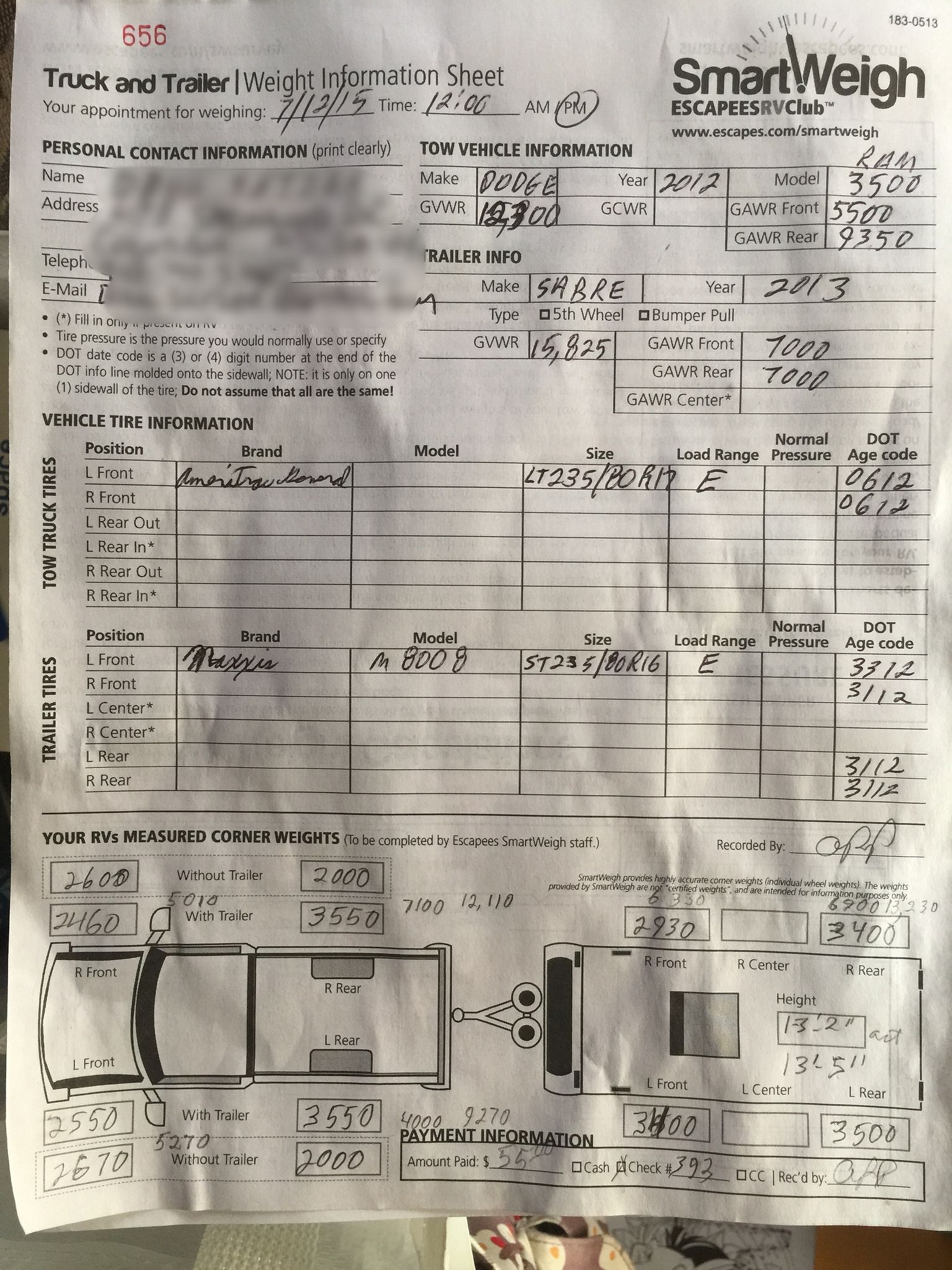
By the end of the weighing, you get a sheet of paper that tells you individual weights for each wheel location for both the truck and RV. It also records those weights against what your manufacturer’s ratings are. This helps you to know if you are under, at, or over any specific ratings.

My Weighing

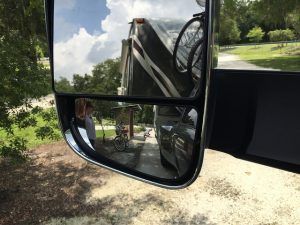
We pulled up to the campground and the scalemaster got me arranged on the pad, lined up the scales, and recorded each weight. He would zero out the scale, have me pull on top of it, and then have me move onto the next position. All told, it didn’t take all that long to do.

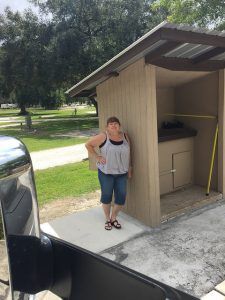
Sadly, I had to be the bad guy and throw my mother-in-law out of the truck for the weightings. They want your vehicle as close to how you normally travel as possible.

By the end of it, they gave me a rather comprehensive form filled with my weights.

Escapees SmartWeigh: Weight Info Sheet
Weight Information Sheet

What Do Those Numbers Mean?

The longest story shortest, I’m withing all ratings on my truck and over on my “total” weight of the camper. I have one tire that’s over its rating on the camper, but all others are at or under (which, I’m realizing as I write this now- that’s not something that this form specifically called out- I had to go to my tire manufacturer’s web page for that information; specifically the max load for the tire in my size)

Here are my numbers:

Truck’s Total Weight Rating: 12,300 lbs. (found on a sticker on the truck’s doorjamb)
Truck’s Weight without Camper: 9,270 lbs. (total of all truck’s wheel weights- without trailer)
Truck’s Weight (with camper): 12,110 lbs. (total of all truck’s wheel weights- with trailer)
Camper’s Pin Weight: 2,840 lbs. (difference between loaded and unloaded weight)
Camper’s Weight on all Axles/Tires: 13,230 lbs. (total of all individual wheel weights)
Camper’s Total Weight Rating: 15,825 lbs. (found on a sticker on the side of the camper)
Camper’s Total Weight: 16,070 lbs. (camper’s pin weight + camper’s weight on axles)
Truck’s Total Combined Weight Rating: 28,000 lbs.
Total Combined Weight: 25,340 lbs.

Now that I have data, what do I do?

  1. We had about 70 pounds of stuff that Lisa brought with her. While I threw her out of the truck, I didn’t also throw her stuff to the curb. (I’m not that cruel!)
  2. We were carrying almost a full tank of freshwater (42 gallons) and a full water heater (10 gallons). Combined, this was 50 gallons of water at 8.3 lbs. per gallon (so, 415 pounds was simply water); I’ll definitely carry less. Basically 10 gallons in the water heater and maybe another 10-20 gallons in the fresh water tank.
  3. Those alone will put me within my ratings. But I’d still like to be further under- I do still want/need to pickup a grill (either a Weber Q2200 or O-Grill ). And, while fun, I don’t really want to have to keep shouting across stores- “ no you can’t buy that, our house is already overweight! “. And yes, I really have been doing that.

The one rating that I’m most bothered by is being right at (and even over on one) my tire maximum loading capacity. Tire damage is bad. Wrecks caused by a blowout is worse. To combat that, I’m already running a tire pressure monitoring system on most of my tires.


Other blogs you might like...

By Ashley Gallaher December 18, 2025
We recently had the chance to sit down with Jennifer, one of the hosts of the Learn to RV Podcast, and it was a great conversation that took us back to the very beginning of our full-time RV journey. In the podcast, we shared who we are as a family, why we chose to sell the house, get rid of (most of) our stuff, and hit the road. We talked about what life really looks like when your home has wheels. It was less about highlight reels and more about honest moments, learning as we go, and figuring things out one mile at a time
By Michael Gardner December 17, 2025
Why a Mini Smart Telescope Is Ideal for RV Living
By Jennifer Schillaci December 16, 2025
Celebrating the Holiday Season with Cookies, Campfires & Christmas Lights
By Kirsten McCormick December 11, 2025
Picture this: Ask your teenager what gifts they received last Christmas. Now ask them about their most memorable adventure. Which question sparks more enthusiasm and detailed stories? The truth is, most physical gifts—even those met with initial excitement—often end up collecting dust, breaking, or being outgrown as interests change. But experiences? They become part of who we are, weaving themselves into the fabric of our memories and shaping our character in lasting ways. 
By Jennifer Schillaci December 10, 2025
Surprising Symptoms, Honest Conversations, and Life on Wheels
By Amanda Pelser December 9, 2025
How Homeopathy Supports the Body During Colds and Flus
By Jennifer Aggio December 4, 2025
Let's talk about the thing nobody wants to talk about—but every RVer deals with: RV tank problems . Foul odors. Clogged black tanks. Inaccurate sensors. Slow drainage. The dreaded poop pyramid. Sound familiar? Here's what most RVers don't realize: your onboard tank flush system isn't enough . Those built-in sprayers don't penetrate buildup, remove struvite stones, or scrub away mold and sludge that accumulates over time. That's where professional RV tank cleaning comes in—and that's where Tank Rangers steps up. Tank Rangers is a nationwide RV tank cleaning service with nearly three dozen locations across the country, offering professional hydro-jetting for both black tanks and gray tanks. Whether you're dealing with sensor issues, stubborn odors, or just want preventative maintenance, Tank Rangers provides mess-free, thorough cleaning that gets your tanks back to factory condition. In this guide, we're covering why professional tank cleaning matters, what happens during service, common RV tank myths, DIY maintenance tips, and how to find Tank Rangers near you. Want to hear the full story? We sat down with founder Gabe on our Community Spotlight podcast episode! 
By Jennifer Skinnell December 3, 2025
AT&T Stadium
By Jennifer Schillaci December 2, 2025
Escapee's C.A.R.E. Program, Traveling with a Purpose & Lasagna Love
By Jennifer Schillaci December 1, 2025
From Motorhomes to Movement: How FMCA’s Quiet Shift and FRVA’s Bold Vision Are Reshaping The RV Community
Show More