An RVer's Etiquette Guide to Cracker Barrel, Walmart & Truck Stops: How to Be a Good Guest on the Road
Jennifer Schillaci • April 6, 2026
The Unwritten Rules That Every RVer Needs to Know
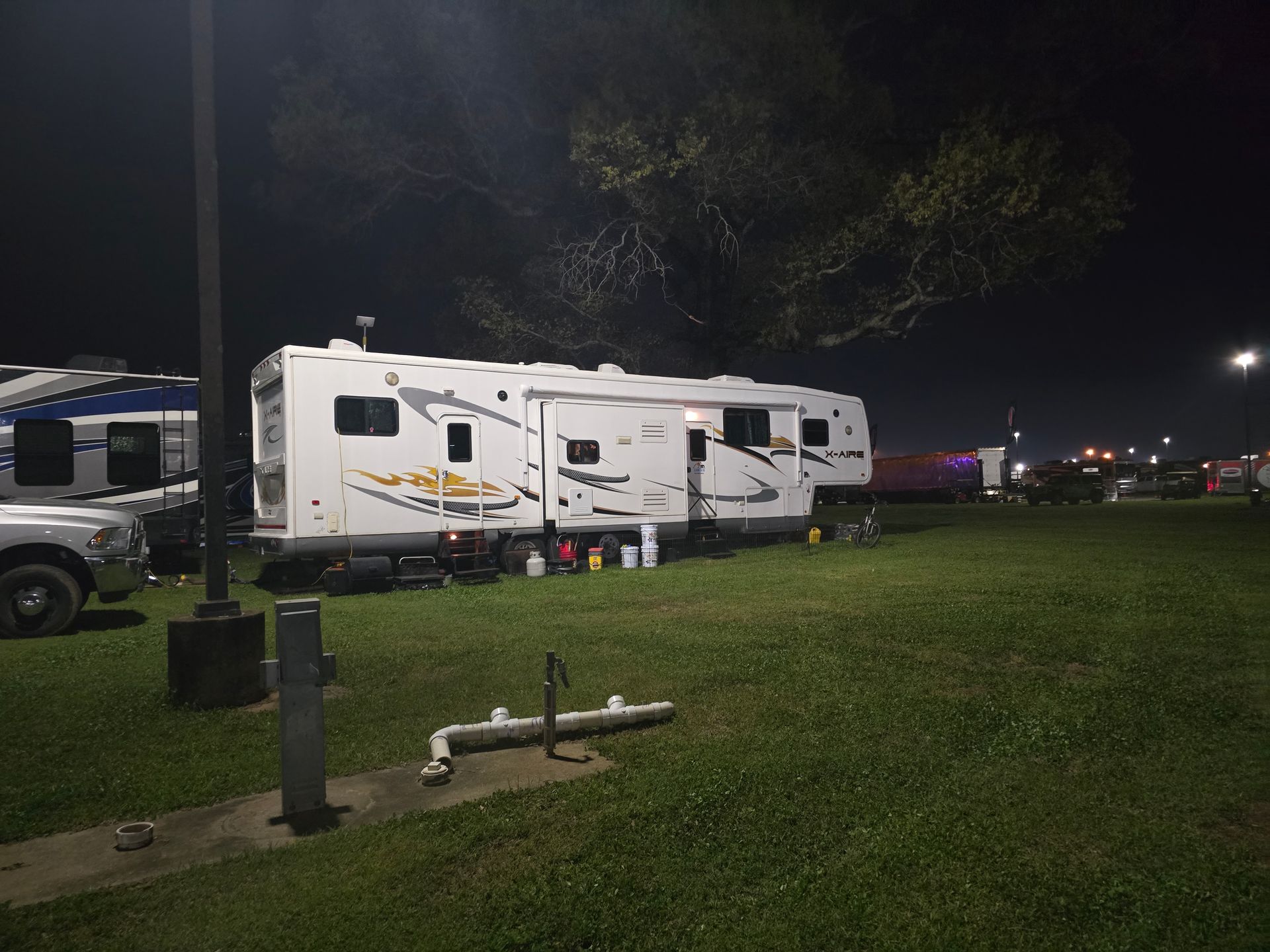
There is a category of overnight stop that every RVer uses at some point & a set of etiquette rules around those stops that nobody officially teaches you but everybody eventually learns. Sometimes the hard way.
Cracker Barrel parking lots. Walmart overnight parking. Truck stops. Rest areas. These are the unofficial infrastructure of RV travel, the places that fill the gap between campgrounds, extend your range, give you a safe place to rest on a long travel day, & occasionally even save a travel day that didn't quite go as planned.
Used well and respectfully, many of these stops are one of the great unsung conveniences of life on the road. Used poorly, they are the reason that more and more of these locations are putting up signs that say no overnight parking & those signs that affect every RVer who comes after you.
This guide covers the etiquette, the unwritten rules, the alternatives worth knowing about, and the one group of road users that every RVer needs to understand and respect deeply — the professional truck drivers who share these spaces with us every single day.
A Tradition Being Lost One Bad Guest at a Time
When we hit the road in 2013, and the landscape looked a bit different. Cracker Barrel parking lots were reliably welcoming. Walmart overnights were a given at most locations. The unwritten agreement between RVers and these businesses felt solid — a mutual understanding that worked beautifully for everyone involved.
Over the last decade, that has definitely changed. Slowly at first, then faster. Location by location, city by city, no overnight parking signs have gone up. The managers who used to wave you in now apologetically shake their heads. The lots that felt like a reliable safety net on a long travel day have quietly closed their doors to the RV community, one by one.
And here is the hard truth that every RVer needs to realize: we did this to ourselves.
Not all of us. Not most of us. But enough of us.
It may have started with the RVer who stayed three nights instead of one. The rig that dumped gray water in the parking lot. The setup that turned a courtesy overnight into a full campsite, complete with chairs, awning, and a grill going at noon. The people who left trash behind. The ones who never went inside to eat, never bought a gallon of milk, never gave back even the smallest expression of gratitude for a courtesy that cost the business real money to extend.
Every single one of those situations gave a manager or a corporate policy team a reason to say never again. And every never again takes something away from every RVer who comes after — including you and including us.
We say this not to shame anyone but because it does matter. The privileges that still exist at the locations that still allow overnight parking are genuinely fragile. They survive on the goodwill of the businesses that extend them and the behavior of the guests who use them. The moment that balance tips the wrong way, another sign goes up and another option could disappear.
This blog is a reminder to make sure that doesn't keep happening. It's about being the kind of guest that makes a manager glad you stopped. It's about protecting what's left of a tradition that served this community well for decades & could potentially continue to serve it for decades more if we treat it right.
The Truckers: Let's Start Here Because It Matters
Before we talk about Cracker Barrel parking lots and Walmart etiquette we need to talk about truckers. Because understanding the professional truck driving community changes how you think about every stop on this list.
Here is something that many RVers don't fully appreciate: professional truck drivers are required by federal law to stop and rest. The Hours of Service regulations enforced by the Federal Motor Carrier Safety Administration mandate rest periods for commercial drivers and those rest periods are not just a suggestion, not optional, not negotiable, and not something a driver can push through because the truck stop is full.
When a trucker's hours are up their hours are up. Period.
They must stop, they must rest, and if the truck stop is full of RVers who parked in truck spaces because they were convenient, that trucker has a serious problem that is not of their making.
This is not a minor inconvenience. This is a safety issue.
A fatigued commercial driver on a highway is a danger to everyone on that road including you. The rest stop and truck stop infrastructure in this country exists in large part to keep those drivers — and by extension everyone else on the road — safe.
The cardinal rule for RVers at truck stops: never park in a designated truck space. Truck spaces are for trucks.
Treat professional drivers with respect when you encounter them. They are working. They are navigating federal regulations, tight schedules, and vehicles that require a completely different level of skill and attention to operate than your rig. They were here first and the infrastructure was built for them. We are guests in their workspace.
Truck Stops: The RVer's Guide to Being a Good Guest
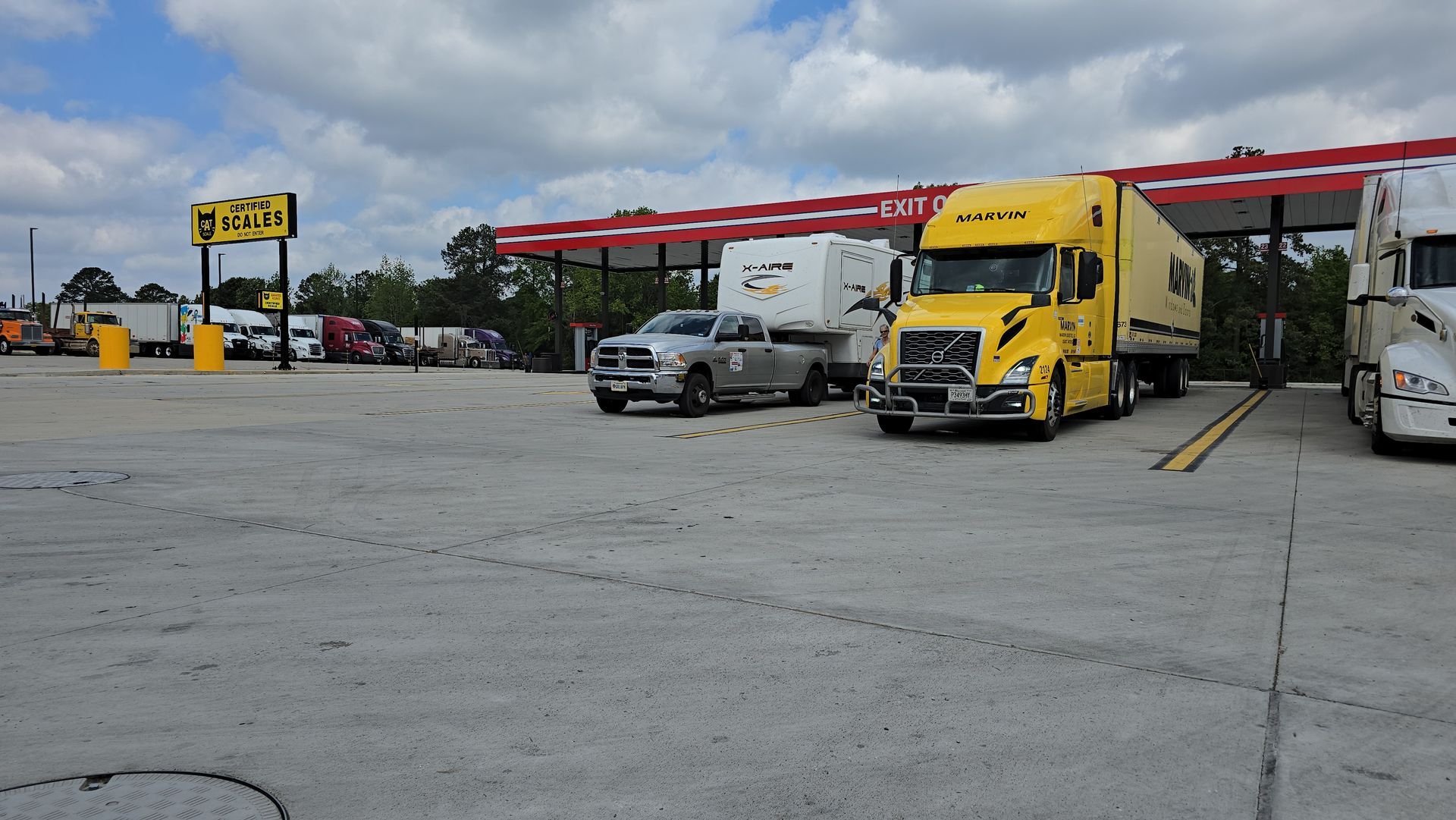
Like many RVers, we often fuel up at truck stops along our route and if you've never pulled into one, let me tell you, it can be a game changer.
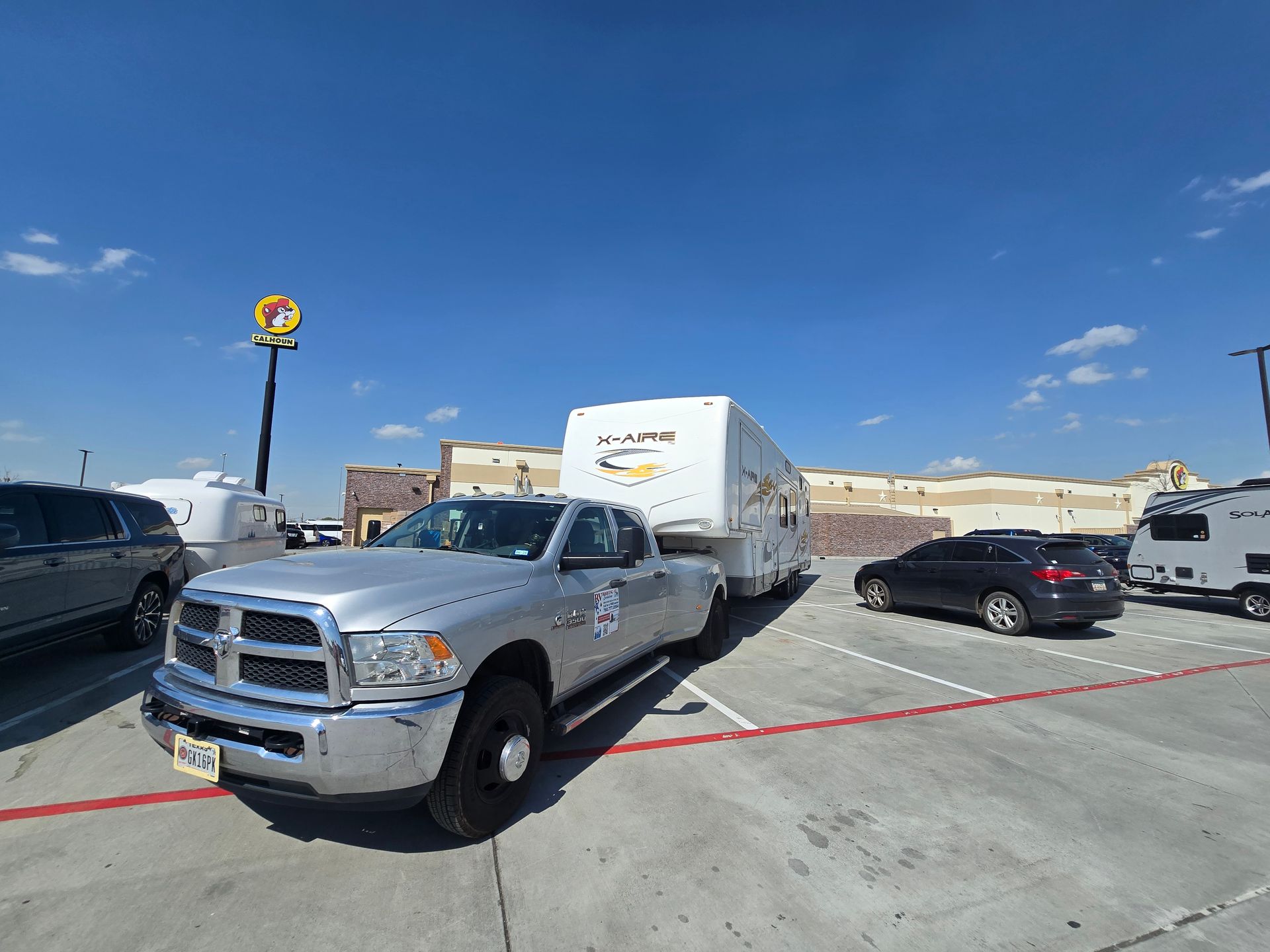
We drive a dually pulling a 42-foot fifth wheel, which means we're filling up with diesel and we need the space that truck lanes give us. Trying to maneuver a rig that size into a regular fuel station is the kind of adventure nobody asked for. The truck lanes just make sense, they have more room, easier pull-through, and you're not holding up a line of minivans while you try to figure out your turning radius.
We use our Open Roads Card to fuel up, and if you're not already taking advantage of that kind of program for your travels, it's worth looking into, especially if diesel is part of your regular road life.
Truck stops are genuinely useful for RVers — fuel, food, showers, dump stations, and a safe well-lit place to rest on a long travel day. But they come with a specific set of etiquette expectations that matter.
Fuel first, then park. If you're stopping at a truck stop to fuel up, fuel up and move your rig before you go inside to eat or rest. Fuel islands are not parking spaces and leaving your rig at a pump while you take a leisurely break blocks access for drivers who are working against a clock.
Use designated RV or car parking only. Many larger truck stops — Pilot Flying J, Love's, TravelCenters of America — have designated areas for RVs and passenger vehicles. Use them. If you're not sure where RV parking is ask inside before you pull through.
Love's Travel Stops deserves a specific mention here. Love's has made a genuine effort to accommodate the RV community with dedicated RV parking areas, dump stations, and amenities at many of their locations. They are one of the most RV-friendly truck stop chains on the road and that friendliness is worth acknowledging — and worth reciprocating with the kind of respectful behavior that keeps those amenities available.
Many Love's locations offer RV-specific services including propane, dump stations, and even dedicated RV parking with hookups at select locations. The Love's app is worth downloading for finding locations, checking amenities, and planning stops along your route.
Overnight at truck stops. It is generally acceptable to overnight in the RV or car parking area at most truck stops — but always verify the specific location's policy before you settle in. Some locations have time limits. Some have posted no overnight parking signs. Respect whatever the policy is at that specific stop.
Be quick with the bathrooms. Truck stop restrooms are high traffic facilities used by people who are working. Keep your visits efficient. This is not the place to spread your toiletries across the counter and settle in for a lengthy grooming session. Don't forget to pull the RV forward before hitting the bathroom so the truck behind you can fuel up too.
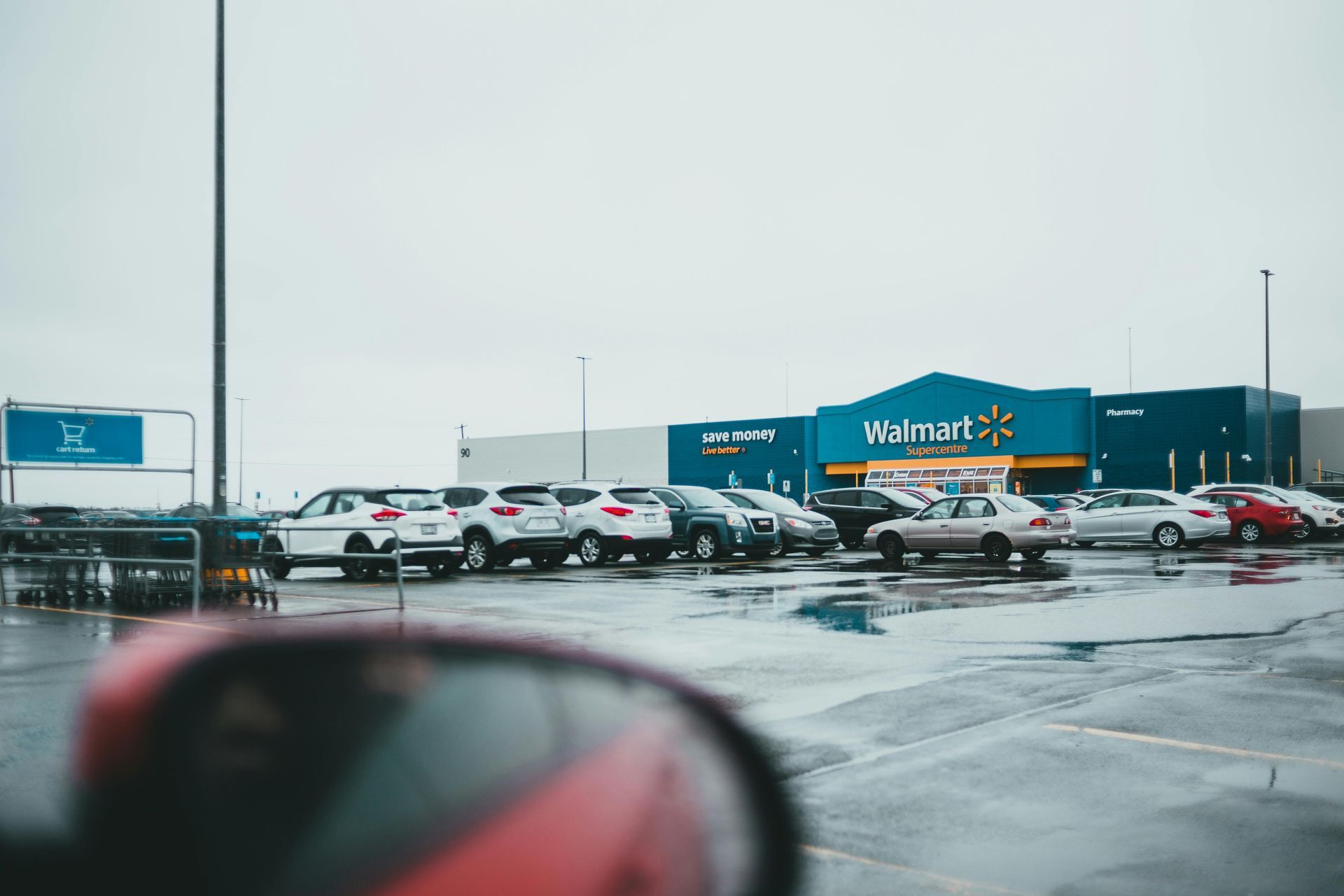
Walmart Overnight Parking: The Unwritten Rules
Walmart overnight parking is one of the most discussed topics in the RV community — and one of the most misunderstood. Here is the honest current state of things.
Walmart's corporate policy has historically allowed overnight parking at the discretion of individual store managers. That policy has not changed at the corporate level. What has changed is that an increasing number of individual stores — particularly in urban and suburban areas — have chosen to prohibit overnight parking due to issues with extended stays, trash, waste dumping, and general misuse of the courtesy.
The result is that Walmart overnight parking is not a guarantee anywhere. It is a courtesy that is extended at some locations and not at others — and the ones that have stopped allowing it almost always did so because someone abused the privilege.
The rules for Walmart overnight parking are always changing:
Always call ahead or go inside and ask a manager before you settle in for the night. Do not assume the permission exists — confirm it.
Park away from the store entrance and away from the areas used by customers and delivery trucks. Do not set up camp. This means no chairs, no awnings, no outdoor rugs, no grills, no signs of extended habitation. You are not camping in a Walmart parking lot. You are resting overnight in a private parking lot at the courtesy of the store.
One night maximum. If you need two nights you need a campground. Walmart overnight parking is a rest stop not a free campsite and treating it like one is the fastest way to get it taken away for everyone.
Do not dump gray water or black water in a Walmart parking lot. Ever. Under any circumstances. This should not need to be said but it does.
Shop at the store if you're using the parking lot. This is the most basic expression of reciprocity available to you and it costs nothing to do.
Leave the spot cleaner than you found it.
Rest Areas: Know the Rules Before You Stop
Rest areas are managed by individual state departments of transportation and the rules vary significantly from state to state. Some states allow overnight stops up to a specific time limit — often 8 to 24 hours. Others prohibit overnight parking entirely.
What most travelers don't know is that some states have gone a step further and created dedicated spaces specifically for tired drivers — not just RVers but any traveler who needs to stop and rest before getting back behind the wheel. Ohio is a great example of this. Ohio's rest areas include designated spaces for fatigued travelers with the explicit understanding that drowsy driving is a genuine public safety issue and that giving someone a safe legal place to sleep for a few hours is worth far more than moving them back onto the highway before they're ready.
This is smart policy and it reflects something the RV community has always understood intuitively: a rested driver is a safe driver. If your state has dedicated tired traveler spaces use them without guilt. That infrastructure was built for exactly this purpose.
The safest approach is to know the rules for the states you're traveling through before you need a rest area in the dark. A quick search for the specific state's rest area policy takes minutes and prevents the unwelcome knock at 2am. Look specifically for whether the state has designated fatigue stops or extended rest provisions — you may have more legitimate options than you realize.
Rest areas are designed for rest — not for extended stays, not for camping, and not for the kind of setup that makes it look like you've moved in.
Use them for what they're designed for, follow the posted rules, and move on when you're rested.
Cracker Barrel: A Tradition Worth Protecting
Cracker Barrel has a long and genuine tradition of welcoming RV travelers in their parking lots & it is one of the most beloved unofficial rest stops in the RV community for good reason. Large parking lots, good food, a friendly atmosphere, and a corporate culture that has historically understood the RV traveler as a valued customer.
The tradition is worth protecting, which means it is worth behaving in a way that keeps that relationship intact.
The Cracker Barrel etiquette rules:
Go inside and eat. This is the foundation of the whole arrangement.
Cracker Barrel extends the courtesy of their parking lot to RVers and the reciprocal expectation is that you patronize the restaurant. If you're not going to eat there you're not really a guest — you're trespassing on private property. The meal doesn't have to be elaborate. Breakfast, dinner, a pie and a coffee — whatever works. Just go inside.
Call ahead if you're arriving late or planning to overnight.
A quick call to the specific location to confirm they allow overnight parking in your rig size takes two minutes and prevents the uncomfortable conversation at 11pm when someone knocks on your door.
Park away from the restaurant entrance.
Pull to the back or side of the lot. Leave the prime parking spaces for the customers coming in for dinner.
One night only.
Same principle as Walmart — this is a rest stop not a campground. One night, move on.
No slide outs if it's going to encroach on other parking spaces. Read the lot and be considerate of the space you're taking up.
No generators running late at night or early in the morning. You are in a commercial parking lot in close proximity to other people and a working restaurant. Be a considerate neighbor.
Leave the parking lot cleaner than you found it.
Pick up any trash — yours and anyone else's within reach. The two minutes it takes is the most powerful thing you can do to keep this tradition alive.
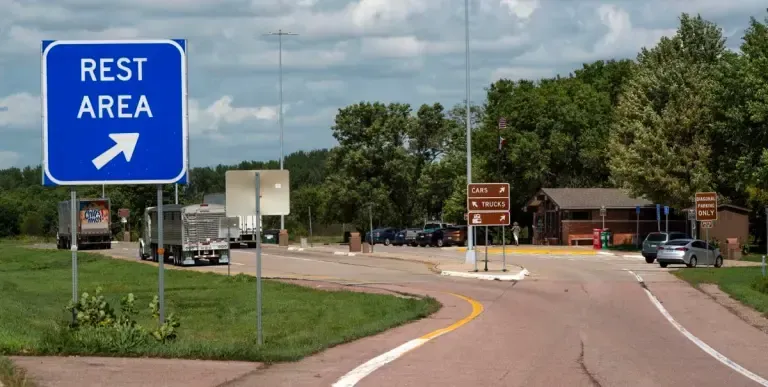
Rest Areas: Know the Rules Before You Stop
Rest areas are managed by individual state departments of transportation and the rules vary significantly from state to state. Some states allow overnight stops up to a specific time limit — often 8 to 24 hours. Others prohibit overnight parking entirely.
What most travelers don't know is that some states have gone a step further and created dedicated spaces specifically for tired drivers — not just RVers but any traveler who needs to stop and rest before getting back behind the wheel.
Ohio is a great example of this. Ohio's rest areas include designated spaces for fatigued travelers with the explicit understanding that drowsy driving is a genuine public safety issue and that giving someone a safe legal place to sleep for a few hours is worth far more than moving them back onto the highway before they're ready.
This is smart policy and it reflects something the RV community has always understood intuitively: a rested driver is a safe driver. If your state has dedicated tired traveler spaces use them without guilt. That infrastructure was built for exactly this purpose.
The safest approach is to know the rules for the states you're traveling through before you need a rest area in the dark. A quick search for the specific state's rest area policy takes minutes and prevents the unwelcome knock at 2am. Look specifically for whether the state has designated fatigue stops or extended rest provisions — you may have more legitimate options than you realize.
Rest areas are designed for rest — not for extended stays, not for camping, and not for the kind of setup that makes it look like you've moved in. Use them for what they're designed for, follow the posted rules, and move on when you're rested.
Campgrounds and Membership Programs
Here is the honest truth about Cracker Barrel parking lots, Walmart overnights, and truck stop rest stops: they are genuinely useful tools in the RV travel toolkit. But they work best as occasional solutions rather than regular strategies.
If you find yourself relying on free overnight parking more nights than not it's worth examining whether your campground budget and membership setup is working as hard as it should be.
Thousand Trails, Passport America, Harvest Hosts, Boondockers Welcome, and RV Overnights all offer legitimate overnight options that are more comfortable, more appropriate for extended use, and in many cases not significantly more expensive than the fuel you burn driving to find a Walmart parking lot with availability.
Love's RV sites at select locations offer a legitimate paid overnight option in a well-lit, secure environment with amenities — worth knowing about as an alternative to free parking when you want something slightly more structured than a retail parking lot.
BLM land and dispersed camping gives you free legal overnight options in some of the most spectacular landscapes in the country — a far better experience than a parking lot on almost every level for travelers who have the flexibility to use it.
What If You Can't Stay Without Extending Your Slides?
This is a conversation worth having & honestly because it affects more RVers than people talk about openly.
Some rigs are simply not livable without the slide-outs extended. The bedroom slide makes the bed accessible. The living room slide gives you enough space to move around.
Without slides, the rig is functional for a quick stop but genuinely difficult for an overnight stay — especially for families or couples who need the space to sleep comfortably.
If that's your situation here's the honest reality: Cracker Barrel parking lots, Walmart overnights, and truck stops are probably not the right solution for your rig. And that's okay. It just means your overnight stop toolkit looks a little different.
What to do instead:
Look for campgrounds with late arrival options. Many campgrounds accommodate late arrivals with a simple check in process — a lockbox code, a site assignment left at the gate, or a host who stays available by phone. A quick call ahead is almost always all it takes and a $30 hookup site with the room to extend your slides beats a cramped parking lot overnight every time.
Love's RV dedicated sites at select locations give you a legitimate paid overnight option with enough space to set up properly. Worth checking the app before you commit to a parking lot situation that won't work for your rig.
RV Overnights, Harvest Hosts and Boondockers Welcome locations are typically on private property with enough space to extend slides, level properly, and actually rest. These memberships exist precisely for situations like this.
BLM land and dispersed camping near your route may give you a free legal overnight option with all the space you need.
The bottom line is this: know your rig's limitations before you commit to an overnight stop. If you need your slides to sleep comfortably plan for a stop that accommodates that need rather than discovering the problem at 11pm in a parking lot with nowhere else to go. A little planning before your travel day is infinitely better than the alternative.
Courtesy Keeps Overnight Parking Alive
Walmart overnight parking has always been a courtesy — never a guarantee — and the only reason it still exists in many places is because RVers, for the most part, have treated it with respect. The stores that have stopped allowing it almost always did so because someone pushed the limits, stayed too long, dumped waste, or treated a parking lot like a campsite.
And that’s really what all of this comes down to: etiquette.
Ask permission.
Park out of the way.
Don’t set up camp.
Stay one night.
Leave no trace.
Support the business.
Move on in the morning.
It’s simple, but it matters.
It’s simple, but it matters.
This week on the Learn to RV Podcast, we actually dove into RV etiquette — specifically how to be a good campground neighbor — and it ties directly into this conversation. Whether you’re in a campground, a Cracker Barrel lot, a Walmart, or a rest area, the same principles apply: be considerate, be aware of the space you’re using, and remember that your actions affect the entire RV community. We’ll link this week’s episode so you can listen in.
The truth is, the overnight parking courtesy at places like Walmart and Cracker Barrel only survives when RVers use it well. Every time someone treats it like a free campsite, we all lose a little bit of access. Every time someone parks respectfully, shops inside, keeps things clean, and leaves early, they help keep the tradition alive for the next traveler.
Our first year on the road, we had one of those travel days that just wouldn’t quit — long miles, tired kids, and cylinders misfiring on our tow vehicle. By the time we finally limped into town, it was late, dark, and all we wanted was a safe place to park near the auto parts store that promised our replacement parts would be ready in the morning.
We found what looked like an empty strip‑mall parking lot, tucked ourselves into a corner, and crashed for the night.
At 4:15 a.m., there was a knock on the camper door — the kind that jolts you straight out of sleep. An officer informed us that no overnight parking was allowed, and even after explaining the situation, we were given two hours to leave. The businesses didn’t open until 8 a.m., but rules were rules.
Back then, our littles were even littler, which meant the next day was fueled by grumpy toddlers, cranky teens, and two exhausted parents trying to keep everyone moving. But that morning became a turning point for us.
Right there, in that dark parking lot, we made a decision: we were never going to put ourselves in that situation again without knowing the rules.
It pushed us to start researching overnight parking policies, understanding local regulations, and learning the etiquette that keeps these options available for everyone. And honestly, that one uncomfortable experience shaped how we travel & how we share these unwritten rules to this day.
Quick Reference Guide
Truck Stops: Fuel first, then park. Never use trucker spaces. Use designated RV areas. Confirm overnight policies.
Walmart: Call ahead. One night only. No camp setup. No dumping. Shop inside. Leave it cleaner than you found it.
Cracker Barrel: Eat at the restaurant. Call ahead. Park away from the entrance. One night only. No late‑night generators. Leave no trace.
Rest Areas: Know state rules. Follow posted limits. Rest only. Move on when you’re ready.
Love’s RV: Use the app. Look for dump stations, propane, and dedicated RV parking. A genuinely RV‑friendly chain.
If you need space to set up, choose a campground, Love’s RV site, Harvest Hosts, or public land.
Truckers, RVers, commuters, families — we’re all using the same infrastructure and relying on the same courtesy economy that makes travel possible. The truck driver who needs that rest stop space is keeping the supply chain moving. The manager who says yes to overnight parking is extending a kindness to strangers.
As long as we respect that & use it well.
Be sure to take the time to leave it better than you found it.
The road is generous to the people who treat it that way.
Always confirm overnight policies directly with each business and location, and take the time to check state‑specific rules for rest areas before relying on them as an overnight option. Policies change often, and a quick check can save you from an early‑morning knock on the door.
Other blogs you might like...